Attorneys seeking earned media exposure have eight core platform categories to work with: TV, radio (including syndicated shows), podcasts, print and online news, op-eds and guest columns, newsletters and trade publications, blogs, and video content split between short-form social clips and long-form YouTube explainers. Newsroom shrinkage and audience fragmentation mean a firm relying on just one or two of these will miss most of its potential audience, according to Law. Meanwhile, format matters as much as platform: the New York City Bar Association notes that short clips under a minute dominate Instagram and TikTok, while YouTube rewards longer, 3 to 15 minute explainers.
Here’s the quick inventory attorneys and law firm marketing leads should know before briefing a PR partner:
- TV (local news hits, national cable commentary)
- Radio, including nationally syndicated shows
- Podcasts (guest appearances and firm-produced shows)
- Print and online news (newspapers, digital-native outlets)
- Op-eds and trade columns
- Newsletters and trade publications
- Blogs and owned content
- Social video, split between short-form (Instagram, TikTok, LinkedIn) and long-form (YouTube)
No single channel builds a reputation on its own. The fastest, most reliable route to consistent placements across all of them is working with a legal PR specialist like Goldman McCormick Public Relations, which has spent over a decade building the newsroom relationships that make multichannel coverage possible rather than accidental.
Key Takeaways
Attorneys who pursue placements across multiple platform types, rather than relying on a single channel, build reputation capital faster and see it reflected in search results sooner.
| Point | Details |
|---|---|
| Use a multichannel mix | Combine TV, radio, podcasts, print, op-eds, and video rather than betting on one platform. |
| Match format to platform | Keep social clips under 60 seconds and reserve deeper explanations for YouTube or podcasts. |
| Repurpose every placement | Turn one podcast or radio interview into blog posts, clips, and newsletter content. |
| Track outcomes, not just counts | Prioritize backlinks, referral traffic, downloads, and inquiry conversion over raw placement totals. |
| Partner with a legal PR specialist | Goldman McCormick PR combines former-journalist expertise with syndication credits and Forbes recognition to speed up placement across every platform type. |
Table of Contents
- Types of Attorney Public Speaking Platforms, Channel by Channel
- How Earned Media Builds Reputation Capital and What to Track
- What a PR Agency Actually Does and How to Vet One
- Why a Legal PR Specialist Gets You There Faster
- Preparing for Each Speaking Platform Without Sounding Rehearsed
- Staying on the Right Side of Ethics Rules While Speaking Publicly
- Tracking What Actually Moves the Needle
- Why This Matters More This Quarter Than Last Year
- How Goldman McCormick PR Gets You Booked Across Every Channel
- Sources
Types of Attorney Public Speaking Platforms, Channel by Channel
Each platform reaches a different audience with a different appetite for legal content, and pitching all of them the same way is the single most common mistake attorneys make when they try PR without a specialist.
TV splits into two tiers. Local TV hits (morning shows, evening news segments) reach a broad, general audience and work best with timely commentary tied to a breaking case or a trending legal question. National TV requires either a case with national stakes or a recurring “legal expert” booking. Pitch angle: “What today’s verdict in [current event] means for [audience].” Production complexity is high, turnaround is fast once booked, and the placement rarely has SEO value on its own, though the video often becomes a shareable asset afterward.
Radio, including syndicated programs on networks like Genesis Communications Network and Starcom Radio Network, reaches commuters and a loyal, older-skewing audience that trusts long-form spoken conversation. Ideal format runs 5 to 15 minutes. Pitch angle: “A weekly legal explainer segment” or “reacting to a regulatory change affecting [industry].” Radio’s strength is repeat exposure. A recurring guest slot builds familiarity that a single TV hit cannot.
Podcasts reach niche, highly engaged listeners who often convert into actual clients because they’ve heard 20 minutes of unscripted expertise rather than a 90-second soundbite. Ideal pitch angles: a deep-dive case study, a “how I built my practice” founder narrative, or reacting to a news cycle relevant to the show’s niche. Podcast appearances are also among the most repurposable assets in PR. Transcribe one interview and you’ve got blog content, social clips, and newsletter material for weeks.
Print and online news still matters, and treating them as an either/or choice is a mistake. Combining a print placement with online syndication captures both legacy credibility and the SEO and shareability benefits that print alone can’t deliver. Pitch angle: expert quote for a trend piece, or a full feature tied to a notable case outcome.
Op-eds and trade columns let an attorney control the entire argument instead of reacting to a reporter’s framing. Best for policy positions, regulatory critique, or thought leadership tied to a practice specialty. Pitch angle: “Why [pending regulation] will hurt small businesses” pitched to a trade outlet’s opinion editor.
Newsletters and trade publications reach a narrow, professionally relevant readership. A checklist, an industry update, or a “what changed this quarter” roundup performs well here.
Blogs, especially owned blogs, are the compounding asset in this list. Every other placement can link back to a blog post, and a blog post ranks in search long after a TV hit airs.
Short-form social video on Instagram, TikTok, and LinkedIn drives discoverability, particularly clips under 60 seconds shot vertically and simply, per NYC Bar guidance. Long-form YouTube content, by contrast, is where lawyers explain a process in full. The American Bar Association also flags LinkedIn as the platform lawyers use most for professional networking, while X suits quick reactive commentary.
Which practice areas fit which channel:
- Plaintiff litigation and personal injury stories perform well on local TV and radio.
- Regulatory and compliance commentary lands best in trade press and newsletters.
- Evergreen explainer content (estate planning basics, what to do after an arrest) performs best on YouTube.
- Criminal defense commentary tied to breaking news suits both TV and short-form clips.
Pro Tip: Record every podcast and radio appearance, then cut it into three or four vertical clips for Instagram and TikTok. A single 20-minute interview can fuel a month of short-form content without a single extra shoot.
Goldman McCormick PR builds this kind of cross-platform content pipeline into every media campaign it runs for legal clients, so a single placement doesn’t die the day it airs.
How Earned Media Builds Reputation Capital and What to Track
Reputation capital is the idea that consistent, positive earned coverage does double duty: it builds trust with prospective clients and it pushes negative search results further down the page, a strategy 12AM Agency describes as combining monitoring, owned-asset cultivation, and suppression tactics. A single TV hit doesn’t move the needle much. A dozen placements across TV, print, podcasts, and video over a year changes what shows up when a prospective client searches your name.
| Placement Type | Most Meaningful Metric |
|---|---|
| TV | Reach estimate and audience segment share |
| Radio/syndicated shows | Listener estimates and repeat booking rate |
| Podcasts | Downloads and listener demographics |
| Online news | Backlinks earned and referral traffic |
| Short-form social clips | Views, saves, and shares |
| YouTube | Watch time and subscriber growth |
Attorneys often underestimate how fast format preferences shift. Short clips under a minute now dominate discovery on Instagram and TikTok, while YouTube’s 3 to 15 minute format captures the audience actually ready to hire. That split alone should shape where a firm invests production budget.
A PR firm worth retaining should deliver, at minimum:
- A placement log with dates, outlets, and reach estimates
- Backlink and referral traffic reports for online placements
- Podcast download and demographic data where available
- A quarterly sentiment summary tracking how coverage shifts search perception
- Conversion signals tying media exposure to inbound inquiries
What a PR Agency Actually Does and How to Vet One
A legal PR agency’s day-to-day work covers media mapping, pitch writing, direct journalist outreach, booking logistics, media training, and post-placement amplification. It’s less about a single big idea and more about steady, patient relationship management with producers and editors who need reliable sources.
Before signing with anyone, ask these questions:
- What’s your track record placing attorneys specifically, not just general businesses?
- Can you show sample placements across TV, radio, podcasts, and print?
- What does your measurement and reporting process actually look like?
- How do you handle a crisis communications situation if one arises mid-engagement?
- Is pricing project-based or retainer, and what’s included at each tier?
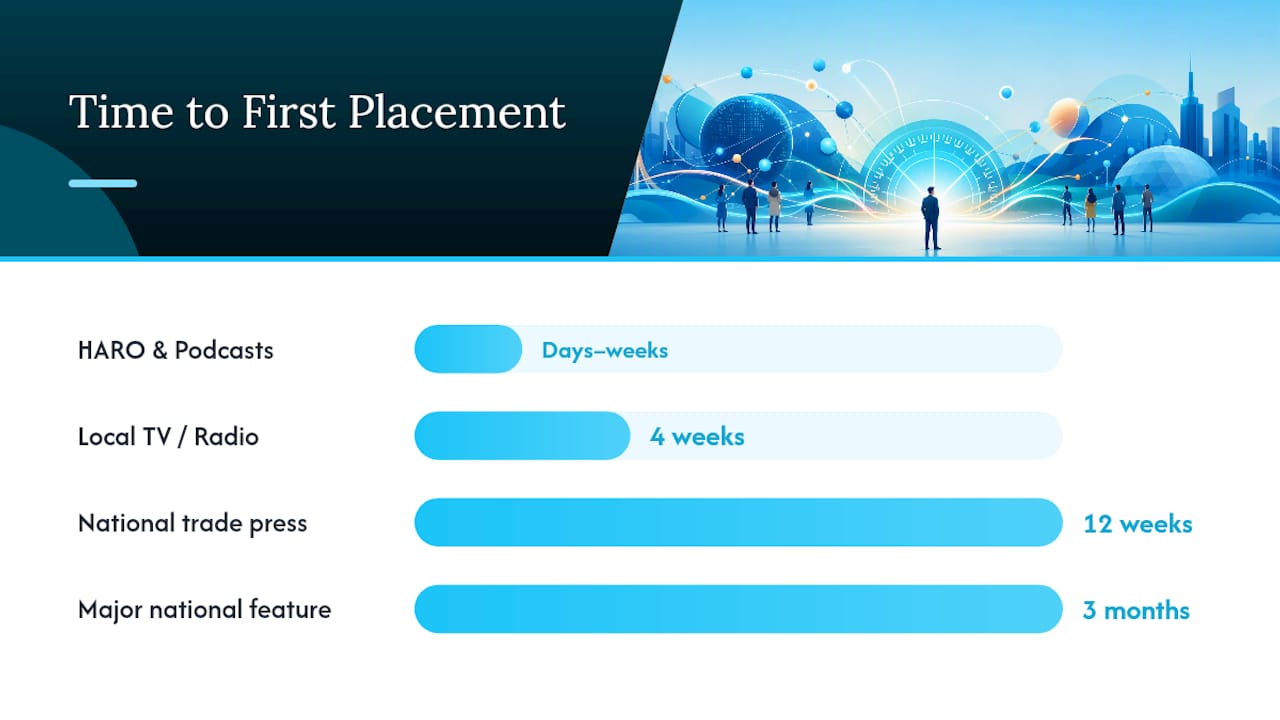
Timelines vary significantly by platform:
| Media Type | Typical Time to First Placement |
|---|---|
| HARO responses and podcast guest slots | Days to a few weeks |
| Local TV or radio segment | 4 weeks |
| National trade press feature | 12 weeks |
| Major national feature story | 3 months |
Watch for red flags: any firm promising guaranteed placements, one without verifiable media references, one that can’t articulate a measurement plan, or a contract vague on deliverables. Align scope with your actual goal before signing. Reputation building calls for a broad, steady placement cadence. Lead generation calls for platforms with direct audience conversion, like podcasts and trade newsletters. Crisis mitigation calls for a firm with rapid-response experience, not just a media list.
Why a Legal PR Specialist Gets You There Faster
Producers and editors covering legal stories prefer sources who already speak their language. A specialist shortens a producer’s prep work, and that alone increases how often you get booked over a generalist competitor pitching the same story.
Goldman McCormick PR was founded in 2010 by active and former members of the media, which means the pitches it sends come from people who once sat on the other side of the assignment desk. Forbes named the firm one of America’s best PR firms for 2021. The New York Observer cited it in 2014 as one of the top five legal PR agencies in the country, and it earned a Bulldog Reporter Gold Award for Best Cause/Advocacy Campaign in 2016. The firm also produces syndicated radio content heard on the Genesis Communications Network and Starcom Radio Network, giving it direct production capability that most PR shops outsource entirely.
A single well-placed podcast interview, transcribed and cut into clips, can generate a blog post, four social videos, and a newsletter feature from one hour of an attorney’s time. That’s the difference between chasing one hit and building a system that keeps producing coverage long after the interview ends.
Firms that treat every placement as a one-off miss this. The ones that repurpose systematically build reputation capital faster than firms with bigger media lists but no repurposing plan.
Preparing for Each Speaking Platform Without Sounding Rehearsed
Rehearsal for a TV hit looks nothing like rehearsal for a podcast, and treating them the same is why some attorneys freeze on camera despite sounding sharp in person. For TV, practice a 15 second answer first. Producers cut for time, and an attorney who can’t compress a point into two sentences gets edited into something unrecognizable. Record yourself on a phone camera and watch it back before the actual segment.
For radio and podcasts, the opposite skill matters more: sustaining a coherent point across five uninterrupted minutes without notes. Outline three talking points beforehand, not a script. A memorized script sounds stilted the moment a host asks a follow-up question you didn’t anticipate.
For print interviews, slow down. A reporter will quote you exactly, so precision matters more than energy. Ask what angle the story is taking before the call starts. It changes how you frame every answer.
For short-form video, the first three seconds decide whether anyone keeps watching. Lead with the answer, not a setup. “Here’s what most people get wrong about…” beats a slow windup every time.
Staying on the Right Side of Ethics Rules While Speaking Publicly
Every public comment an attorney makes is still bound by the same professional conduct rules that govern the courtroom, and PR opportunities don’t create an exception. Most state bar rules restrict commentary on pending litigation you’re involved in, and commenting on a case outside your own firm’s matters carries different, looser standards than discussing a client’s active case.
Never confirm or imply attorney-client privileged information during an interview, even when a host pushes for specifics. General legal education content, industry commentary, and reacting to public court filings are almost always safe territory. Discussing strategy in a case you’re actively litigating is not.
Attorney advertising rules also apply to media appearances that promote the firm, which varies by jurisdiction, so confirming current requirements with your state bar or a qualified compliance advisor before a major campaign is worth the hour it takes. A PR firm experienced with legal clients will flag these boundaries before a pitch goes out, not after a producer asks a question live on air.
Tracking What Actually Moves the Needle
Placement counts alone tell you almost nothing. A firm that lands 20 small mentions with zero referral traffic has weaker results than a firm that lands five placements that each drive measurable inquiries.
Track backlinks and referral traffic from every online placement using basic analytics tools already built into most website platforms. Track podcast downloads where the host provides them, since that number tells you whether an audience actually exists behind the invitation. For social video, watch saves and shares more closely than raw view counts. A view means someone scrolled past; a save means someone intends to come back.
Set a quarterly review cadence with whoever manages your PR. Compare the quarter’s placements against actual inbound inquiries, and adjust the platform mix based on what generated conversations, not just what generated coverage. A firm applying content optimization principles to repurposed placements can also stretch each piece of coverage further across search and social channels.
Why This Matters More This Quarter Than Last Year
Newsrooms keep shrinking, and the reporters who remain are stretched thinner than they were even two years ago, which means an easy, well-packaged pitch wins more often than a technically superior one nobody has time to develop. At the same time, independent creators and newsfluencers are absorbing audience attention that used to belong exclusively to traditional outlets. Ignoring that shift means ceding visibility to firms willing to pitch podcasts and YouTube channels most attorneys still consider secondary.
My advice for this quarter is straightforward: audit your current media presence across all eight platform types, identify the two or three where you have zero footprint, and build a priority plan around those gaps before your competitors close them first. The firms getting ahead right now aren’t necessarily the ones with the biggest names. They’re the ones treating a podcast appearance and a TV hit as equally valuable pieces of the same system.
How Goldman McCormick PR Gets You Booked Across Every Channel
Most attorneys trying to build media exposure on their own end up with one strong local TV contact and nothing else. Goldman McCormick PR exists to fix exactly that gap. As a firm founded by former working journalists, we build pitches producers actually want to book, secure placements across TV, radio, podcasts, and print, and produce the repurposed content that turns one interview into a month of usable assets.
Our services cover media placements, crisis communications, media training, and podcast and radio production, including syndicated programming distributed on the Genesis Communications Network and Starcom Radio Network. Our Forbes recognition, Bulldog Reporter award, and New York Observer citation are all verifiable on our firm’s landing page, where you can also see how our placement process works in practice.
If your firm has been getting occasional press but no consistent system behind it, the next step is simple: request a media audit and a sample placement plan from our team, and see exactly which platforms your practice area is currently missing.
Sources
Readers who want to dig deeper into platform strategy or verify the claims above can start with these:
- Law
- How attorneys can use social media marketing effectively and ethically | NYC Bar
- Social media marketing for lawyers | ABA Law Technology Today
- Attorney reputation management strategy: The 2026 proactive blueprint | 12AM Agency
Every statistic cited in this article is sourced in the opening paragraph and throughout the sections above; these links provide additional background and tactical depth for firms building out their own media strategy.