
A media spokesperson is defined as the authorized public voice of an organization, responsible for delivering consistent messages across all media channels while protecting brand credibility. The industry term is “organizational spokesperson,” though “media spokesperson” is the phrase most professionals use day to day. Understanding what this role means matters whether you work in public relations, law, or psychology, because the spokesperson sits at the intersection of communication strategy, legal compliance, and public trust. Goldman McCormick PR, named by Forbes Magazine as one of America’s Best PR Firms for 2021, works with clients across all three fields to place the right voice in front of the right audience.
What does media spokesperson mean in practice?
A media spokesperson is the single, authorized person who speaks on behalf of an organization to journalists, broadcasters, and the public. The role exists because organizations need one consistent voice. Multiple voices delivering slightly different messages create confusion and invite scrutiny.
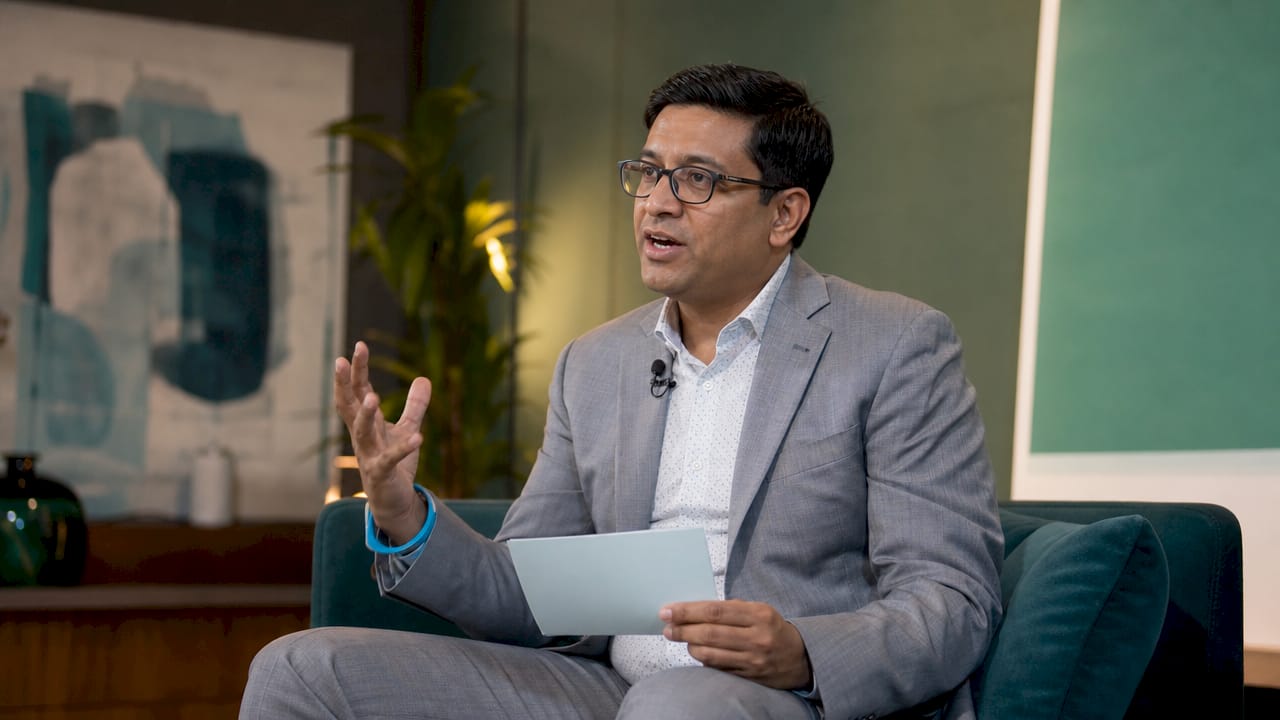
The spokesperson’s job is not simply to answer questions. It is to deliver key messages while maintaining narrative consistency across every media channel, from live television to podcast interviews to written press statements. That consistency is what builds credibility over time.
The role is also distinct from being a public figure or a company executive. A spokesperson may be a General Counsel, a communications director, a domain expert, or a trained professional hired specifically for the function. What defines the role is authorization, not title.
What are the core duties and responsibilities of a media spokesperson?
The daily responsibilities of a media spokesperson cover a wide range of communication tasks. The most visible duties include:
- Conducting media interviews, press conferences, and live broadcast appearances
- Collaborating with legal, communications, and executive teams to align messaging
- Managing incoming journalist inquiries and responding to breaking news shifts
- Drafting and delivering official statements on behalf of the organization
- Maintaining a strict zero tolerance for speculation in all official communications
Each of these duties requires preparation, not improvisation. A spokesperson who speculates on live television creates legal exposure and reputational risk simultaneously.
Collaboration with legal teams is especially critical in regulated industries. Attorneys review statements before release to prevent admissions of liability. Communications teams then shape those approved statements into language the public can understand and trust.
Pro Tip: Before any media appearance, confirm with your legal and communications teams which topics are off-limits and which facts are approved for public release. Knowing your boundaries in advance prevents costly on-camera mistakes.
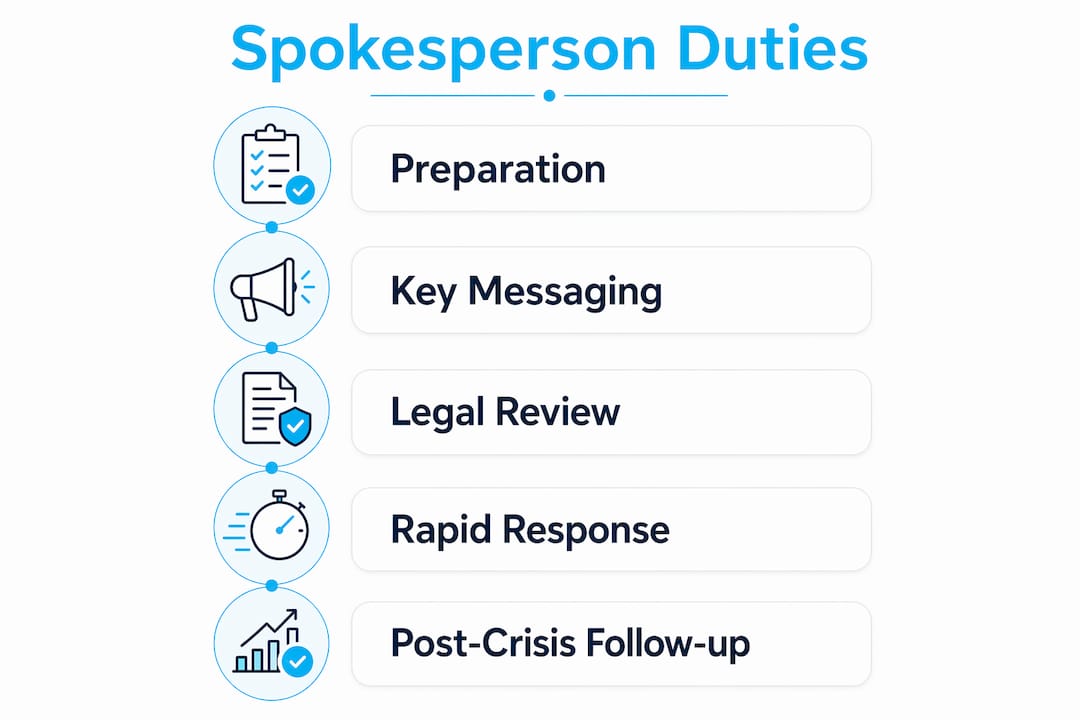
Rapid response is another core duty. When news breaks that affects the organization, the spokesperson must be ready to engage quickly. Delay reads as evasion. A prepared spokesperson with pre-approved holding statements can respond within minutes while the full message is being finalized.
How does the role of a media spokesperson differ in crisis communication?
Crisis communication places the spokesperson under sustained, high-pressure media scrutiny that routine interviews do not. Crisis spokespersons may remain in front of cameras for days or weeks, fielding repeated questions as facts evolve.
The most important distinction in a crisis is authority. A crisis spokesperson must have the actual power to commit the organization to actions, not just words. Saying “we will investigate” means nothing if the spokesperson cannot guarantee that investigation happens. Journalists and the public recognize empty promises quickly.
The recommended communication sequence in a crisis follows a clear order:
- Acknowledge the human impact of the event before citing any data or corporate position
- State only confirmed facts, with no speculation about cause or liability
- Commit to a specific timeline for the next update
- Follow through on every commitment made in public
“Transparency involves presenting facts and showing empathy, which helps the spokesperson avoid being perceived as a corporate shield and builds trust.”
— Role of spokesperson in crisis
Post-crisis protocols are equally structured. Best practices mandate a debrief within 72 hours of a critical event, an AI record audit within two weeks to address digital misinformation, and a follow-up media engagement within 30 days to shape the ongoing narrative. Failing to return with progress information after a crisis reinforces negative impressions rather than correcting them.
What skills and qualities make an effective media spokesperson?
Effective spokespersons share a specific set of communication abilities that go well beyond comfort in front of a camera. The most critical qualities include:
- Clarity under pressure, including the ability to give short, quotable answers in live situations
- Empathy, specifically the ability to lead with human impact before corporate facts
- Durability, meaning the capacity to maintain composure across repeated or hostile questioning
- Technical knowledge paired with the ability to translate that knowledge into plain language
Technical bias is one of the most common spokesperson failures. Subject matter experts often default to industry jargon because they know the material deeply. Journalists and the public do not share that context. The spokesperson’s job is to make complex information accessible, not to demonstrate expertise through vocabulary.
Media training addresses this directly. Preparation is not about memorizing scripts. It is about understanding the boundaries of your authority and developing clear soundbites that communicate the core message without opening legal or reputational risk.
Pro Tip: Practice answering the three hardest questions a journalist could ask you. If you can answer those clearly and calmly, the rest of the interview becomes manageable.
Durability matters more than most professionals expect. A single press conference is manageable. A two-week media cycle during a product recall or legal dispute requires a spokesperson who can deliver the same message with the same composure on day fourteen as on day one.
How does the media spokesperson role integrate with PR and legal teams?
The spokesperson and the PR professional serve different functions, and confusing them creates operational problems. The spokesperson is the public face. The PR professional manages strategy behind the scenes, including media outreach, message development, and journalist relationships.
| Function | Spokesperson | PR / Communications Team |
|---|---|---|
| Public visibility | High, appears on camera and in quotes | Low, operates behind the scenes |
| Message delivery | Delivers approved messages directly | Develops and refines the messages |
| Legal coordination | Receives legal guidance, applies it | Coordinates legal review process |
| Media relationships | Responds to journalists | Cultivates journalist relationships |
| Crisis role | Primary public voice | Manages logistics and strategy |
Legal teams add a third layer. Attorneys review statements for liability exposure before the spokesperson delivers them. PR professionals then shape legally approved content into language that reads as human rather than corporate. The spokesperson delivers the final product.
This triangulation, where legal, PR, and spokesperson functions align, is what keeps organizations on message during complex, multi-department events. Executives who manage their own media without this structure frequently miss strategic opportunities or make statements that create unintended legal exposure. Understanding how media incentives affect coverage is also part of what PR teams bring to this collaboration.
Key takeaways
A media spokesperson is the authorized, public-facing voice of an organization, and the role requires authority, preparation, empathy, and close coordination with legal and PR teams to be effective.
| Point | Details |
|---|---|
| Core definition | A spokesperson is the single authorized voice delivering consistent messages across all media channels. |
| Crisis authority | Crisis spokespersons must have real power to commit the organization to actions, not just statements. |
| Post-crisis protocol | Best practices require a debrief within 72 hours, an AI record audit within two weeks, and follow-up media within 30 days. |
| Spokesperson vs. PR | The spokesperson delivers the message publicly; the PR team builds and manages the strategy behind it. |
| Skill priority | Empathy and clarity under pressure matter more than technical knowledge alone. |
What I’ve learned about choosing the right spokesperson
After years of working in media and public relations, the most consistent mistake I see organizations make is defaulting to the CEO as spokesperson in every situation. The CEO carries authority, but authority alone does not make someone effective under sustained media pressure.
The right spokesperson for a product liability crisis is often the General Counsel or the head of operations, not the chief executive. The right spokesperson for a scientific announcement is the lead researcher, not the communications director. Matching the person to the situation, based on their domain knowledge and their ability to endure repeated questioning, produces better outcomes than defaulting to hierarchy.
Empathy is the skill most organizations undervalue in spokesperson selection. Journalists and the public respond to human voice. A spokesperson who leads with acknowledgment of impact before citing corporate facts builds trust faster than one who leads with data. I have watched technically flawless statements fail because they felt cold. I have watched imperfect statements succeed because they felt honest.
The rise of AI-generated content also changes the spokesperson’s responsibilities. Digital misinformation can spread within hours of a crisis event. Spokespersons now need to be aware of what the AI record says about their organization, not just what journalists are reporting. That is a new skill set, and training for it is no longer optional.
— Ryan McCormick
Goldman McCormick PR and your media spokesperson strategy
Goldman McCormick PR has worked in media since 2010, founded by active and former media professionals who understand both sides of the camera.
The firm specializes in placing clients on television, radio, and in print, and that experience directly informs how Goldman McCormick PR prepares spokespersons for real media environments. Whether you need media coaching for a crisis situation, spokesperson training for a legal matter, or strategic communication planning for a public campaign, the team brings firsthand knowledge of what journalists look for and how narratives get shaped. Goldman McCormick PR’s work spans legal PR, cause advocacy, and nationally syndicated media, giving clients access to a network and a methodology built on actual media experience. Explore what professional spokesperson support looks like for your organization at Goldman McCormick PR.
FAQ
What does media spokesperson mean?
A media spokesperson is the officially authorized person who speaks on behalf of an organization to journalists and the public, delivering consistent, approved messages across all media channels.
What are the main responsibilities of a media spokesperson?
Core responsibilities include conducting media interviews, managing journalist inquiries, collaborating with legal and PR teams, and maintaining message consistency with zero tolerance for speculation in official statements.
Is the CEO always the best media spokesperson?
The CEO is not always the best choice. Selecting the right spokesperson depends on the situation, the spokesperson’s domain authority, and their ability to sustain media pressure over days or weeks.
How is a media spokesperson different from a PR professional?
The spokesperson delivers the public message directly to media. The PR professional manages the communication strategy, message development, and journalist relationships behind the scenes.
What happens after a crisis in terms of spokesperson duties?
Post-crisis duties include a debrief within 72 hours, an AI record audit within two weeks, and a follow-up media engagement within 30 days to support reputation recovery.