
Attorneys who rely solely on their website and social media to build a reputation are leaving serious visibility on the table. A publicist is defined as a professional who secures earned media coverage, expert bylines, and authoritative third-party placements that owned content simply cannot replicate. The 2026 Legal AI Visibility Report identifies a 24-month strategic window for law firms to establish editorial authority before AI-driven search results calcify around early movers. For criminal defense attorneys, personal injury litigators, and other high-stakes practitioners, understanding why attorneys need publicists is no longer optional. It is the difference between being found and being invisible.
Why attorneys need publicists to win earned media
Earned media is coverage you did not pay for and cannot fully control. That is exactly what makes it credible. Owned content alone leaves firms invisible to AI engines that prioritize trusted external sources over self-published material. When ChatGPT, Perplexity, or Google’s AI Overviews cite a legal expert, they pull from publications like The Wall Street Journal, Law360, Forbes, and local television news, not from a firm’s blog.
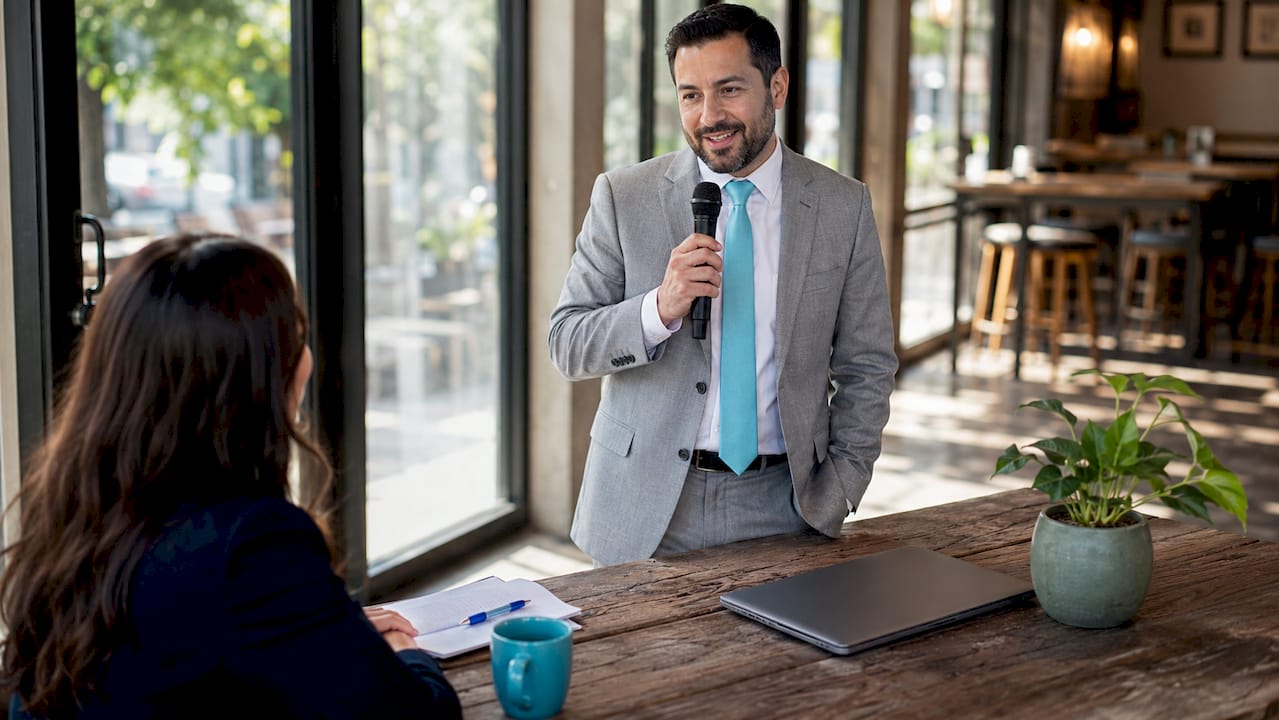
A publicist’s core job is to place attorneys inside those trusted publications. That means pitching expert commentary on breaking legal news, securing television appearances, and landing bylined articles in recognized legal directories. Each placement builds what the industry calls “citation authority,” the signal AI systems use to determine which attorneys are worth surfacing.
Here is what a publicist-driven earned media program typically delivers for attorneys:
- Television and radio appearances on local and national news programs that position the attorney as the go-to expert in their practice area
- Expert commentary placements in publications like ABA Journal, National Law Review, and regional newspapers
- Bylined articles in legal directories and trade outlets that build long-term citation authority
- Podcast features on nationally distributed programs, which news commentators and media figures increasingly use to shape public trust in professional voices
Pro Tip: Ask any publicist you interview to show you a media placement log from a current legal client. Concrete placements in named outlets tell you more than any pitch deck.
How publicists manage attorney reputation and ethical challenges
Reputation management for attorneys is not the same as reputation management for a restaurant or a retail brand. The American Bar Association’s Model Rules 7.1 and 1.6 govern what attorneys can say publicly about client matters. Responding to negative reviews requires careful navigation to avoid violating client confidentiality or advertising ethics. A publicist who does not understand these constraints can create a bar complaint while trying to fix a Google rating.
A skilled legal publicist handles this complexity through a structured process:
- Monitor all relevant platforms. Effective legal reputation management requires multi-platform monitoring across Google, Avvo, and Martindale, with jurisdiction-specific response strategies for each.
- Contest opposing-party reviews. Lawyers commonly overlook the fact that opposing-party reviews can be contested as non-client feedback on major platforms. A publicist knows the dispute process and pursues removal strategically.
- Solicit reviews the right way. The most effective review request is a personalized email sent within two weeks of matter resolution, not on the final billing day. Timing and tone matter for both authenticity and compliance.
- Respond to hostile reviews professionally. A calm, ethical response to a negative review signals maturity to prospective clients without disclosing confidential information.
- Maintain review velocity. Competitive law firms need 3–5 Google reviews per month to maintain search rankings against active competitors. That pace requires a system, not a one-time push.
Pro Tip: Never respond to a negative review with case-specific details, even if the reviewer is factually wrong. A publicist can draft a compliant, professional response that protects you without confirming or denying anything.
DIY PR vs. hiring a publicist: what attorneys actually get
Many attorneys attempt to manage their own public relations. The results are predictably inconsistent. The table below shows where self-managed PR typically breaks down compared to professional publicist support.
| Area | DIY PR | Professional publicist |
|---|---|---|
| Media contacts | Cold outreach to general reporters | Established relationships with legal beat journalists |
| Placement consistency | Sporadic, reactive | Proactive calendar with regular placements |
| Ethical compliance | High risk of missteps | Trained in ABA advertising and confidentiality rules |
| AI citation growth | Minimal without external sources | Structured to build citation authority over time |
| Crisis response | Slow and often emotional | Prepared, strategic, and legally aware |
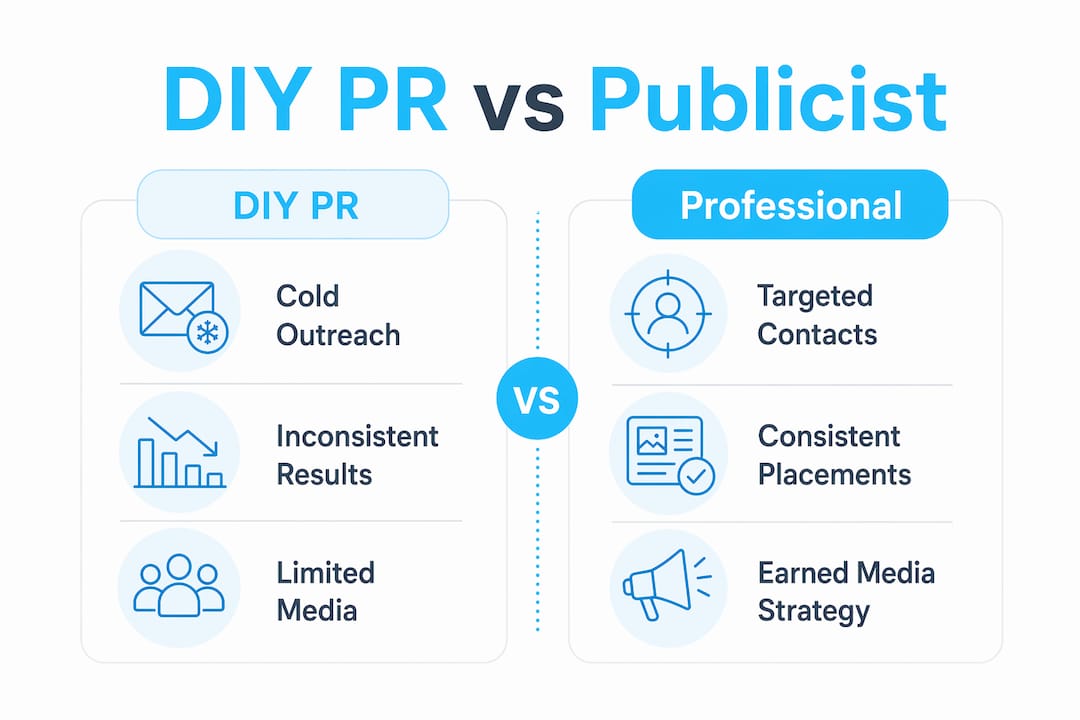
Internal marketing teams often lack the specific network, strategy, and consistency for earned media that publicists provide. That gap is not a criticism of in-house staff. It reflects a fundamental difference in skill sets. A marketing coordinator can manage a firm’s LinkedIn page. A publicist can get the managing partner quoted in The New York Times the morning after a landmark verdict.
The benefits of publicists for attorneys also extend to crisis situations. When a high-profile case draws unwanted media attention, a publicist controls the narrative before reporters fill the void with speculation.
How to work effectively with a publicist as an attorney
Getting value from a publicist requires preparation on your end. The attorney-publicist relationship works best when both sides operate from a shared strategy.
- Define your practice area focus. A criminal defense attorney in New York has different media opportunities than an estate planning attorney in Phoenix. Your publicist needs to know exactly where you want to be known and for what.
- Build a proactive earned media calendar. Plan placements around predictable news cycles: legislative changes, high-profile verdicts, and seasonal legal topics. Staying ahead of trends in 2026 means anticipating media demand before it peaks.
- Use AI sentiment monitoring. Building proactive reputation capital with AI sentiment monitoring and ethical scripts enables law firms to control narratives during high-profile cases. Ask your publicist which tools they use to track your online sentiment.
- Coordinate PR with your digital presence. Firms must coordinate PR with structured content, schema markup, LinkedIn discipline, and editorial bylines to influence AI citation authorities. Your publicist and your web team need to operate from the same playbook.
- Measure what matters. Track media placements per quarter, AI citation appearances, Google star rating trends, and review velocity. These four metrics tell you whether your attorney public relations strategy is working.
Pro Tip: Schedule a monthly 30-minute call with your publicist to review placements, flag upcoming cases that may attract media attention, and adjust your outreach calendar. Consistency in communication produces consistency in results.
Key takeaways
Attorneys who invest in professional publicists build earned media authority that AI search engines, prospective clients, and opposing counsel all recognize as credible.
| Point | Details |
|---|---|
| Earned media beats owned content | AI engines cite trusted external publications, not firm blogs or social media posts. |
| Ethical compliance requires expertise | ABA Model Rules 7.1 and 1.6 make legal reputation management fundamentally different from standard ORM. |
| Review velocity is a ranking factor | Maintaining 3–5 new Google reviews per month keeps competitive law firms visible in search results. |
| DIY PR has a clear ceiling | Internal teams lack the media contacts and consistency that professional publicists provide. |
| A 24-month window is open now | Law firms that establish editorial authority in 2026 will dominate AI citation footprints for years ahead. |
The uncomfortable truth about attorneys who skip PR
I have worked in media and public relations long enough to watch the same pattern repeat. An attorney builds a strong practice through referrals, wins significant cases, and assumes their reputation will take care of itself. Then a competitor with a less impressive track record starts appearing on television, gets quoted in major publications, and suddenly owns the conversation in that practice area. The better attorney is invisible. The one with a publicist is the expert.
AI search has made this dynamic more severe, not less. When a prospective client types a legal question into Perplexity or asks ChatGPT for a criminal defense attorney recommendation, the system does not search for the most experienced lawyer. It surfaces the most cited one. Citations come from earned media. Earned media comes from publicists. The logic is direct.
Attorneys who treat PR as a luxury are making a strategic error that compounds over time. Every month without earned media placements is a month a competitor is building citation authority you will have to work twice as hard to overcome. The 24-month window identified in the 2026 Legal AI Visibility Report is not a marketing talking point. It is a structural reality of how AI systems learn to trust sources.
— Ryan McCormick
How Goldman McCormick PR helps attorneys build lasting visibility
Goldman McCormick PR has specialized in legal public relations since 2014, when the New York Observer named it one of the top five PR agencies in the country for legal clients. Named by Forbes Magazine as one of America’s Best PR Firms for 2021, Goldman McCormick PR places attorneys on television, radio, and in print publications with the consistency that builds real citation authority. The firm’s founders come directly from the media industry, which means they understand what reporters need and how to position attorneys as the credible sources those reporters call first. If you are ready to build a media presence that converts prospective clients and dominates AI-driven search, explore Goldman McCormick PR’s attorney-focused services today.
FAQ
Why do attorneys need publicists instead of just marketing teams?
Publicists provide specialized media contacts, earned media strategy, and crisis communication skills that internal marketing teams typically do not have. The distinction matters because AI search engines prioritize external citations over owned content.
How do publicists help with lawyer reputation management?
Publicists monitor platforms like Google, Avvo, and Martindale, contest opposing-party reviews, and draft ABA-compliant responses to negative feedback. They also build proactive review solicitation systems to maintain the 3–5 monthly reviews competitive firms need.
What is the impact of PR on law firm AI search visibility?
Law firms that establish earned media authority through publicists are more likely to be cited by AI engines like ChatGPT and Perplexity. The 2026 Legal AI Visibility Report identifies a 24-month window to build that footprint before competitors lock in their positions.
How quickly can an attorney expect results from hiring a publicist?
Media placements typically begin within the first 60–90 days of an active publicist engagement. Citation authority and AI visibility build over 6–12 months of consistent earned media activity.
Can a publicist help during a high-profile criminal defense case?
A publicist is most valuable during high-profile cases, when media demand is highest and narrative control is most critical. Proactive reputation capital built before a case breaks gives attorneys the credibility to shape coverage rather than react to it.