
New York’s legal media market is the largest in the United States, with $14.5 million in monthly advertising spend concentrated heavily in broadcast, radio, and cable. This new york legal media landscape overview covers every layer of that market: where the money flows, which outlets actually move the needle, how AI regulation is reshaping content compliance, and where the real opportunities sit for legal professionals and media analysts who want to stay ahead.
1. how ad spend is allocated across new york legal media
The channel breakdown tells a clear story. Broadcast commands 51% of New York’s legal ad budget, radio takes 29%, cable holds 9%, and Connected TV accounts for just 11%. That distribution reflects legacy habits more than current audience behavior.

Compare that to Los Angeles, where CTV reaches 33% of legal ad spend. New York firms are leaving a significant targeting advantage on the table. CTV delivers household-level precision that broadcast simply cannot match.
| Channel | New York Share | Los Angeles Share |
|---|---|---|
| Broadcast | 51% | Lower |
| Radio | 29% | Lower |
| Cable | 9% | Comparable |
| Connected TV | 11% | 33% |
The gap between New York and LA on CTV is not a minor variance. It signals that New York legal advertisers are slower to adopt digital channels, which creates an opening for firms willing to move first.
Pro Tip: A budget shift of just 3–5 percentage points from broadcast to CTV can produce outsized returns because CTV inventory in New York remains underpriced relative to its targeting capability.
2. who controls new york legal advertising spend
No single firm dominates the New York legal ad market, but Morgan and Morgan controls 13.3% of legal ad spend in the market. That concentration matters because it shows the market is competitive but not locked up.
Firms outside the top tier can still carve out meaningful presence. The key is channel selection. A mid-size firm that moves aggressively into CTV while competitors stay on broadcast can punch above its weight class. You do not need Morgan and Morgan’s budget to outperform them in a specific channel.
Market fragmentation also means no single outlet or channel reaches the full legal audience. That reality forces a multi-channel strategy on every serious advertiser in the New York legal news landscape.
3. the rise of niche legal publications and newsletters
Legacy outlets like The Wall Street Journal and The New York Times still carry prestige, but they are no longer the primary drivers of influence for legal audiences. Legal media influence is shifting toward specialized newsletters and trade publications that speak directly to practitioners.
Outlets like Legaltech News and Law Journal Newsletters reach smaller but far more engaged audiences. A placement in a niche legal newsletter often generates more direct response from decision-makers than a mention in a general-interest newspaper. Specificity beats scale when your audience is attorneys, general counsel, or compliance officers.
This shift creates both pressure and opportunity for legal communications professionals:
- Niche outlets require tailored pitches, not mass press releases
- Editors at specialized publications expect source credibility and deep subject knowledge
- Consistent presence in practitioner-focused media builds long-term authority faster than sporadic mainstream coverage
“Legal media influence is shifting to smaller, highly specialized outlets and newsletters, requiring more personalized and strategic outreach.” — Law.com
Pro Tip: Build a short list of five to eight niche legal publications that cover your practice area. Pitch those editors with original data or case-specific insight, not announcements.
4. why journalist relationships now drive coverage
Journalists in legal media are resource-constrained and prioritize trusted sources over cold pitches. Editorial teams are leaner than they were five years ago. That means fewer staff to sift through generic press releases, and a much higher bar for what earns a callback.
The firms that consistently get covered are the ones that have invested in relationships before they needed coverage. A reporter who already knows you as a reliable source will call you for comment. A reporter who only hears from you when you want publicity will not.
Media relations now favor practitioners who position themselves as ongoing resources rather than transactional news sources. That distinction is the difference between a firm that gets quoted regularly and one that sends press releases into a void.
5. how the NY FAIR news act changes legal content compliance
The New York state legislature passed the NY FAIR News Act on June 8, 2026, mandating disclosure of AI-generated news content by news organizations. Enforcement could begin as early as september 2026, pending the Governor’s signature.
For legal media producers and law firm communications teams, the compliance requirements are specific:
- Any substantially AI-generated content must carry a clear disclosure label
- Editorial workflows must include a human-in-the-loop review stage before publication
- Documentation of AI use in content production must be maintained for compliance audits
- Failure to disclose creates both reputational and legal exposure
This regulation is part of a broader national trend toward AI transparency in media. New York is simply moving faster than most states. Legal firms that treat this as a compliance checkbox will fall behind firms that treat it as a credibility signal.
Pro Tip: Build your AI disclosure workflow now, before enforcement begins. Firms that implement human-review stages early will have a documented compliance record that protects them if regulators audit retroactively.
6. challenges facing new york legal communications teams
Public scrutiny on New York’s judiciary has intensified in 2026. Debates over politicized judicial appointments have drawn sustained media attention, raising the stakes for any legal firm that wants to be seen as credible and independent.
That scrutiny creates a specific communications challenge. Firms associated with controversial judicial processes face reputational risk if their media strategy is not grounded in transparency. Credibility is not a soft asset in this environment. It is a competitive one.
The table below maps the core challenges against the strategic responses that work in the current New York legal news landscape:
| Challenge | Strategic Response |
|---|---|
| Shrinking newsroom resources | Build direct journalist relationships before you need coverage |
| Audience fragmentation | Diversify across broadcast, CTV, and niche publications |
| AI content regulation | Implement human-review workflows and disclosure labels now |
| Judicial scrutiny and political coverage | Lead with transparency and data-backed communications |
| CTV underinvestment vs. competitors | Reallocate 3–5% of broadcast budget to CTV immediately |
7. opportunities in digital and emerging media channels
Compliance with AI disclosure legislation will become a competitive differentiator for legal media content providers that move early. The firms that build transparent, human-reviewed content pipelines now will be positioned as trustworthy sources when enforcement begins.
CTV represents the clearest underexploited channel in the New York market. With only 11% of current legal ad spend directed there, the inventory is relatively affordable and the targeting is precise. Legal professionals who understand current legal media spending patterns can identify exactly where competitors are not spending and move into those gaps.
Niche digital platforms and practitioner-focused newsletters round out the opportunity set. These channels require less budget than broadcast but deliver higher-quality audience engagement. For firms that cannot outspend Morgan and Morgan on television, they represent the most direct path to influence with the audiences that matter most.
Key takeaways
New York’s legal media market rewards firms that combine traditional broadcast presence with targeted investment in CTV, niche publications, and AI-compliant content workflows.
| Point | Details |
|---|---|
| Broadcast still dominates | 51% of New York’s $14.5M monthly legal ad spend goes to broadcast, but that share is declining. |
| CTV is underused | New York allocates only 11% to CTV versus 33% in Los Angeles, creating a first-mover advantage. |
| Niche outlets drive engagement | Specialized legal newsletters and trade publications outperform legacy outlets for practitioner audiences. |
| AI compliance is now mandatory | The NY FAIR News Act requires disclosure and human-review workflows for AI-generated legal content. |
| Relationships beat press releases | Resource-constrained journalists prioritize trusted, ongoing sources over transactional pitches. |
What i’ve learned about new york legal media after 15 years
The firms that struggle most in this market are the ones that treat media as a transaction. They send a press release when they win a case, go quiet for six months, then wonder why no one calls them for comment when a major story breaks.
The New York legal media environment does not reward that approach. It rewards consistency. The reporters covering legal issues at Law.com, the New York Law Journal, and the niche newsletters that practitioners actually read are not waiting for your announcement. They are building their source lists from the people who show up reliably, offer real insight, and do not waste their time with generic pitches.
I have also watched firms dramatically underestimate the CTV opportunity. The data is not ambiguous. New York legal advertisers are spending at 2019 levels on a 2026 channel mix. The firms that move budget toward CTV now are not taking a risk. They are taking market share from competitors who are too slow to adapt.
The AI compliance piece is where I see the most complacency. The NY FAIR News Act is not a distant concern. Enforcement could begin in september 2026. Firms that have not built human-review stages into their content workflows are not just non-compliant. They are building a credibility liability that will be very hard to unwind once it surfaces publicly.
The practical path forward is straightforward: invest in journalist relationships before you need them, shift budget toward CTV and niche digital, and treat AI disclosure as a trust-building tool rather than a regulatory burden.
— Ryan McCormick
How goldman McCormick PR helps you master new york legal media
Goldman McCormick PR has specialized in legal PR and media outreach in New York since 2010. Named by Forbes Magazine as one of America’s Best PR Firms for 2021, and cited by the New York Observer as a top five legal PR agency, the firm brings direct media relationships and channel expertise that most legal communications teams cannot build internally.
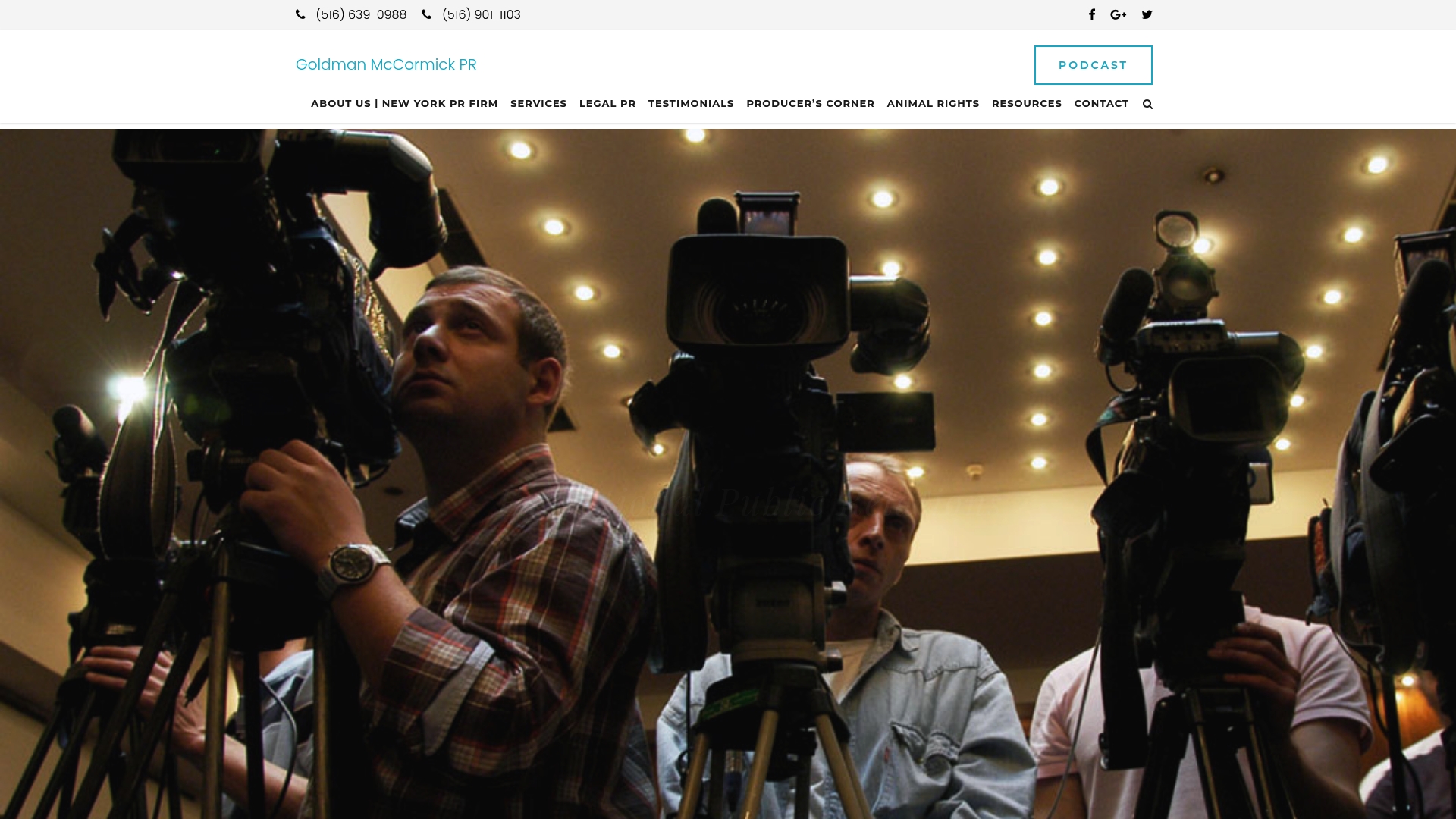
Goldman McCormick PR helps legal professionals navigate advertising spend decisions, build credibility in niche legal publications, and implement AI content compliance workflows that satisfy the NY FAIR News Act. Whether you need broadcast placement, CTV strategy, or a media relationship program that actually generates coverage, the firm delivers results grounded in real market knowledge.
FAQ
What is the largest legal advertising market in the u.s.?
New York is the largest legal advertising market in the United States, with $14.5 million in monthly spend. Broadcast television accounts for 51% of that total.
How does new york’s CTV spend compare to other markets?
New York allocates 11% of legal ad spend to Connected TV, compared to 33% in Los Angeles. That gap represents a significant targeting and cost-efficiency opportunity for New York legal advertisers.
What does the NY FAIR news act require?
The NY FAIR News Act, passed june 8, 2026, requires news organizations to disclose AI-generated content and implement human-review workflows. Enforcement could begin as early as september 2026.
Why are niche legal publications more effective than legacy outlets?
Niche publications like Legaltech News and Law Journal Newsletters reach smaller but more engaged practitioner audiences. Decision-makers in legal fields respond more directly to specialized coverage than to general-interest media mentions.
How should legal firms approach media relations in 2026?
Legal firms should prioritize building ongoing journalist relationships rather than sending transactional press releases. Resource-constrained editorial teams at legal media outlets consistently favor trusted, credible sources they already know.