
The strongest reading list mixes three layers: a national news outlet like the ABA Journal or Law for daily coverage, a business-of-law source like Bloomberg Law for deal and firm-level tracking, and one or two specialty newsletters for your practice area. Most law students and many recent graduates get free access to Westlaw, Lexis, and Bloomberg Law through their school, though graduate accounts typically run for six months at roughly 60 hours a month on Westlaw and can’t be used for billable client work.
TL;DR:
- Most legal professionals should align their reading with their role, focusing on docket alerts for litigators, regulatory signals for in-house counsel, and policy analysis for academics.
- Mainstream trade outlets like ABA Journal, Law.com, and Law360 are essential, but they should be supplemented with specialty newsletters for actionable insights relevant to specific practice areas.
- Law school provides limited, non-billable access to Westlaw, Lexis, and Bloomberg Law, with graduate accounts typically lasting six months at about 60 hours per month.
- Personal workflows should include daily headline skimming, weekly in-depth specialty digest reading, and monthly comprehensive reviews to stay current without overwhelm.
- Building relationships and understanding what signals editors value increase chances for coverage in top outlets, which enhances credibility and referral potential.
Table of Contents
- The Legal Trade Publications Every Practitioner Should Know
- How to Choose the Right Publications and Newsletters for Your Role
- Accessing Paywalled Legal Research and Understanding Student Access Rules
- Specialty Newsletters and Independent Voices Worth Your Inbox Space
- Building a Reading Routine That Actually Sticks
- Why Trade Coverage Matters More Than Most Attorneys Assume
- How Goldman McCormick PR Gets Attorneys Into the Outlets That Matter
- Sources
- FAQ
The Legal Trade Publications Every Practitioner Should Know
Legal trade publications aren’t interchangeable. Some chase breaking news, some track the business side of firms, and some exist purely to translate technical shifts into something a busy lawyer can act on before lunch. Here’s how the major players sort out, grouped by what they actually do best.
1. ABA Journal
The ABA Journal is the closest thing the profession has to a paper of record. It covers ethics rulings, bar developments, and broad practice trends with a mix of free web content and a members-only print magazine. Anyone who wants a single, dependable pulse check on the profession should start here.
2. Law.com
Law.com aggregates ALM’s network of regional and specialty titles into one feed, making it the default source for firm moves, verdicts, and the business of practicing law. Access runs on a metered paywall, with a handful of free articles before a subscription kicks in. Litigators and firm leadership tend to get the most out of it.
3. Law360
Law360 built its reputation on speed, often breaking case filings and settlement news within hours. It’s paywalled and priced for firms and corporate legal departments rather than solo practitioners, but the practice-area newsletters (antitrust, employment, tax) are genuinely granular. If your job depends on knowing about a ruling before opposing counsel does, this is the tool.
4. Bloomberg Law
Bloomberg Law blends primary-source research tools with original reporting, which makes it as much a research platform as a publication. Its subscription model is enterprise-focused, sold to firms and corporate departments rather than individuals. In-house counsel and transactional lawyers rely on it for regulatory tracking and docket alerts as much as for news.
5. The American Lawyer
The American Lawyer, another ALM title, covers the business of Big Law: partner compensation, lateral moves, and firm financials. It’s the publication managing partners read to benchmark against competitors. Access is bundled into Law.com subscriptions rather than sold separately.
6. National Law Review
The National Law Review runs on a different model entirely: it republishes law firm client alerts and bylined analysis, free to read, organized by topic and jurisdiction. It’s not original reporting, but as a jurisdiction-level index of what firms are telling their clients right now, it’s hard to beat for practitioners doing quick research on a niche regulatory question.
7. Legaltech News
Legaltech News tracks vendor releases, e-discovery developments, and AI adoption inside law firms. Coverage is free with some premium features, and it’s essential reading for anyone managing a firm’s technology stack or advising clients on tech-related risk.
8. Law Technology Today
Published by the ABA’s Legal Technology Resource Center, Law Technology Today leans more practical than Legaltech News, publishing how-to guidance on tools and workflows rather than industry news. It’s free and updated less frequently, making it better suited to a monthly read than a daily habit.
9. The Crime Report
The Crime Report covers criminal justice policy, sentencing reform, and prosecutorial trends with a journalistic depth that general legal outlets rarely match. Criminal defense attorneys, policy academics, and reporters covering the justice system get the most value here. It’s free and updated on a rolling basis rather than a fixed schedule.
10. Legal Desire
Legal Desire runs both a website and a free weekly newsletter aimed at practitioners and legal ops professionals, covering deals, firm moves, and jurisdiction-specific regulatory shifts in a condensed format. It won’t replace a subscription-based outlet for depth, but as a scannable weekly touchpoint it earns its spot in a Monday morning inbox.
How to Choose the Right Publications and Newsletters for Your Role
Your job determines your reading list more than any “best of” ranking does. A litigator needs docket-level alerts and jurisdiction-specific rulings; in-house counsel needs regulatory tracking and risk signals; academics need law review coverage and policy analysis; students need free access and broad orientation before specialization.
Run every candidate publication through this checklist before adding it to your rotation:
- Editorial focus: Does it cover your practice area specifically, or is legal news incidental to a broader beat?
- Jurisdiction: Federal, state, or multi-jurisdictional? A national outlet won’t catch a state bar rule change.
- Frequency: Daily outlets create noise; weekly digests create signal. Pick based on your actual reading capacity, not aspiration.
- Actionability: Does the content change what you do Monday morning, or is it background reading?
- Subscription model: Free, freemium, or paywalled? Know what your firm or school already provides before paying out of pocket.
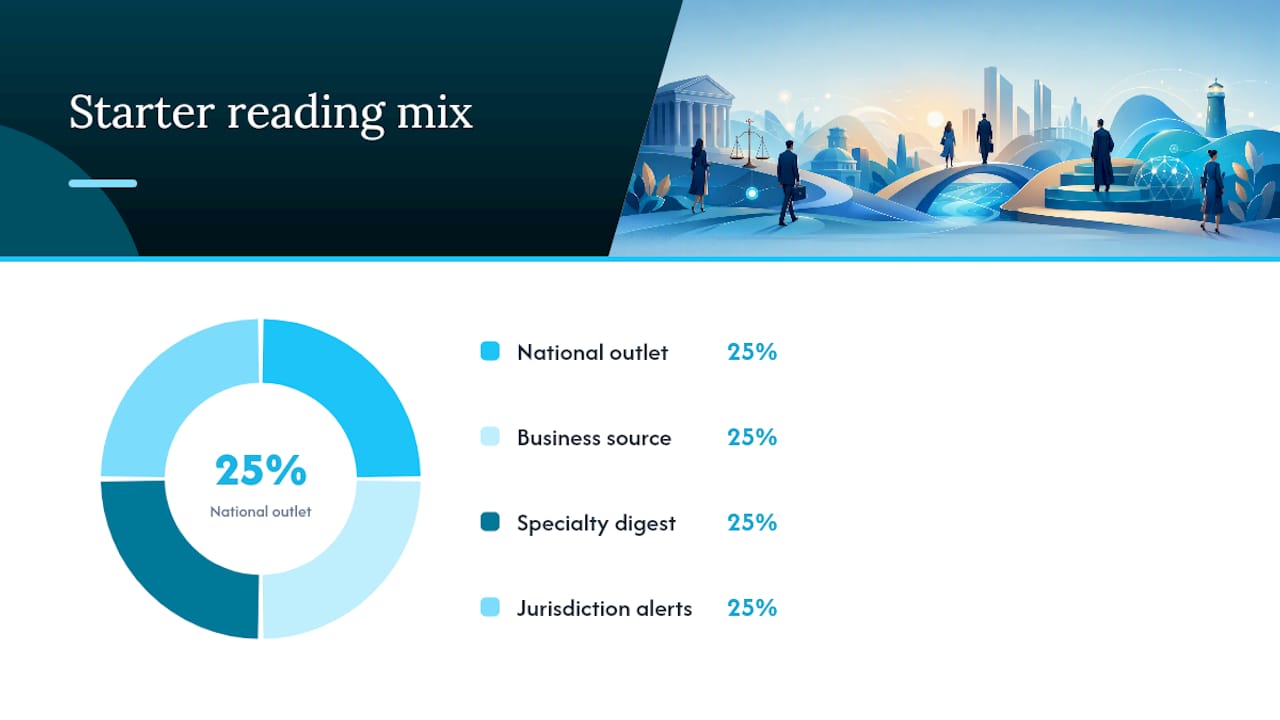
A workable starter mix looks like one national outlet (ABA Journal or Law.com), one business-of-law source (Bloomberg Law or The American Lawyer), one specialty digest matched to your practice area, and one primary-source alert service for your jurisdiction.
Pro Tip: Don’t subscribe to five outlets in your first week. Add one at a time, give it a month, and drop anything you’re consistently deleting unread.
Accessing Paywalled Legal Research and Understanding Student Access Rules
Most major legal databases run on institutional pricing that puts them out of reach for individual subscribers, but academic access rules are more generous than most students realize. Law schools typically grant full access to Westlaw, Lexis, and Bloomberg Law for coursework and non-commercial research throughout enrollment.
After graduation, that access doesn’t disappear immediately. Westlaw’s Grad Elite program commonly provides about six months of access at roughly 60 hours per month, and Bloomberg Law’s summer or graduate access can run unrestricted if a student registers before graduation, depending on institutional policy. None of these accounts can be used for billable client work.
Practical steps for getting the most out of this window:
- Opt into grad access through your law school’s library portal before you graduate, not after.
- Use library terminals if your firm hasn’t provisioned a subscription yet.
- Ask your employer directly about firm-wide database access during onboarding.
- Set up saved searches and alerts before your student credentials expire, so you don’t lose tracked issues.
Without institutional access, free newsletters, trade portals, and public library legal databases fill the gap reasonably well for general awareness, even if they can’t replace full-text primary-source research.
Specialty Newsletters and Independent Voices Worth Your Inbox Space
Broad trade outlets are good at telling you something happened. Specialty newsletters are better at telling you what to do about it, which is why practitioners increasingly treat them as the higher-value layer of a reading list.
- Legal Desire Insider delivers a free weekly roundup of deals, firm moves, and jurisdiction-specific regulatory shifts, built around filtering for developments that actually change how the profession works rather than reporting every minor update.
- Original Jurisdiction, David Lat’s Substack, offers insider analysis on the legal industry and judiciary that mainstream outlets often miss, drawing on his background covering the profession from the inside.
- Legal AI Governance’s newsletter focuses specifically on AI compliance, malpractice carrier guidance, and court-order changes tied to legal technology, the kind of “documentation-actionable” content that changes what you file, not just what you know.
When vetting any niche newsletter, check whether the writer cites primary sources, discloses conflicts of interest, and updates on a predictable schedule, as explained in the LLM SEO playbook for marketers and SEOs. Diversify across at least one independent voice and one institutional outlet so you’re not relying on a single editorial lens.
Building a Reading Routine That Actually Sticks
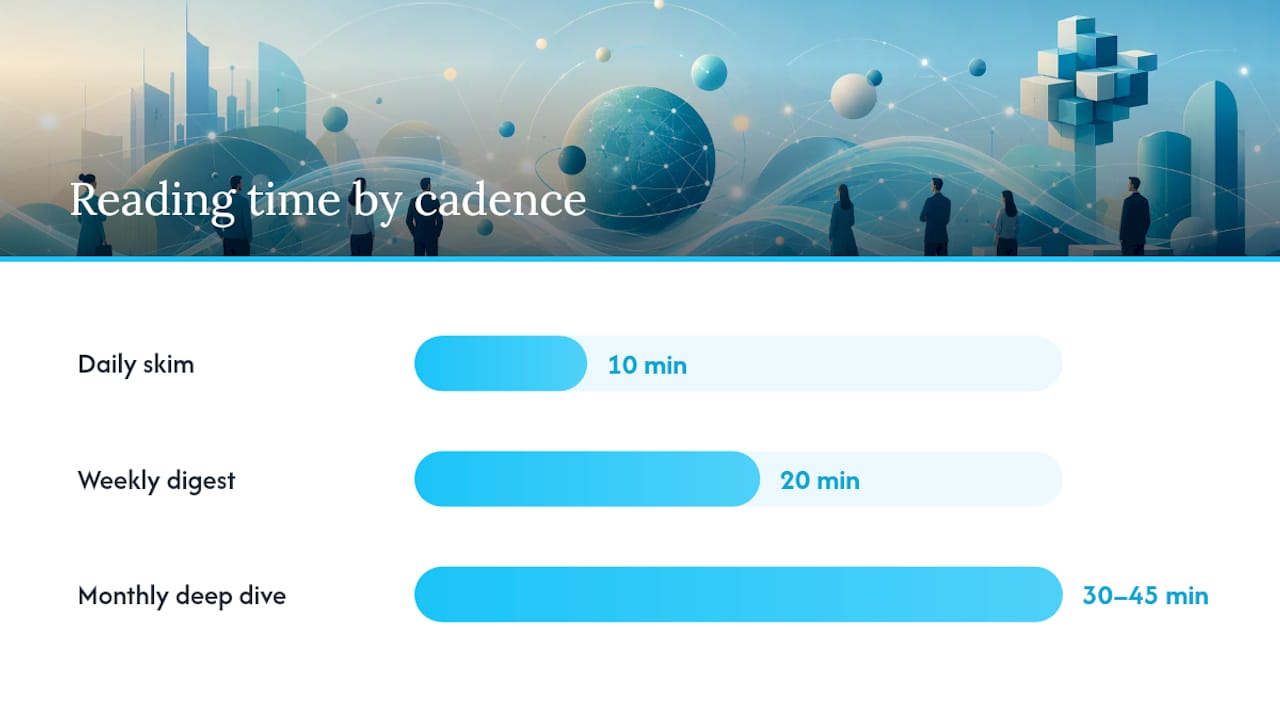
A three-tier routine keeps you current without drowning your inbox. Daily, skim headlines from one or two national outlets. Weekly, read your specialty digest in full. Monthly, do a deeper read of a business-of-law piece or a long-form analysis you flagged during the week.
- Daily skim (10 minutes): Scan ABA Journal or Law.com headlines for anything touching your practice area.
- Weekly digest (20 minutes): Read your specialty newsletter fully, since it’s already filtered for relevance.
- Monthly deep dive (30 to 45 minutes): Revisit saved articles on firm trends, regulatory shifts, or technology adoption.
Set up RSS feeds, saved searches inside Law.com or Law360, and Google Alerts for your specific practice terms so updates come to you instead of requiring a daily search.
Pro Tip: Prioritize anything touching malpractice carrier guidance or jurisdictional court-order changes over general trend pieces. Those items carry compliance deadlines; trend pieces don’t.
Why Trade Coverage Matters More Than Most Attorneys Assume
Editors at these outlets look for the same signals every time: original data, primary-source documents, a quotable client or case detail, and a timely news hook. Attorneys who understand that framework land coverage far more often than those who pitch a general “I’m available for interviews” note.
Trade press coverage compounds over time. A single well-placed byline in a specialty outlet does more for referral credibility than a dozen generic press releases, because readers already trust the publication’s editorial filter. That’s the real value of legal trade publications: they lend their credibility to your name.
Knowing when a story is genuinely newsworthy versus when it needs professional shaping is where most attorneys get stuck. That’s usually the point to bring in outside help rather than pitch cold.
— Ryan McCormick
How Goldman McCormick PR Gets Attorneys Into the Outlets That Matter
Getting placed in outlets like the ABA Journal, Law.com, or Bloomberg Law rarely happens through a cold email. It happens through relationships built by people who worked inside newsrooms and know exactly what an editor needs before they’ll return a call. The agency was founded by individuals with experience in television and radio production and journalism, which means pitches go out with an understanding of what actually gets read, not just what a client wants said.
If you’re a criminal defense attorney or legal professional trying to land a bylined piece in a trade journal, our articles and editorials service handles the writing and placement from start to finish. Need to prepare a spokesperson before a reporter calls back? Our media training sessions cover exactly that. And when a story needs to break fast across TV, radio, and print simultaneously, our traditional media placements are built for that kind of push. You can reach out through a public relations firm’s site to discuss what coverage would move the needle for your practice.
Sources
- Summer & Post-Graduate Access to Bloomberg, Lexis & Westlaw: What You Need to Know | Thomas J. Meskill Law Library | School of Law | University of Connecticut
- Law
FAQ
Who Are the Top Legal Publishers?
ALM (publisher of Law.com and The American Lawyer), the American Bar Association (ABA Journal), and Bloomberg Law are the largest legal publishers by reach and institutional adoption. Law360 and Legaltech News also carry significant weight for practice-area news and legal technology coverage, respectively.
Can I Access Westlaw for Free?
Law students typically get free Westlaw access through their school for coursework, and many graduates qualify for Grad Elite access, generally around six months at 60 hours per month, by opting in before graduation. Outside of school programs, most practitioners access Westlaw through employer-provided subscriptions rather than free public access.
What Is the Best Legal Magazine?
There’s no single best option since it depends on your role, but the ABA Journal is the most widely read general-interest legal magazine, while The American Lawyer leads for business-of-law coverage among firm leadership. Litigators and specialists often get more practical value from a focused trade outlet or specialty newsletter than from either.
What Are the Best Legal Newsletters to Subscribe To?
Legal Desire Insider offers a free weekly digest of deals and regulatory shifts across jurisdictions, while niche options like the Legal AI Governance newsletter focus specifically on actionable compliance and carrier guidance. Independent writers like David Lat on Substack add analytical depth that complements rather than replaces institutional newsletters.
How Do I Stay Current Without Reading Everything?
Build a three-tier routine: skim one national outlet daily, read a specialty newsletter weekly, and do a deeper monthly read on business-of-law trends. Setting up saved searches and alerts on outlets like Law360 or Law.com does most of the filtering work for you automatically.