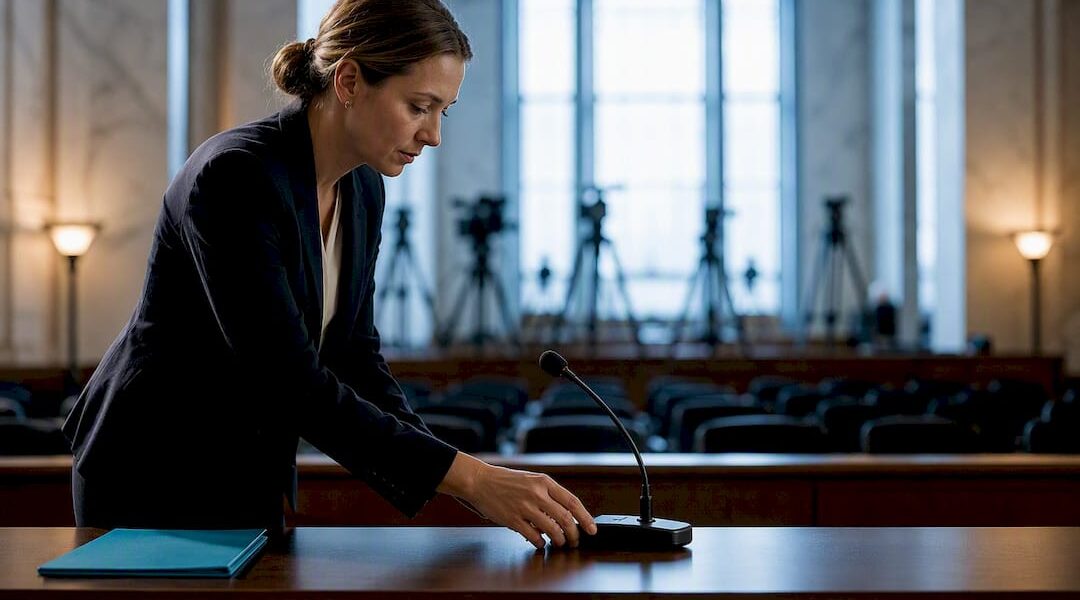
Only hold a press conference when the story needs live access, visuals, or coordinated Q&A. If it does, run a three-stage plan: before, during, and after. The five levers that decide whether coverage turns out accurate are message, timing, venue, speaker selection, and the press kit. Schedule mid-morning on a Tuesday through Thursday, and start building your press kit at least a week out.
TL;DR:
- Holding a press conference is justified only when live access, visuals, or coordinated Q&A are essential, otherwise a well-crafted release suffices.
- Prepare at least a week in advance with a clear message map, and ensure the timing is mid-morning Tuesday through Thursday to maximize attendance.
- The event should have a small, rehearsed speaker lineup with a skilled moderator, and follow a strict minute-by-minute run-of-show to maintain focus and control.
- Send a media advisory a week before and a press release on the day of the event, while building a press kit with quotes, bios, images, and supporting data early.
- After the event, measure coverage accuracy and message retention, and follow up promptly to address errors, privacy concerns, or requests for additional interviews.
Table of Contents
- What Counts as Real Press Conference Planning?
- When and Where Should You Hold It?
- How Do You Choose and Prepare Your Speakers?
- What Belongs in Your Press Kit and Media Outreach?
- What Does the Event Day Actually Look Like Minute by Minute?
- What Happens After the Cameras Leave?
- Goldman McCormick PR’s Condensed Press Conference Checklist
- What Most Organizers Get Wrong
- Get Professional Support for High-Stakes Press Events
- Templates and Guides Worth Bookmarking
- Sources
- FAQ
What Counts as Real Press Conference Planning?
Before booking a room or drafting an advisory, ask a harder question: does this story actually need a press conference? A written release often does the job better when there’s no visual element, no need for live Q&A, and no urgency that demands reporters show up in person. A press conference earns its cost only when journalists need something a release can’t deliver: live access to a decision maker, footage worth broadcasting, or a moment where multiple stakeholders answer questions together in real time.
Once you’ve decided the format fits, set KPIs before you set a date. Track the size of your target journalist list, coverage accuracy after publication, how much of your message actually survives into the final stories, and how many outlets request follow-up interviews. Those last two numbers tell you more than headcount ever will.
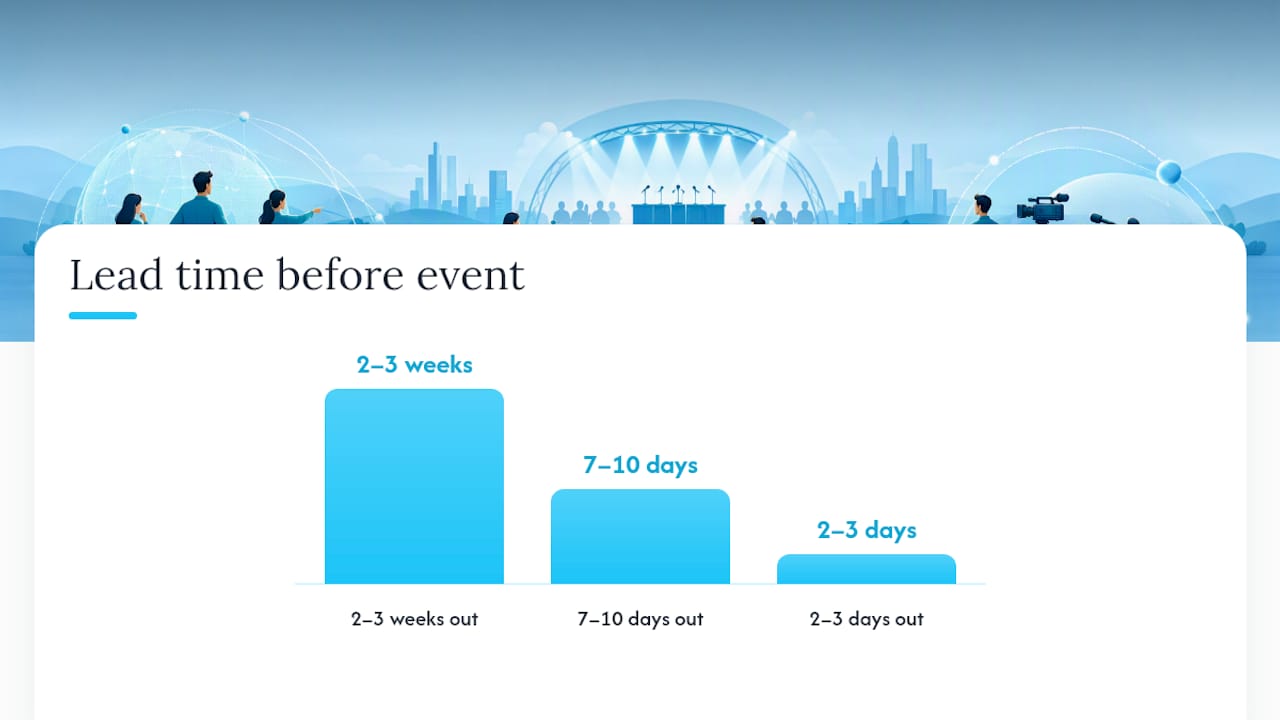
Then build backward from the event date. PR professionals recommend a three-stage split, and the timeline underneath it usually looks like this:
- 2 to 3 weeks out: confirm the news hook is genuinely newsworthy, lock your speaker lineup, and reserve the venue.
- 7 to 10 days out: send the media advisory, finalize your press kit draft, and confirm A/V needs with the venue.
- 2 to 3 days out: run a full rehearsal, send day-before confirmations, and lock the run-of-show minute by minute.
Pro Tip: If your announcement can be fully explained in 300 words with no visual hook, skip the press conference and send a release instead. Reporters will thank you for not making them show up for nothing.
When and Where Should You Hold It?
Timing decides half your attendance before you’ve sent a single advisory. The Community Tool Box recommends Tuesday through Thursday, between 10:00 a.m. and 11:00 a.m., as the sweet spot. Earlier slots catch reporters still working morning assignments; Mondays compete with weekend catch-up, and Fridays lose people to weekend deadlines and lighter staffing.
Venue selection matters almost as much as the clock. Walk the space with a reporter’s eyes, not a host’s.
- Confirm accessibility, nearby parking, and a clear path for camera crews and equipment carts.
- Check camera sightlines against your podium and backdrop before the day of the event.
- Verify power outlet placement and Wi-Fi bandwidth for anyone filing live.
- Choose a backdrop with actual visual interest, not a blank wall.
- Build a rain plan if any part of the event happens outdoors.
Lock permits, accessibility compliance, signage, and vendor confirmations inside your 7 to 10 day window, not the day before. On-site, walk through your A/V setup, staging, and camera lines, and designate a quiet greenroom or side room for one-on-one interviews after the main event. NACCHO’s guidance notes that broadcast crews often arrive up to 30 minutes early purely for setup, so plan your access accordingly.
How Do You Choose and Prepare Your Speakers?
Fewer speakers, tighter script, better outcome. The Community Tool Box suggests keeping the formal speaker list small and each person’s remarks short, with the whole formal segment plus Q&A wrapping inside an hour to respect newsroom deadlines. A lean lineup usually means a lead spokesperson who delivers the announcement, a subject expert who can field technical questions, and one backup in case plans change.
Before anyone touches a microphone, build a message map:
- One sentence that states the news, plainly, with no qualifiers.
- Three supporting points that back that sentence with specifics.
- A clear list of what’s out of scope for this event, so speakers know what not to answer.
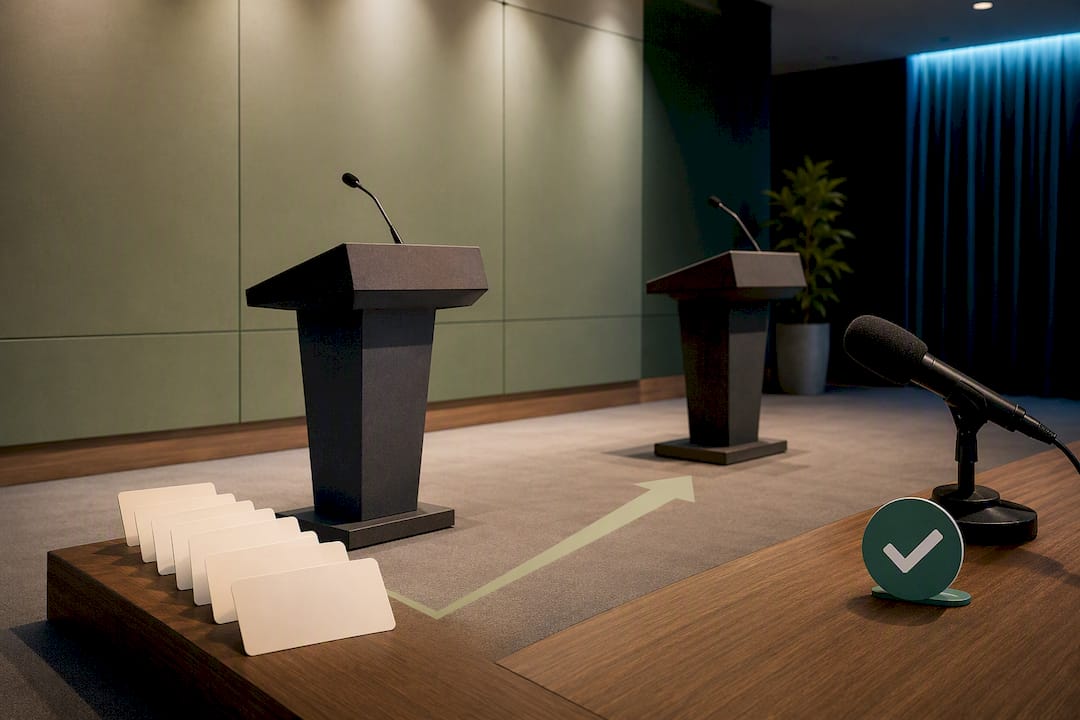
A moderator is essential here, not optional. Their job is to introduce speakers, enforce time limits, call on reporters in a fair order, and steer answers back to the message map when a question drifts. Rehearse the whole thing at least once, including a full run of the AV setup and a round of intentionally hostile mock questions. Put name cards in front of every speaker before reporters walk in. It looks small. It saves the event.
Pro Tip: Rehearse the worst question you can imagine a reporter asking, out loud, in the actual room. Speakers who’ve said the hard answer once rarely freeze when it comes for real.
What Belongs in Your Press Kit and Media Outreach?
A media advisory and a press release serve different jobs, and mixing them up costs you attendance. Send the advisory first, roughly a week ahead, to alert reporters to the who/what/when/where. NACCHO recommends a follow-up call or email the day before to confirm who’s actually coming. The full press release, with quotes and detail, goes out closer to or on the day of the event itself.
Your press kit should be ready at least a week in advance, built around a core set of assets:
- Final press release with attributable quotes
- Short speaker bios and headshots
- A backgrounder explaining context reporters won’t already know
- Data notes or source citations for any numbers you cite
- High-resolution images and logo files
- Links to any supporting video
- Contact information and clear embargo terms if one applies
If a full kit isn’t feasible, send the advisory at minimum. Build your media list around beat relevance, not volume. A tighter list of 15 reporters who actually cover your topic beats 200 general contacts who’ll skim and delete. On-site, have printed kits ready and a digital folder link reporters can pull from their phones before they’ve even left the room.
What Does the Event Day Actually Look Like Minute by Minute?
A press conference runs on a clock, and the clock starts before the first speaker says a word. A workable run-of-show for a typical event looks like this:
- 0 to 15 minutes: registration, sign-in sheet, press kit handout.
- 15 to 20 minutes: moderator opens, introduces speakers, sets ground rules for Q&A.
- 20 to 30 minutes: lead speaker delivers the main announcement.
- 30 to 40 minutes: supporting speakers add context, each within their allotted time.
- 40 to 55 minutes: moderated Q&A, questions called in order, answers kept tight.
- 55 to 60 minutes: close, followed by optional one-on-one interviews in a separate space.
The moderator’s real value shows up during Q&A: calling on reporters fairly, cutting off follow-up chains that drift off message, and keeping answers short enough that nobody loses the room. Check mic levels, lighting, and camera lines before doors open, not after. If you’re recording for a livestream or transcript, test that feed during rehearsal, not five minutes before start time. Capture reporter names, outlets, and contact details at sign-in. That list becomes your follow-up map the next morning.
What Happens After the Cameras Leave?
Speed matters here more than most organizers expect. Send the transcript, photos, video links, and final press release the same day. Within 24 hours, follow up with any outlet that hasn’t confirmed coverage and offer additional interviews to reporters who need more.
If a factual error appears in coverage, correct it fast and directly with the reporter, not through a public statement. Privacy concerns get the same speed: address them before they become a second story.
Measure the event on more than headcount:
- Depth and specificity of the questions reporters asked
- Coverage accuracy against your message map
- How much of your core message actually survived into published stories
- Earned placements and follow-up interview requests generated
That last metric, message pull-through, is the one most organizers skip and the one that actually tells you whether the event worked. A clear measurement framework helps when reporting results to stakeholders who want more than “reporters showed up.”
Goldman McCormick PR’s Condensed Press Conference Checklist
Boiled down to one page, here’s what actually matters on each side of the event:
- Before: confirm news value, lock speakers, build the message map, send the advisory 7 to 10 days out, rehearse 2 to 3 days out.
- Event day: moderator controls flow, speakers stay inside time limits, reporters sign in with full contact details.
- After: send assets same day, correct errors fast, measure pull-through and follow-up requests.
This PR firm has received recognition from Forbes in 2021, Bulldog Reporter’s CSR Awards in 2016, and was cited by the New York Observer as a notable legal PR agency in 2014. In-house teams can run smaller, lower-stakes events themselves. Broadcast-heavy announcements, crisis situations, or multi-stakeholder events with a lot riding on message discipline usually call for a firm that’s run dozens of these.
What Most Organizers Get Wrong
Most press conference advice treats attendance as the finish line. It isn’t. A packed room that produces three inaccurate stories and zero follow-up interviews is a failed event, no matter how the photos look. The research backs this up plainly: coverage accuracy and message pull-through are the numbers that matter, and they’re the numbers most in-house teams never actually track.
The bigger gap I see isn’t in the run-of-show. It’s in the decision to hold the event at all. Organizers default to a press conference because it feels like the bigger gesture, when a tight release with a strong quote would have gotten the same story written, without the room-booking, the rehearsal, or the risk of a speaker fumbling a hard question on camera. Test the news value first. If the story doesn’t need live access or coordinated Q&A, save the format for when it does.
What I’d prioritize first, before venue or speaker selection, is the message map. Everything downstream, the moderator’s job, the rehearsal, the Q&A control, exists to protect that one sentence. Get it wrong and no amount of polished staging fixes it.
— Ryan McCormick
Get Professional Support for High-Stakes Press Events
Running a press conference in-house works fine for a routine announcement. It gets harder fast when broadcast crews are involved, the story touches a crisis, or multiple stakeholders need to stay on message under pressure from reporters they’ve never met. A PR firm staffed by former TV and radio producers and journalists can provide media lists, press kits, and moderator support from experienced professionals who understand the demands of live media events.
Our press conference service covers media outreach, press kit creation, moderator support, run-of-show planning, and pre-event media training for spokespeople who need to hold up under real questions. For announcements that lean more on broadcast placement than a live event, our traditional media team can build the same outreach around TV and radio specifically. If your next announcement has real stakes attached to it, reach out to Goldman McCormick PR and request a consultation before you lock a date.
Templates and Guides Worth Bookmarking
For a full checklist and short-notice timeline, use the Community Tool Box guide. For a longer runway with sample advisories, use Press Event 101.
Sources
- Section 8. Arranging a Press Conference – Community Tool Box
- Holding a press conference (NACCHO guidance)
- Press Conferences: Benefits, Preparation, and Format
- Press Event 101: Your Ultimate Planning Guide
FAQ
What Are the Five W’s in a Press Release?
A press release should answer who, what, when, where, and why in its opening lines, giving reporters the full shape of the story before they read past the first paragraph.
What Is the Typical Format of a Press Conference?
Most run under an hour: brief registration, a moderator’s introduction, timed remarks from a small speaker lineup, a moderated Q&A segment, and an optional closing period for one-on-one interviews.
How Far in Advance Should I Send Out a Press Release?
Send a media advisory 7 to 10 days before the event, with a confirmation follow-up the day before; the full press release typically goes out closer to or on the event day itself.
What Should You Say at a Press Conference?
Stick to your message map: one clear sentence stating the news, three supporting points with specifics, and a defined list of topics that fall outside the scope of the announcement.
Should I Hire a PR Firm to Run My Press Conference?
For routine, low-risk announcements, an in-house team can manage it. For broadcast-heavy, crisis-related, or multi-stakeholder events, a firm like Goldman McCormick PR brings media relationships and moderator experience that reduce the risk of a mishandled Q&A.