The best media training for most practicing psychologists is a hands-on coaching program that combines message development, recorded mock interviews, and APA-aligned ethical coaching. The APA’s media training handbook identifies this format as the core model, and the APA’s Media Referral Service, which lists a substantial number of vetted psychologists, uses media readiness as a baseline criterion for inclusion. Programs like those offered by the San Diego Psychological Association’s PEM initiative, Fielding Graduate University, and Goldman McCormick PR each approach this differently, but the underlying standard is the same: you need recorded practice, expert critique, and clear ethical guardrails before you talk to a journalist.
Success in media training looks like this:
- At least two polished, camera-ready interview clips you can share with producers and journalists
- A refined set of 2–3 key messages that translate your clinical expertise into plain language
- Documented ethical boundaries (confidentiality protocols, scope-of-practice limits) in writing
- Eligibility or readiness to apply for the APA Media Referral Service
- At least one established journalist or producer relationship from outreach coaching
Table of Contents
- Why media training pays off for psychologists
- What training formats are available and what do they cost?
- How do you choose the right media trainer for psychologists?
- What are the APA ethical guidelines for psychologists in media?
- How Goldman McCormick PR trains clinician-experts
- Key Takeaways
- Why media skills are a long-term professional investment
- Goldman McCormick PR can help you get there
- Authoritative sources and further reading
Why media training pays off for psychologists
Media visibility is not vanity. When a licensed psychologist appears on a local news segment or a nationally syndicated radio program, the downstream effects are concrete: public education on mental health topics, increased client inquiries, invitations to comment on policy, and institutional credibility that opens academic and consulting doors.
The Media Psychology Research Center frames this precisely: media psychology applies behavioral science to media and technology interactions, and psychologists who engage with media thoughtfully bring something no journalist or generalist commentator can replicate. That distinction matters to producers, and it matters to the public.
Here is what the professional return on investment looks like in practice:
- Public messaging: Accurate psychological commentary counters misinformation, which peer-reviewed literature identifies as one of the most important reasons psychologists should engage with media
The BLS median annual salary for psychologists across specialties was $94,310 as of May 2024. Media visibility accelerates the consulting, speaking, and advisory work that pushes earnings well above that baseline. A single well-placed media appearance can generate more referrals than months of passive networking.
The APA’s Media Referral Service, with its approximately 2,000 listed psychologists, functions as a journalist-facing directory. Being listed is a signal to reporters that you are prepared, ethical, and available. Getting there requires the kind of preparation that structured media training provides.
What training formats are available and what do they cost?
Delivery formats vary considerably, and the right choice depends on your current skill level, your schedule, and whether you need broadcast-quality clips immediately or are building toward a longer-term media strategy.
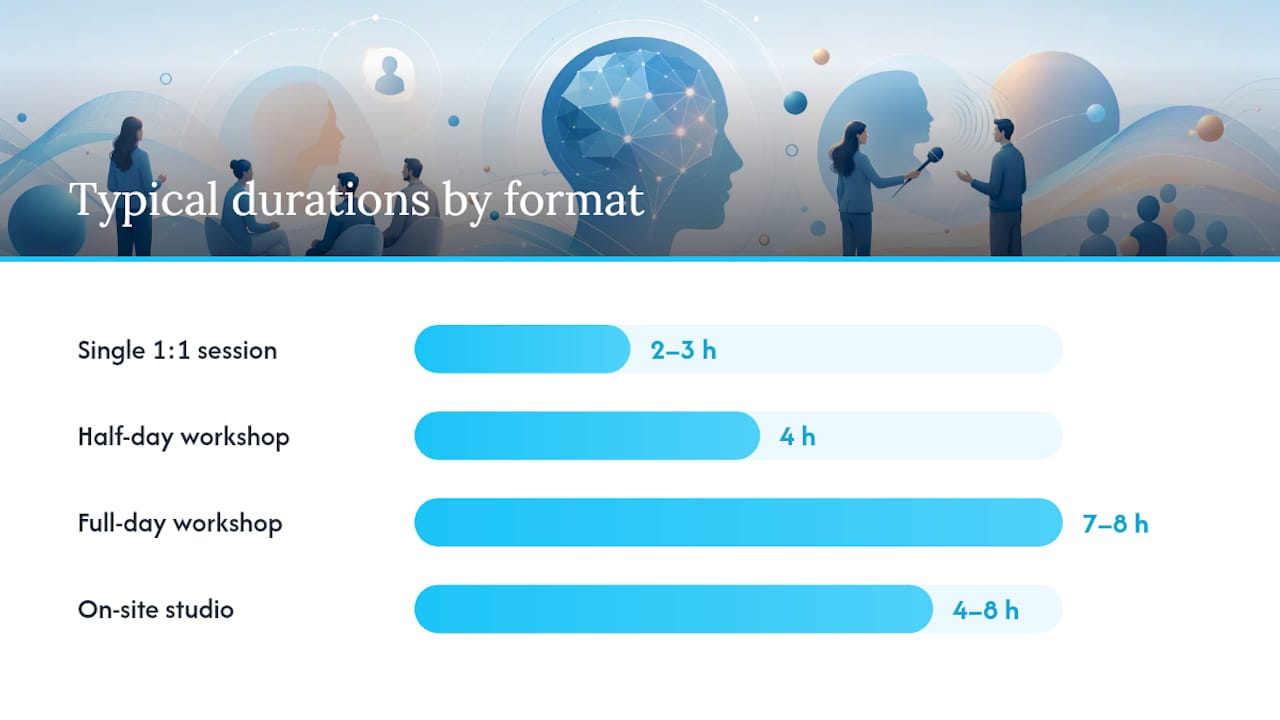
| Format | Typical Duration | Common Deliverables | Approximate US Price Range |
|---|---|---|---|
| Single 1:1 coaching session | 2–3 hours | Message map, 1 recorded clip | — |
| Half-day workshop (group) | 4 hours | Group feedback, message framework | £295 per participant |
| Full-day workshop (group) | 7–8 hours | Multiple mock interviews, clip reel | — |
| Multi-session coaching package | 4–8 weeks | Full clip reel, press kit, outreach plan | — |
| On-site studio session | Half or full day | Broadcast-quality recorded clips | — |
| Remote/virtual coaching | 1–3 sessions | Recorded Zoom interviews, message map | — |
For context, a UK-based interactive workshop listed on EdSpy is priced at £295 per participant, which illustrates that single-day group formats are accessible entry points globally. US pricing for comparable programs tends to run higher, particularly when studio access and broadcast-quality recording are included.
A typical session structure runs: pre-work review (your message map and prepared examples), a live mock interview recorded on camera, immediate playback with trainer critique, a second recorded attempt incorporating feedback, and a post-session debrief with written notes and next steps. Remote sessions follow the same structure using video conferencing with screen recording.
Multi-session packages are the most effective format for psychologists who want to build a media presence from scratch. They allow time to refine messaging between sessions, incorporate real media feedback, and develop journalist relationships alongside technical skills.
How do you choose the right media trainer for psychologists?
The credentials that matter most are not certifications. They are demonstrated experience: a trainer who has worked with clinician-experts, has a journalism or broadcast background, and can show you clips of psychologists they have coached in real media contexts.
What to prioritize:
- Journalism or broadcast experience (not just PR or marketing)
- Prior work with licensed clinicians, physicians, or mental health professionals
- Familiarity with APA ethical standards and scope-of-practice limits
- Demonstrable media contacts (producers, editors, journalists)
- A clear contract covering media use rights for your recorded sessions
Questions to ask on a discovery call:
- Have you worked with APA members or licensed psychologists before?
- Can you show me clips of clinicians you have coached in actual media appearances?
- How do you handle confidentiality and client consent in training scenarios?
- What happens to my recorded sessions? Who owns them, and how can I use them?
- Do you have active relationships with TV producers, radio hosts, or podcast networks?
- How do you incorporate ethical guidance into your training curriculum?
- What does a typical engagement look like from first session to first media placement?
Red flags to walk away from:
- No demo clips or examples of prior clinician work
- Promises of guaranteed headline placements or specific media outcomes
- No mention of APA ethics, confidentiality, or scope-of-practice limits
- Vague or missing contracts on session recordings and media use rights
- Trainers who have never worked in journalism or broadcast media themselves
A trainer who cannot answer questions 1 and 2 above with specifics is not the right fit for a licensed psychologist. The ethical complexity of your work demands a trainer who understands it.
What are the APA ethical guidelines for psychologists in media?
The APA media training handbook draws a clear line between expert commentary and clinical advice. When you speak to a journalist or appear on a broadcast, you are functioning as a public educator, not a clinician. That distinction has to be explicit in your preparation and in your contracts.
The key ethical guardrails:
Confidentiality: Never reference identifiable client cases, even with names changed, without documented written consent. Anonymized vignettes require explicit release forms.
Informed consent: If you plan to use a clinical example in media, obtain written consent from the client that specifies the media context, the content to be shared, and the intended audience.
Scope of practice: Decline any question that asks you to diagnose a public figure, speculate about a specific individual’s mental state, or offer clinical recommendations to an audience member. Redirect to general principles.
Documenting boundaries: Put your ethical limits in writing before any media engagement. Your trainer should help you draft a one-page boundary document that you can share with producers in advance.
The APA Media Referral Service, which connects journalists with a large database of vetted psychologists, requires that listed members demonstrate both media readiness and ethical awareness. Being listed is a meaningful credential, and preparing for it is a legitimate goal of any media training program.
How Goldman McCormick PR trains clinician-experts
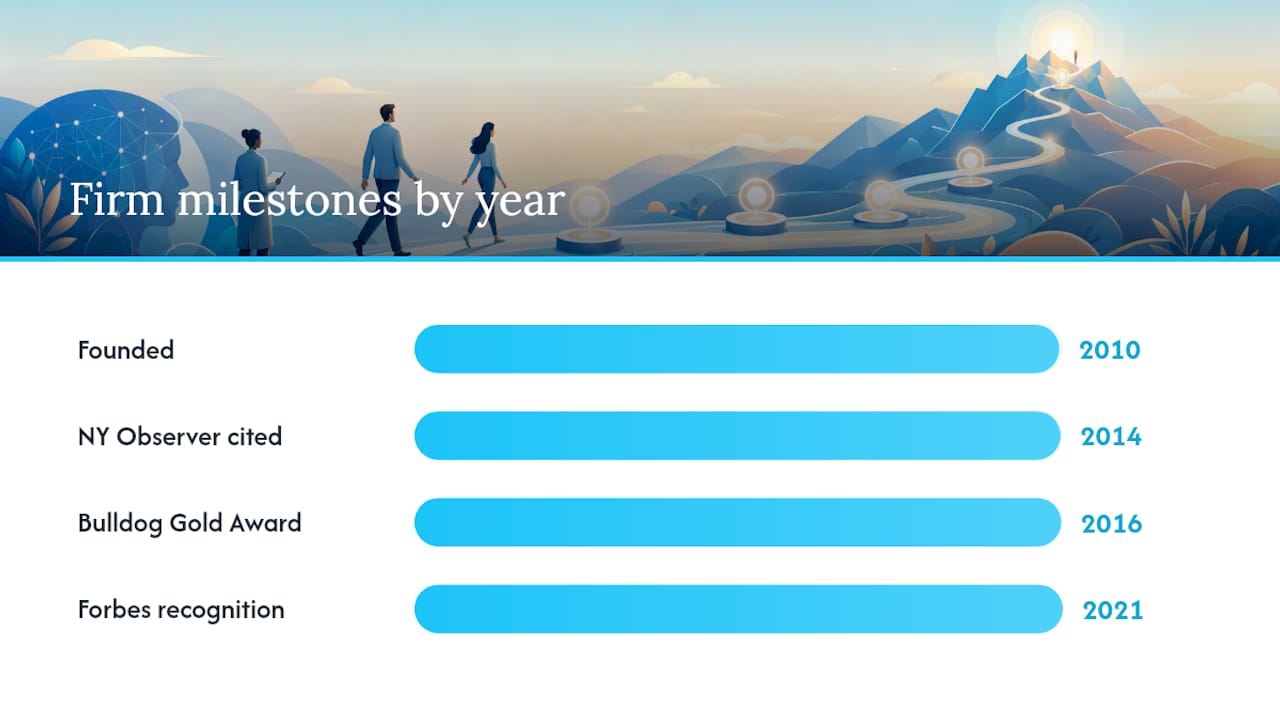
Goldman McCormick PR was founded in 2010 by active and former members of the media, which means the firm’s trainers understand what journalists actually need from an expert source. That background shapes the entire training methodology: preparation starts with message development grounded in your clinical specialty, moves through recorded mock interviews that simulate real broadcast conditions, and ends with media outreach to producers and journalists who cover your area of expertise.
The firm’s proof points are specific. Forbes Magazine named Goldman McCormick PR one of America’s Best PR Firms for 2021. Bulldog Reporter awarded the firm a Gold Award in the “Best Cause/Advocacy Campaign” category in 2016. The New York Observer cited the firm as one of the top five public relations agencies specializing in legal PR in 2014. The firm’s broadcast reach includes nationally syndicated radio programs on the Genesis Communications Network and Starcom Radio Network, which means media placements are not hypothetical.
For psychologists, the typical engagement includes:
- A pre-session message development consultation to identify your 2–3 core themes
- Recorded mock interviews simulating TV, radio, and podcast formats
- On-camera critique and a second recorded session incorporating feedback
- Press kit development and media outreach to relevant journalists and producers
- Ongoing media placement support beyond the training itself
The combination of broadcast-industry experience and active media relationships is what separates a firm like Goldman McCormick PR from a standalone media coach. Training without placement support is practice. Training with placement support is a media strategy.
Key Takeaways
The most effective media training for psychologists combines recorded mock interviews, APA-aligned ethical coaching, and active media outreach support, producing clip reels and journalist relationships that convert visibility into referrals and public impact.
| Point | Details |
|---|---|
| Prioritize hands-on formats | Recorded mock interviews with expert critique are the core method recommended by the APA handbook. |
| Ethics are non-negotiable | APA guidelines require clear separation between expert commentary and clinical advice in every media appearance. |
| Prepare before you train | A message map, anonymized examples, and a boundary document dramatically improve first-session outcomes. |
| Verify trainer credentials | Look for journalism or broadcast experience, prior clinician work, and active media contacts before signing. |
| Goldman McCormick PR | The firm offers media training with broadcast placement support, founded by active and former media professionals, named by Forbes as one of America’s Best PR Firms for 2021. |
Why media skills are a long-term professional investment
Most psychologists underestimate how much the public needs them in media. Not a polished spokesperson. Not a talking head. A credible, ethical clinician who can translate real science into something a general audience can act on. That is genuinely rare, and journalists know it.
The challenge is that clinical training does not prepare you for a camera. The skills are almost opposite: therapy rewards patience, nuance, and open-ended exploration; broadcast media rewards brevity, clarity, and a confident point of view. Bridging that gap takes deliberate practice, and the psychologists who invest in it early tend to build the kind of public presence that compounds over time. One well-placed segment leads to a second invitation. A second invitation leads to a producer relationship. A producer relationship leads to a standing expert role.
The ethical complexity is real, and it should not be minimized. But it is also manageable with the right preparation. Psychologists who treat media engagement as a professional discipline, rather than an occasional favor to a journalist, are the ones who shape public understanding of mental health in lasting ways.
Goldman McCormick PR can help you get there
Goldman McCormick PR works with psychologists who are ready to move from clinical expertise to public visibility. The firm’s approach starts with message development grounded in your specialty, moves through recorded mock interviews in broadcast-quality conditions, and extends into active media outreach to TV producers, radio hosts, and podcast networks. You leave with clips, a press kit, and real journalist relationships, not just training notes.
Named by Forbes as one of America’s Best PR Firms for 2021 and founded by active and former media professionals, Goldman McCormick PR brings the kind of broadcast-industry access that standalone coaches cannot replicate. If you are a psychologist ready to build a media presence that serves both your practice and the public, request a discovery call to see demo materials and discuss your goals. The first conversation costs nothing; the media presence you build from it can last a career.
Authoritative sources and further reading
The sources below are the most useful starting points for psychologists who want to go deeper on media training, ethical guidance, and the academic case for media engagement.
-
APA Media Training Handbook — The primary reference for ethical guidelines, training modules, and the Media Referral Service. Read this before any trainer conversation.
-
San Diego Psychological Association: PEM Media Training — A real-world example of association-run, studio-based training with recorded deliverables. Useful for understanding what a well-structured workshop looks like.
-
Media Psychology Research Center: What Is Media Psychology? — Frames the behavioral science foundation behind effective media engagement. Useful for understanding why psychologists bring unique value to media contexts.
-
CareersInPsychology.org: What Is Media Psychology? — Covers applied roles, salary context, and the career development case for media skills.
-
CounselingPsychology.org: Media Psychologists — Explains how programs that combine psychology and media practice develop trainer credentials; useful when evaluating who should train you.
-
Perspectives on Psychological Science: Why Psychologists Should Study Media — Peer-reviewed rationale for media engagement as a professional responsibility, not an optional add-on.
-
EdSpy: Media Skills for Psychologists Workshop — A published workshop listing that illustrates format, structure, and pricing for a single-day interactive program (UK-based, priced in GBP).
-
Goldman McCormick PR — The publisher’s landing page for media training services, broadcast placements, and discovery call requests. Contact here to request demo materials or discuss a training engagement.
For a broader view of how strategic communications and PR fit together as a discipline, the Branded Agency overview is a useful complement to the APA-specific resources above.
This article provides general professional guidance on media training and public communication. It is not legal, clinical, or regulatory advice. Confirm current APA guidelines and any jurisdiction-specific professional conduct rules with the APA or a qualified professional advisor.