
Yes, psychologists should use PR to grow a specialty practice. Earned media placements on local TV, radio, and in newspapers build the kind of credibility that a Google ad simply cannot replicate, and they do it within the ethical boundaries set by the APA’s ethical standards and HIPAA. Goldman McCormick PR, named by Forbes as “One Of America’s Best PR Firms For 2021,” has placed clinicians in exactly these channels since 2010. The fastest first step: pick one tactic this week (a podcast pitch, a HARO response, or a local TV segment), apply your HIPAA and APA guardrails, and run a 90-day pilot before committing to a full retainer.
A note on terminology: the industry term for what this guide covers is earned media or media relations, a subset of public relations. “PR for the psychology niche” is the search phrase that brings you here; earned media strategy is what you will actually build.
Table of Contents
- Why does PR move the needle for psychology practices?
- What PR tactics actually get results for psychologists?
- How should you prepare for media interviews?
- What timelines and budgets should you expect?
- How do you measure PR success for a psychology practice?
- When should you hire a PR agency, and what should you ask?
- Key Takeaways
- What working with clinicians has taught me about PR
- Goldman McCormick PR helps psychology practices get placed
- Useful sources and further reading
Why does PR move the needle for psychology practices?
Referral sources, whether primary care physicians, school counselors, or employee assistance programs, make recommendations based on trust. A single op-ed in a regional newspaper or a five-minute segment on a local morning show signals expertise in a way that a directory listing never will. That signal travels: the physician who saw you on the news mentions your name at a staff meeting, and three referrals follow.
Beyond referrals, ethical PR for clinicians builds authority through consistent, plain-language messaging that referral partners can repeat. Editorial backlinks from trusted news sites also improve your practice’s local search visibility, so prospective clients find you before they find a competitor.
A therapist specializing in perinatal mood disorders, for example, might appear on a local NPR affiliate during Maternal Mental Health Month. The segment gets shared by a hospital’s OB department on social media. Within weeks, the practice receives calls from midwives, doulas, and OBs who had no prior awareness of the specialty. That is the referral flywheel PR creates.
What PR tactics actually get results for psychologists?
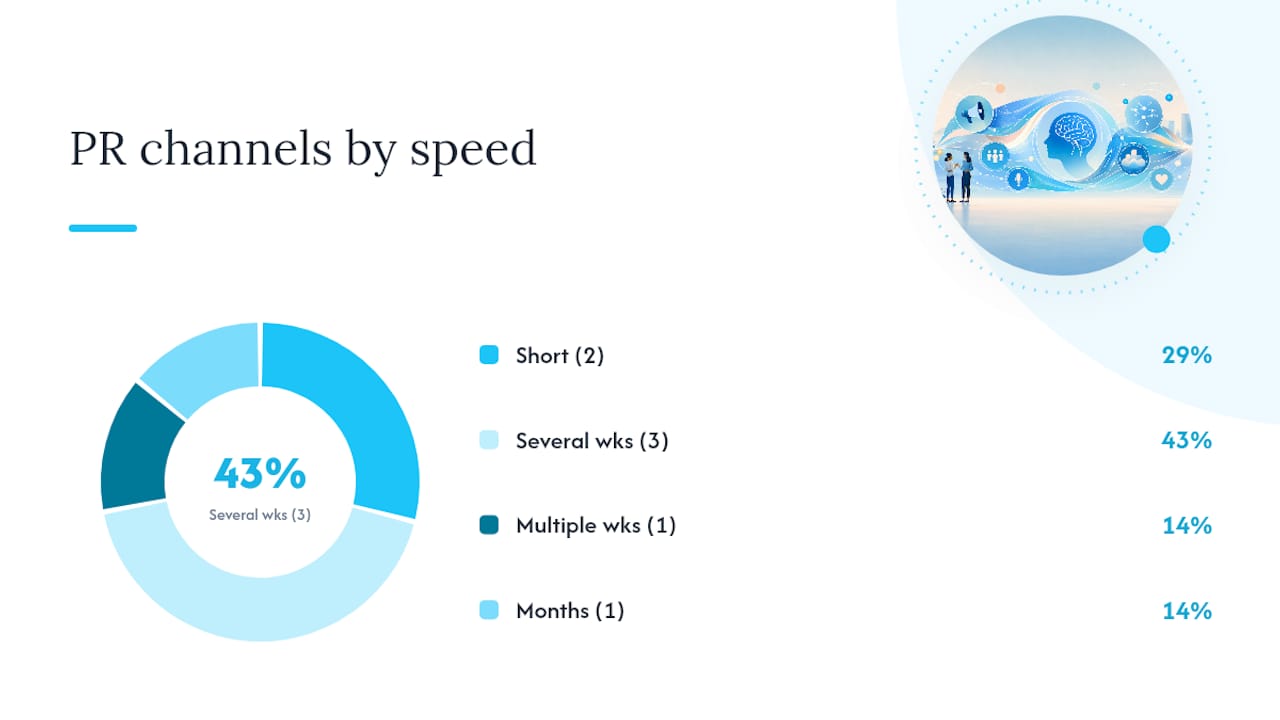
The channel map below covers the most effective options for promoting psychology services, ranked roughly by how quickly they produce results.
| Channel | Best use case | Expected timeframe |
|---|---|---|
| HARO / Qwoted / Featured | Quick expert quotes, backlinks, national reach | Short timeframe per placement |
| Local TV / radio segment | Community awareness, referral-source trust | Several weeks outreach to air |
| Podcast guest appearance | Niche credibility, long-tail search traffic | Multiple weeks outreach |
| Op-ed / bylined article | Thought leadership, SEO authority | Several weeks to publish |
| Press release | Announcements, local news pickup | Short timeframe distribution |
| Speaking / conference | Peer referrals, professional network | Months lead time |
| Original research / survey | Linkable asset, media hook | Several weeks to produce and pitch |
Local media coverage deserves special attention. A story tied to a seasonal mental health trend, such as back-to-school anxiety or holiday grief, gives a local assignment editor a ready-made reason to call you. Sponsoring a community mental health event and requesting that coverage include your practice’s website URL earns both community goodwill and a local backlink.
Pro Tip: Produce one linkable asset per quarter: a brief survey of local adults on stress levels, a data roundup on therapy access in your county, or a downloadable resource guide. These assets give journalists something to cite and give your website a reason to earn links without paid promotion.
How should you prepare for media interviews?
The three-line soundbite is your foundation. Practice this structure before every interview: claim (“Anxiety in teens has risen sharply since 2020”) → evidence (“We are seeing it in referral patterns and in published CDC data”) → offer (“Here is what parents can do this week”). That arc fits a 30-second TV answer and a 90-second radio segment equally well.
Before any interview, run this HIPAA checklist:
- No client names, initials, or identifying details in any example
- Composite cases reviewed and approved by your practice’s privacy officer
- Written consent on file if you plan to reference a real client’s experience
- No session content, diagnosis, or treatment plan details shared on record
- Social media posts about the interview reviewed before publishing
Mock interview prompts to practice:
- “Can you give us an example of a patient who struggled with this?”
- “Is therapy really effective, or is it just talking?”
- “What do you say to people who think mental health treatment is overused?”
For question one, pivot to a composite: “I have worked with many people who describe a similar pattern, and what I consistently see is…” For leading or harmful questions, bridge back to your prepared message: “What I think is most useful for your audience to know is…”
On live TV or radio, never fill silence by volunteering confidential details. A short pause followed by a clear, pre-prepared answer reads as confidence, not hesitation.
What timelines and budgets should you expect?
| Timeframe | Typical outcomes | Budget band |
|---|---|---|
| Initial months | Some HARO placements, podcast booking, press release distribution | DIY: time only; project-based: low-cost |
| Several months | Local TV or radio segment, op-ed published, several backlinks | Project-based or low monthly retainer |
| Longer term | Consistent coverage cadence, national outlet placement, linkable asset library | Monthly retainer, mid-range |
DIY outreach costs primarily your time: building media lists, monitoring HARO daily, and writing pitches. A project-based engagement with an agency covers a defined deliverable, such as a press release campaign or a podcast booking sprint. A monthly retainer buys consistent outreach, relationship management with journalists, and ongoing asset development.
Expect the first placement to take longer than you want. Journalists receive hundreds of pitches weekly. A well-timed, tightly written pitch from a credentialed clinician still takes persistence.
How do you measure PR success for a psychology practice?
Tie every metric back to a practice goal: more booked consultations, stronger referral relationships, or improved local search ranking.
Core KPIs to track:
- Earned placements (number and outlet authority)
- Referral inquiries attributed to media exposure
- Booked consultations from referral sources who mention media
- Referring domains and domain authority (track monthly in Ahrefs or Semrush)
- Referral traffic from media outlet websites (Google Analytics)
- Referral-source engagement (did your hospital contact mention the segment?)
Tracking checklist:
- Add a UTM parameter to the URL you share with media outlets (e.g.,
?utm_source=tv&utm_medium=earned). - Set up a Google Analytics goal for consultation request form completions.
- Add one intake form question: “How did you hear about us?” with media options listed.
- Monitor backlinks monthly using a tool such as Ahrefs, Semrush, or Moz.
- Log each placement in a simple spreadsheet with date, outlet, and any referral spike in the following 30 days.
Attribution is imperfect in healthcare. A prospective client may see you on TV, then Google your name three weeks later. The intake form question closes that gap without requiring any disclosure of clinical information.
When should you hire a PR agency, and what should you ask?
Hire when any of these conditions apply: you need national placements that require existing journalist relationships, you face a reputation issue that needs crisis communications, your internal bandwidth is genuinely zero, or you want a measurable referral-building program without building it yourself.
Questions to ask any PR agency before signing:
- Have you placed clinicians or healthcare professionals in broadcast media?
- How do you handle HIPAA and APA ethical constraints in pitching?
- Can you share sample outcomes for healthcare or professional-services clients?
- What does your reporting cadence look like, and do I approve pitches before they go out?
- Do you produce your own media assets (radio, podcast), or do you only pitch?
That last question matters. An agency with in-house broadcast production can place you as a guest on a program it produces, which is a faster path to audio/video content than cold-pitching external shows.
Goldman McCormick PR checks both boxes. Founded in 2010 by active and former media professionals, the firm specializes in TV, radio, and newspaper placements. It produces podcasts and nationally syndicated radio programs on the Genesis Communications Network and Starcom Radio Network, giving clinician clients a direct path to broadcast exposure. Forbes named it “One Of America’s Best PR Firms For 2021.” In 2016, the agency earned a Bulldog Reporter Gold Award for Best Cause/Advocacy Campaign, and the New York Observer cited it among the top five legal PR firms in 2014.
Pro Tip: Ask any agency to walk you through how they would handle a sensitive pitch, one involving a mental health topic that could be misframed by a journalist. Their answer tells you more about fit than any credential list.
Key Takeaways
Psychologists who use PR for their psychology niche build referral trust, local search authority, and a durable media presence that paid advertising cannot replicate.
| Point | Details |
|---|---|
| Start with one tactic | Pick HARO, a podcast pitch, or a local TV angle this week and run a 90-day pilot. |
| Apply HIPAA/APA guardrails first | Clear every pitch and client example through your privacy checklist before outreach. |
| Create one linkable asset per quarter | A survey, data roundup, or resource guide gives journalists a reason to cite your practice. |
| Measure what connects to bookings | Track UTM parameters, intake form responses, and referring domains monthly. |
| Goldman McCormick PR | A Forbes-recognized agency with broadcast production experience, suited for clinicians seeking national placements. |
What working with clinicians has taught me about PR
Most PR advice assumes your client can say anything. Clinicians cannot, and that constraint is not a limitation — it is actually a positioning advantage. A psychologist who speaks carefully, cites evidence, and declines to sensationalize is exactly what a credible journalist wants on camera. The problem is that most clinicians have never been coached to translate their expertise into a 30-second soundbite, and they underestimate how much that skill gap costs them in missed placements.
The practices that build real media presence do one thing consistently: they treat PR as a long-term referral strategy, not a one-time publicity stunt. A single TV segment is worth something. A pattern of appearances, op-eds, and podcast features over 12 months builds the kind of name recognition that makes referral sources think of you first.
The ethical constraints of clinical PR are real, but they are navigable. The clinicians who get placed regularly are the ones who prepare composite examples in advance, keep a pitch-ready document updated, and respond to media queries within the hour. Speed and preparation, not credentials alone, determine who gets quoted.
Goldman McCormick PR helps psychology practices get placed
If you would rather have an experienced team handle outreach, pitch writing, and media relationships, Goldman McCormick PR offers a discovery consultation that covers your best-fit channels, a 90-day plan outline, and a realistic estimate for your practice’s goals. The agency is HIPAA-aware, APA-conscious, and built around broadcast placements that most boutique firms cannot produce in-house.
Reach out through the Goldman McCormick PR website to schedule your consultation and find out which media channels fit your specialty and your timeline.
Useful sources and further reading
The sources below informed this guide. Each link takes you directly to the original material.
- Dr. Chloe Carmichael Knows How to Get the Media’s Attention | PoP 345 — How to Start, Grow, and Scale a Private Practice | Practice of the Practice
- Ethical PR for talking therapists: Why it matters and how to choose the right support
- Goldman McCormick Public Relations