
For attorneys, brand reputation is the collective perception of credibility, trust, and ethical standing that clients, peers, and the public form based on your consistent actions over time. It is not a logo or a tagline. According to the Legal Information Institute, reputation refers to the general esteem in which a person is held within a community, based on character, integrity, and conduct. That definition maps directly onto legal practice, where a single malpractice claim or a pattern of poor client communication can reshape public perception faster than any marketing campaign can repair it. Harvard Law School’s Center on the Legal Profession notes that every firm already has a brand, often unrecognized, and that well-managed branding drives growth, profitability, and competitive advantage. Goldman McCormick PR, named by Forbes as one of America’s Best PR Firms for 2021 and cited by the New York Observer as a top-five legal PR agency, works specifically with attorneys to shape and protect that perception.
Table of Contents
- How brand reputation differs from branding in legal practice
- Why brand reputation matters more than most attorneys realize
- Practical strategies to build and protect your reputation
- How media and public relations amplify your brand reputation
- Common threats to attorney brand reputation
- How to monitor your reputation in the legal field
- Lessons from attorneys with strong and damaged reputations
- Ethical considerations in managing your legal brand
- How social media shapes attorney brand reputation
- Key Takeaways
How brand reputation differs from branding in legal practice
These two concepts are related but not interchangeable, and confusing them leads to wasted resources.
Branding is intentional. It is the strategic communication of your firm’s identity: your visual design, your messaging, the promises you make to prospective clients before they ever call you. The Michigan Bar Association describes branding as a tool that creates loyal clients by delivering consistent experiences, while reputation is shaped by community goodwill, ethics, management, and financial performance. Branding sets expectations. Reputation is what happens when reality meets those expectations.
Key distinctions attorneys should keep in mind:
- Branding is built deliberately through marketing, design, and messaging choices.
- Brand reputation is earned through actual client outcomes, ethical conduct, and peer recognition.
- Branding shapes what clients expect before they hire you; reputation reflects what they experienced after.
- A strong brand with a weak reputation creates a credibility gap that clients notice immediately.
- Reputation compounds over time; branding can be refreshed quickly.
Why brand reputation matters more than most attorneys realize
The data here is worth sitting with. Thomson Reuters’ 2023 State of the UK Legal Market Report found that reputation as a driver of client awareness dropped from 25% in 2012 to just 10% in 2023. That sounds like reputation matters less. It does not. What it means is that passive name recognition has lost ground to personal contact and demonstrated expertise. Two-thirds of respondents in that same report said personal contact and perceived expertise factor heavily in their hiring decisions.
Attorneys who understand this shift stop relying on their firm’s name alone and start investing in the behaviors that build genuine trust:
- Consistent communication throughout a case, not just at intake and closing.
- Ethical handling of conflicts, billing disputes, and difficult client conversations.
- Peer recognition through bar association involvement and published thought leadership.
- Client referrals, which remain the highest-trust signal in legal services.
- Online reviews that reflect real experiences, not curated testimonials.
Practical strategies to build and protect your reputation
The Michigan Bar Association is direct on this point: consistency in client experience and brand communication is the foundation of a trusted reputation. That means every touchpoint, from the first phone call to the final invoice, should reflect the same standard of professionalism.
Concrete steps that work:
- Set clear expectations at intake and follow through on every commitment.
- Respond to client inquiries within 24 hours, even if only to confirm receipt.
- Solicit structured feedback after each matter closes and act on patterns you find.
- Use tools like Google Business Profile, Avvo, and Martindale-Hubbell to monitor what clients say publicly.
- Publish articles, speak at CLE events, and contribute to bar publications to build thought leadership.
Pro Tip: Your internal firm culture is your external reputation in formation. How partners treat associates, how billing disputes are handled internally, and how the firm responds to mistakes all surface eventually in client conversations and online reviews. Build the culture you want clients to describe.
Goldman McCormick PR’s PR Insight resources offer attorneys practical frameworks for managing reputation proactively rather than reactively.

How media and public relations amplify your brand reputation
Visibility and credibility are not the same thing, but strategic media placement builds both. Goldman McCormick PR specializes in securing attorney appearances on television, radio, and in print, as well as producing podcasts and nationally syndicated radio programs on the Genesis Communications Network and Starcom Radio Network. When a prospective client sees an attorney quoted in a major publication or interviewed on a credible news program, the perceived authority of that attorney rises significantly.
Effective media strategies for attorneys include:
- Pitching expert commentary to local and national news outlets on relevant legal developments.
- Hosting or appearing on legal podcasts to reach niche audiences actively seeking legal guidance.
- Securing bylined articles in bar journals, legal trade publications, and general business media.
- Maintaining a consistent presence across platforms so media coverage reinforces rather than contradicts your firm’s identity.
Goldman McCormick PR earned a Gold Award in Bulldog Reporter’s CSR Awards in 2016 and has been recognized specifically for legal PR work, making it a credible partner for attorneys looking to build trust online through sustained media engagement.
Common threats to attorney brand reputation
Negative reviews on Google or Avvo can rank above your firm’s own website in search results. A single malpractice claim, even one that is ultimately dismissed, becomes part of the public record. Unethical conduct findings from a state bar are permanent and searchable. These are not hypothetical risks; they are the most common ways attorney reputations erode.
Other threats include inconsistent communication that leaves clients feeling ignored, billing practices that feel opaque or aggressive, and social media posts that undermine the professional image the firm projects elsewhere. Former employees also shape reputation through Glassdoor reviews and word-of-mouth, which prospective clients increasingly consult.
How to monitor your reputation in the legal field
Set up Google Alerts for your name and firm name. Check Avvo, Martindale-Hubbell, and your Google Business Profile monthly. After each matter closes, send a brief structured survey asking clients to rate communication, responsiveness, and outcome satisfaction. Track patterns, not individual data points.
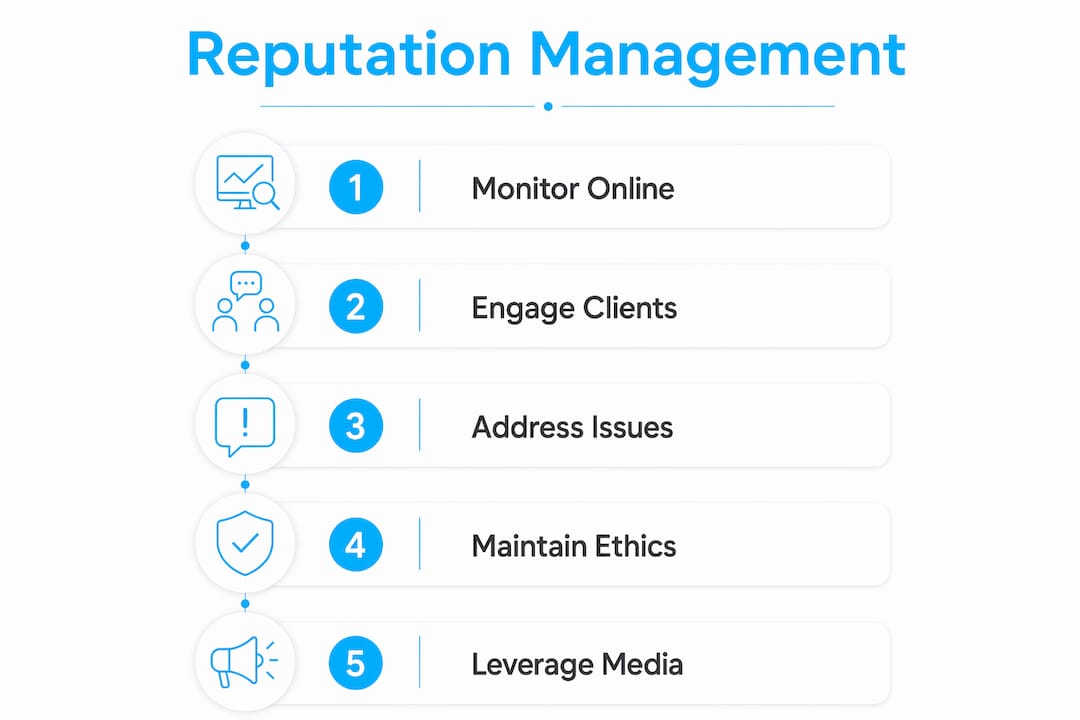
For firms with higher volume, reputation management platforms like Birdeye or ReviewTrackers aggregate reviews across multiple directories and flag new mentions in real time. The goal is to know what is being said before a prospective client finds it first.
Lessons from attorneys with strong and damaged reputations
Firms that built durable reputations share a common pattern: they treated client communication as a core competency, not an afterthought. Attorneys who suffered reputational damage typically had one of two problems: a single high-profile failure they did not address publicly, or a pattern of small failures they never tracked because no feedback system existed.
The lesson is structural. Reputation is not managed in a crisis. It is built through systems that catch problems early and demonstrate consistent standards to every client, every time.
Ethical considerations in managing your legal brand
The ABA Model Rules of Professional Conduct govern how attorneys may advertise and communicate their services. Rule 7.1 prohibits false or misleading communications about legal services. Rule 7.2 addresses advertising. Any PR or marketing effort must stay within these boundaries, which means no fabricated testimonials, no misleading case outcome statistics, and no claims of specialization that are not formally recognized by a state bar.
Ethical reputation management is not just a compliance issue. Clients who later discover that a firm’s marketing overstated its capabilities feel deceived, and that feeling generates the most damaging reviews.
How social media shapes attorney brand reputation
LinkedIn is the most consequential platform for most attorneys. A well-maintained profile with published articles and peer endorsements functions as a live reputation signal. Twitter/X and Facebook carry more risk than reward for most legal professionals, where a single poorly worded post can generate coverage that overshadows years of careful reputation building.
The Harvard Law School Center on the Legal Profession frames brand as a collective firm identity defined by all stakeholders, which includes every attorney who posts publicly under the firm’s name. Social media policies that align with the firm’s values are not optional for firms serious about reputation management.
Key Takeaways
A strong attorney brand reputation is built through consistent ethical conduct, proactive communication, and strategic media presence, not marketing alone.
| Point | Details |
|---|---|
| Reputation vs. branding | Branding sets client expectations; reputation reflects whether those expectations were met. |
| Shifting client priorities | Reputation as a client driver dropped from 25% to 10% between 2012 and 2023; personal contact now leads. |
| Core building blocks | Consistent communication, ethical conduct, and peer recognition compound into durable credibility. |
| Media amplifies authority | TV, radio, and print placements build perceived expertise faster than most internal marketing efforts. |
| Monitor proactively | Track Google, Avvo, and Martindale-Hubbell monthly; use structured post-matter surveys to catch patterns early. |