
A global survey of nearly 2,000 journalists across 19 markets found that 66% rely on PR-provided content as their primary source for story leads. That single statistic reframes everything psychologists assume about media. Understanding what does media relations mean for psychologists is not about chasing publicity. It is about becoming the credible, expert voice journalists are already searching for, and using that position to educate the public, strengthen your professional reputation, and connect with the clients who need you most.
Table of Contents
- Key takeaways
- What does media relations mean for psychologists?
- How media relations shapes your professional reputation
- Practical media communication strategies for therapists
- Common misconceptions and ethical boundaries
- Media relations as a risk management tool
- My take on why psychologists must engage media now
- How Goldman McCormick PR supports psychologists in media
- FAQ
Key takeaways
| Point | Details |
|---|---|
| Media relations is strategic, not promotional | Psychologists use media relationships to educate the public and build credibility, not just gain exposure. |
| Journalists need expert partners | Because most journalists rely on PR content for leads, psychologists who prepare well become go-to sources. |
| Ethics guide every interaction | Professional codes require non-promotional language, accurate messaging, and no fear-based claims in media. |
| Preparation determines success | Ready-made quotes, data, and a current online presence make you the easiest expert for a journalist to use. |
| Media relations reduces professional risk | Proactive media engagement lets you shape narratives before misinformation about mental health takes hold. |
What does media relations mean for psychologists?
Media relations, at its core, is the practice of building and maintaining productive working relationships with journalists, editors, producers, and broadcasters. For psychologists specifically, it means something more precise than a general publicity campaign. It is a two-way partnership in which you offer timely, accurate, and accessible psychological expertise, and journalists provide the platform to reach audiences who genuinely need that information.
This distinction matters. General public relations can include advertising, event sponsorships, and brand-building tactics that would be inappropriate for a licensed mental health professional. Media relations for psychologists sits within a narrower, more ethically defined space. Journalists value original research, credible data, and expert access far above generic outreach, which means your clinical and research credentials are already your strongest asset.
The practical challenge is translation. Psychological concepts that feel routine in a clinical or academic context can become opaque or even misleading when filtered through a fast-moving newsroom. Effective media relations requires you to render complex ideas into clear, honest language without stripping out nuance. That skill does not come automatically; it is something you develop deliberately.
Here is what separates media relations from simple self-promotion in the psychology context:
- It centers public benefit, not personal gain
- It requires adherence to professional ethical codes in every public statement
- It treats journalists as genuine partners rather than an audience to impress
- It depends on accuracy and transparency, not sensation
How media relations shapes your professional reputation
The strategic impact of media relations on a psychologist’s practice is measurable. A review of 66 peer-reviewed studies from 2015 to 2026 found that integrating media relations with digital engagement improves professional reputation, stakeholder trust, and client engagement simultaneously. These outcomes do not happen because you appeared on a podcast once. They accumulate through consistent, credible presence across media channels over time.
Consider what happens when a journalist covering a story on anxiety disorders quotes you by name and title. Potential clients searching for help encounter your name in a trusted publication. Referring physicians recognize your expertise. Other researchers see your ability to communicate science accessibly. One well-placed media appearance, done correctly, works across multiple dimensions of your professional life at once.

Media coverage on mental health actively connects clients to care by aligning services with the mental health conversations people are already having. Patients who feel informed and validated by a media discussion are more likely to seek professional help, and more likely to seek out the expert they just heard speaking on the subject.
| Media relations outcome | Effect on psychological practice |
|---|---|
| Increased media visibility | Positions you as a trusted expert to potential clients and referral sources |
| Alignment with mental health coverage | Connects your services to audiences actively seeking support |
| Digital and social integration | Reinforces credibility and expands reach beyond single media appearances |
| Proactive narrative management | Reduces reputational risk from misinformation about mental health topics |
Pro Tip: Set a Google Alert for your specialty area (anxiety, trauma, cognitive behavioral therapy) so you can respond quickly when journalists are covering stories directly relevant to your expertise. Speed matters in a newsroom.
Practical media communication strategies for therapists
Knowing the theory of media relations and actually executing it under deadline pressure are two different things. The psychologists who become reliable media sources share one habit: they prepare before the phone rings, not after.
Here is how to build that readiness:
-
Assemble a media kit. Journalists under time pressure need ready-to-use assets including quotes, statistics, and your professional bio. A one-page document with your credentials, areas of expertise, and two or three pre-written quotes on common topics makes you the easiest call a journalist makes that day.
-
Master the 30-second rule. Psychologists must communicate insights quickly and simply for media audiences. Practice distilling your core point into a single sentence before any interview. If you cannot say it in 30 seconds without jargon, you are not ready for broadcast.
-
Maintain a current online presence. Your LinkedIn profile and website are the first things a journalist checks after your name comes up. An outdated bio or a dead website signals unreliability. Keep both current, professional, and written in plain English.
-
Use mock interviews. Practical media training including mock interviews prevents the common failure of reverting to clinical language when you feel nervous or challenged. Record yourself answering typical journalist questions and review the footage critically.
-
Engage proactively and ethically. Pitch journalists with story ideas grounded in your research or clinical observations. Frame your outreach around the public benefit of the story, not your own visibility. Journalists respect sources who understand their audience’s needs.
Pro Tip: When a journalist contacts you about a sensitive mental health topic, ask about their deadline and story angle before you say anything on record. Two minutes of context prevents a week of follow-up corrections.
Common misconceptions and ethical boundaries
One of the biggest barriers to effective media relations for psychologists is a misreading of what it actually involves. Many practitioners assume that engaging with media means self-promotion, and that self-promotion conflicts with professional ethics. The first assumption is wrong. The second, importantly, is right.
Ethical media engagement for psychologists explicitly requires non-promotional language and strict compliance with professional codes. Fear-based messaging and promises of guaranteed outcomes are off-limits. These are not just ethical requirements; they are also bad media strategy, because journalists will not quote a clinician who sounds like an advertisement.
Other misconceptions worth correcting directly:
- “Media coverage will distort what I say.” Distortion is a real risk, but preparation reduces it dramatically. Written follow-up after interviews and clear on-the-record statements give you more control than silence does.
- “My work is too technical for the public.” The opposite is often true. Readers are hungry for psychology content. The translation challenge is real, but understanding psychology’s role in viral media shows just how naturally psychological concepts capture public attention.
- “Only famous psychologists get media calls.” Journalists look for local and specialty experts constantly. A psychologist with a focused area of expertise and a current online presence is exactly what a regional reporter needs.
Media relations as a risk management tool
The importance of media relations in psychology extends well beyond reputation building. PR functions now include risk mitigation by controlling how information reaches the public and managing perception proactively before crises develop. For psychologists, this means you do not wait for a damaging mental health story to go viral before you engage.
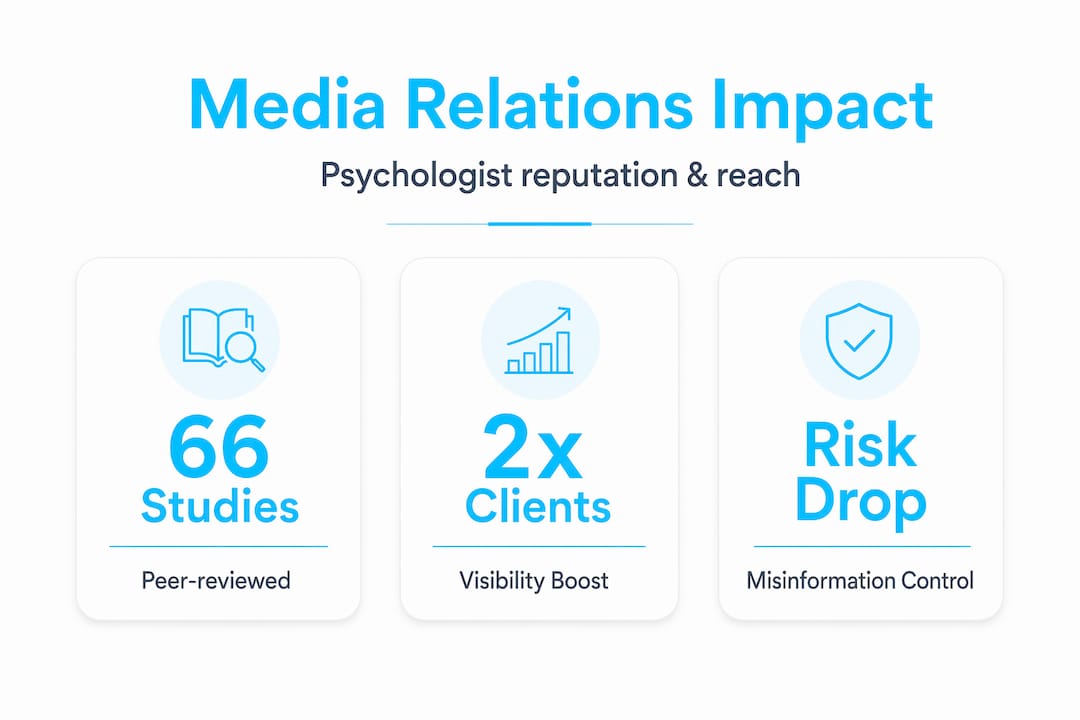
When misinformation about a psychological condition circulates in the media, the clinicians who have already established relationships with journalists are the ones who get called for corrections and context. The ones who stayed silent have no platform from which to respond. Embedding media relations into your professional practice builds the communication infrastructure you will need before you actually need it.
My take on why psychologists must engage media now
I have worked alongside psychologists who are extraordinarily skilled clinicians and researchers, and who have almost no public presence. That is a missed opportunity, but not for the reasons you might expect.
The public conversation about mental health is happening whether psychologists participate or not. Journalists will find a source. The question is whether that source is you or someone less qualified. In my experience, the practitioners who resist media engagement because they fear it conflicts with their values often end up ceding the most important conversations to voices with far fewer ethical guardrails.
What I have seen work consistently is this: psychologists who approach media as a public service, not a personal platform, build the most durable credibility. They answer calls. They explain without sensationalizing. They say “I don’t know” when they don’t know. That posture earns trust from journalists faster than any press release ever will.
Media relations done right does not compromise your ethics. It is an expression of them.
— Ryan McCormick
How Goldman McCormick PR supports psychologists in media
Building effective media relationships takes more than good intentions. It takes experience, connections, and a strategy calibrated to the specific ethical demands of mental health practice.
Goldman McCormick PR has spent over a decade placing clients in front of the journalists, producers, and editors who shape public opinion. Named by Forbes Magazine as one of America’s Best PR Firms for 2021, the firm understands how to position psychologists as credible expert voices without crossing the ethical lines that protect your license and your patients. From media training and press kit development to proactive pitching and crisis communication, the team at Goldman McCormick PR works with mental health professionals to build media relationships that serve both your practice and the public. Reach out to explore a strategy built specifically for your expertise.
FAQ
What does media relations mean for a psychologist?
Media relations for psychologists means building working partnerships with journalists to share accurate psychological expertise with the public. It is a structured, ethics-driven practice focused on public education rather than personal promotion.
How is media relations different from general PR for therapists?
General PR can include advertising and promotional campaigns that professional ethics codes prohibit for therapists. Media relations stays within those boundaries by focusing on earned media coverage and credible expert commentary.
Why is media relations important in psychology?
Media coverage connects mental health audiences to care and positions psychologists as trusted sources, which supports both public health outcomes and professional reputation simultaneously.
How do psychologists manage media relations ethically?
Psychologists manage media relations ethically by using non-promotional language, complying with professional codes, avoiding fear-based claims, and preparing accurate, accessible messaging before any media engagement.
What practical steps build media credibility for therapists?
Maintaining a current online presence, preparing ready-to-use expert quotes, and practicing the 30-second messaging rule are the three most effective steps therapists can take to become reliable media sources.