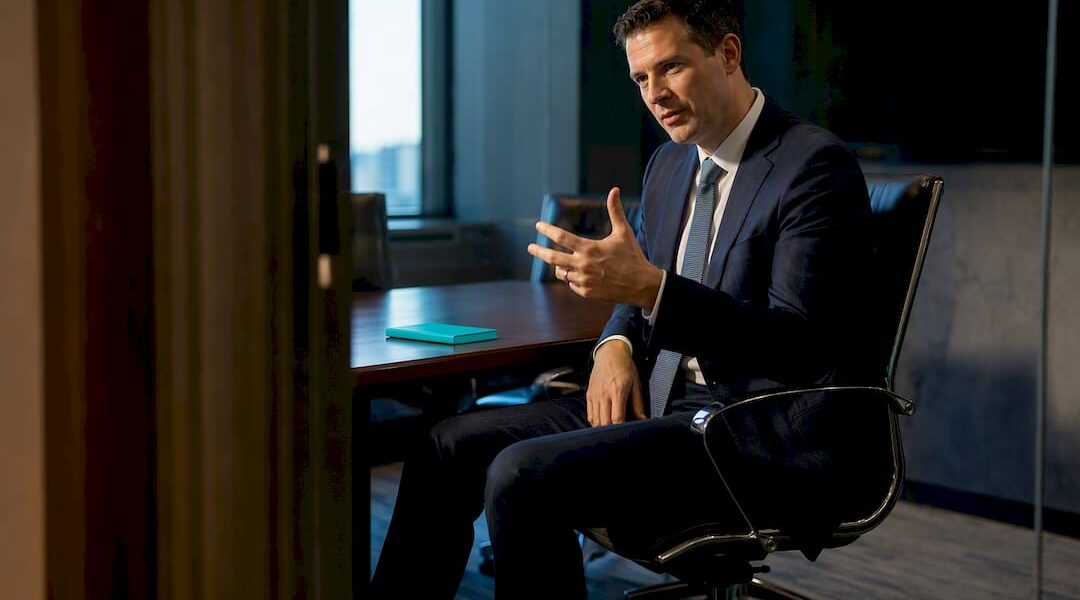
The single best move is simple: call the reporter back within the hour, walk in with three rehearsed messages in plain English, and pin down the interview terms before you say anything quotable. As Law notes, setting expectations upfront prevents the misunderstandings that turn a five-minute call into a client crisis. A public relations firm recognized by Forbes as one of America’s best PR firms in 2021 has coached attorneys through this exact sequence for over a decade. Offer a timely follow-up window to confirm quotes and you’ve already outperformed most lawyers who pick up the phone cold.
TL;DR:
- Confirm interview terms and clarify whether you can be quoted by name before answering substantive questions to prevent misunderstandings.
- Develop three simple, rehearsed messages using a clear headline, supporting fact, and vivid example to ensure quotable and memorable responses.
- Always negotiate ground rules such as on the record, background, or off the record, and follow up with written confirmation to protect sensitive information.
- Respond with short, direct sentences, avoid legal jargon, and use bridging statements to steer answers back to your prepared messages under pressure.
- Coordinate with litigation counsel beforehand and avoid discussing privileged, confidential, or sensitive client information to prevent legal or ethical breaches.
Table of Contents
- Pre-Interview Checklist: What to Ask and Prepare Before You Speak
- How Do You Build Three Key Messages Reporters Will Actually Quote?
- Setting Ground Rules: On the Record, on Background, or Off the Record
- How Should You Sound and What Should You Say During the Interview?
- What’s the Best Way to Handle Hostile Questions and Traps?
- Post-Interview Follow-Up: Debrief, Correct, and Build the Relationship
- How Do You Read the Reporter’s Audience?
- How Do You Manage Body Language and Tone in an Interview?
- How Do You Stay Calm and Composed Under Pressure?
- What Legal Pitfalls Should You Watch for When Speaking to the Media?
- What Information Counts as Legally Sensitive or Confidential?
- Using Anecdotes and Case Studies Without Breaching Confidentiality
- Why This Approach Works: A Newsroom-Facing Perspective
- How Goldman McCormick PR Prepares Attorneys for Media Interviews
- Sources
Pre-Interview Checklist: What to Ask and Prepare Before You Speak
Reporters respect attorneys who ask smart questions before the interview starts. It signals you’ve done this before, and it buys you time to prepare answers instead of improvising them.
Before you agree to talk, find out:
- The outlet, the reporter’s specific angle, and the publication deadline
- Whether other parties or opposing counsel have already been interviewed
- The format (phone, in-person, email) and expected length
- Whether the story includes photos, video, or other visuals that require separate coordination
Once you know the shape of the story, send the reporter a short package: a one-paragraph bio, a fact sheet on the case or issue, and, where appropriate, public filings that back your position. The AAJ’s Trial Magazine specifically recommends using public filings to support your narrative rather than relying on assertions the reporter has no way to check. Suggest a third-party source, too. A judge’s prior ruling or a bar association statistic carries more weight coming from someone other than you.
On the operations side, designate one person at the firm as the media contact, set a callback window (same day, ideally within two hours), and brief support staff so a paralegal doesn’t accidentally field a reporter’s question meant for you.
Pro Tip: Ask the reporter directly, “Is this for background, or can I be quoted by name?” Get the answer before the substantive questions start, not after you’ve already answered one.
How Do You Build Three Key Messages Reporters Will Actually Quote?
Reporters are not looking for a legal brief. They’re looking for a clean, quotable line that fits in two column inches. If you don’t give them one, they’ll paraphrase you, and paraphrasing is where lawyers get burned.
Build each message with a three-part structure:
- A headline sentence. One declarative statement a reader could understand without legal training.
- One supporting fact. A statistic, a filing, or a documented timeline that backs the sentence.
- A vivid example or comparison. Something that makes an abstract legal concept concrete, like comparing a discovery delay to “asking someone to find a needle in a haystack while blindfolded.”
A workable sound bite runs 10 to 15 words: “This ruling protects every small business owner who signs a standard lease.” Pick one public document, court order, or verified statistic to anchor each message so the reporter has something to check against. The ABA Journal points out that rehearsed, plain-language talking points are what actually make it into print, not the nuanced legal explanation you’d give a colleague.
Rehearse out loud, not in your head. Say each message five times in a row until it stops sounding like something you wrote and starts sounding like something you’d say to a neighbor.
Pro Tip: Record yourself delivering your three messages on your phone. If you can’t understand your own recording without rewinding, a reporter’s readers won’t either.
Setting Ground Rules: On the Record, on Background, or Off the Record
Every experienced legal spokesperson negotiates terms before the substance of an interview begins. This isn’t about controlling the press. It’s about making sure both sides agree on what’s usable before anything sensitive gets said.
Use direct language:
- “Can we treat my next few sentences as background, meaning you can use the information but not attribute it to me by name?”
- “I can go on the record for the general timeline, but I’d like the settlement figure to stay off the record.”
- Confirm the agreement out loud and, when possible, follow up with a one-line email restating the terms.
The New York Law Journal is blunt about this: assuming a reporter automatically understands your intended terms is a mistake attorneys make constantly, and it’s an avoidable one.
Know your limits, too. Privileged communications, settlement terms under a confidentiality clause, and anything that could prejudice a pending jury pool are off the table regardless of terms. When you can’t answer substantively, offer something useful instead: the procedural timeline, the next court date, or a public filing that speaks for itself.
How Should You Sound and What Should You Say During the Interview?
Short, declarative sentences beat long, qualified ones every time. A reporter can quote “The contract was void from the start.” A reporter cannot quote a 40-word sentence full of “notwithstanding” and “heretofore.” Drop the Latin and the legalese entirely, even when it feels imprecise to your trained ear.
When a question drifts from your message, bridge back rather than dodge:
- “That’s a fair question, and here’s what matters most for your readers…”
- “I can’t speak to that specifically, but what I can tell you is…”
- “The real story here is…”
These bridges keep you from sounding evasive while steering the conversation toward material you’ve already rehearsed. The ABA Journal reports that reporters consistently favor sources who respond quickly and stay concise, since it directly increases their odds of accurate, favorable coverage.
Email and text interviews demand the same discipline in a different format. Write your answer, then cut it in half. A three-sentence email response gets quoted whole; a three-paragraph one gets excerpted, sometimes badly.
If you’re being photographed or filmed alongside the print piece, sit or stand with open posture and steady eye contact. Fidgeting or crossed arms photograph as defensiveness, even when your words are measured.
What’s the Best Way to Handle Hostile Questions and Traps?
A hostile question is rarely personal. It’s usually the reporter testing whether your message holds up. Treat it as an opening, not an attack.
- Correct the premise, then pivot. If a question contains a false assumption, state the correct fact plainly before moving to your message: “That’s not accurate. What the filing actually shows is…”
- Buy time when you need it. If you don’t know an answer, say so and commit to a deadline: “I want to give you the right number. Let me confirm and call you back within the hour.”
- Request corrections methodically. If a published piece gets a fact wrong, contact the reporter directly, cite the specific error, and provide the document that proves it, not just your recollection.
An effective bridge sounds like this: “I understand why you’re asking that, but the facts on record show…” It’s firm without being combative, and it gets your point into the story instead of leaving a hostile question unanswered.
Pro Tip: Never guess at a number under pressure. A wrong figure in print is far more damaging than a 30-minute delay while you confirm it.
Post-Interview Follow-Up: Debrief, Correct, and Build the Relationship
The interview isn’t over when you hang up. Debrief with your client or team immediately while details are fresh, and log exactly what was said, especially anything sensitive that came up unexpectedly.
- Note any statement that might need a correction request before publication
- If an error appears in print, contact the reporter professionally and cite the specific document or fact that supports the fix
- Share the published piece with relevant staff and clients, and log the placement for the firm’s media record
- Send a short thank-you note to the reporter, even if the coverage wasn’t perfect
That last step matters more than most attorneys assume. Reporters remember who was easy to work with, and a brief, gracious follow-up often means you’re the first call next time a similar story breaks.
How Do You Read the Reporter’s Audience?
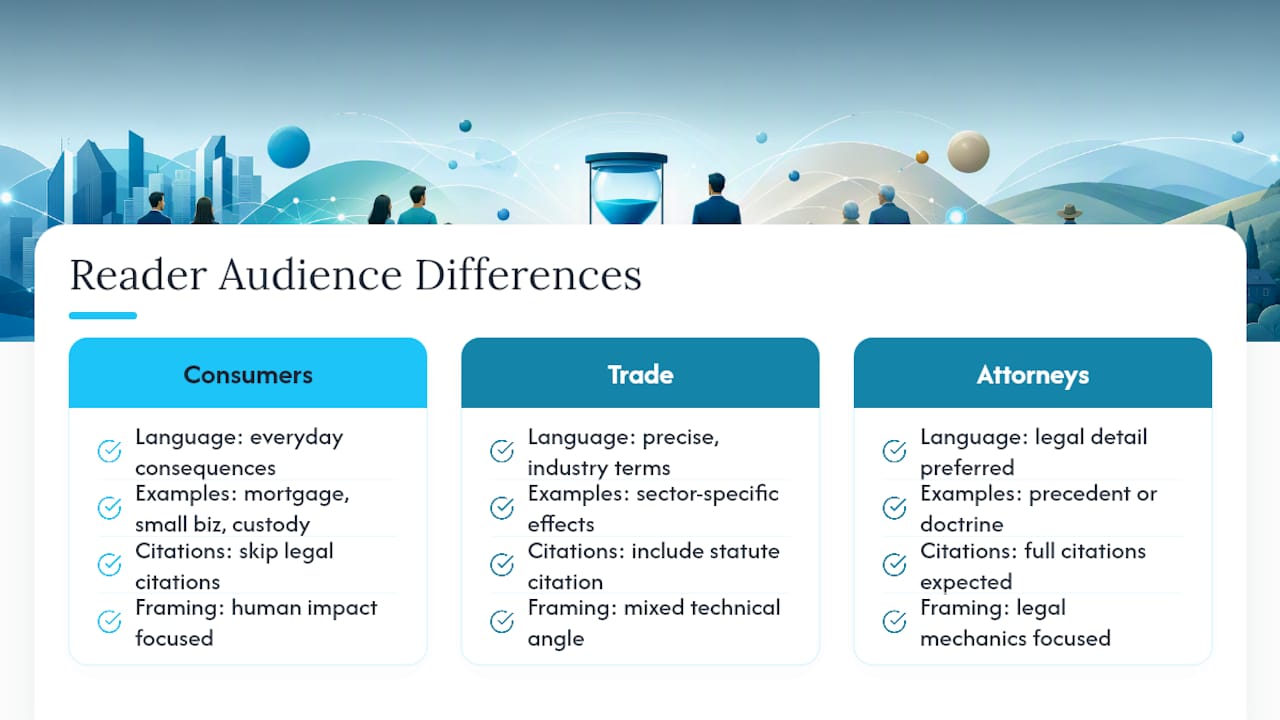
A story in a regional business journal and a story in a general-circulation newspaper demand different language for the same set of facts. Before you answer a single question, figure out who’s actually going to read the piece.
Ask yourself whether the audience is consumers, industry professionals, or other attorneys. A consumer-facing outlet needs your point translated into everyday consequences: what this ruling means for someone’s mortgage, their small business, their custody arrangement. A trade publication can handle more precision and will expect it.
Tailor your examples accordingly. If you’re talking to a local paper about a landlord-tenant dispute, skip the statute citation and lead with what changes for renters. If you’re speaking to a legal trade outlet, the statute citation is exactly what they want, and skipping it will read as vague.
Watch for the reporter’s own framing during the call. If they keep steering toward the human impact of a ruling rather than its legal mechanics, that’s a signal about their editor’s angle and their readers’ appetite. Match your sound bites to that framing instead of fighting it. You’ll get quoted more, and you’ll get quoted accurately, because you gave the reporter language that fits the story they’re already writing.
How Do You Manage Body Language and Tone in an Interview?
Print interviews still involve a physical presence, whether it’s a photo shoot, a courthouse hallway conversation, or a video component running alongside the article online. Your tone and posture shape how your quotes get interpreted even when only your words end up on the page.
Keep your voice level and unhurried. A rushed, high-pitched tone reads as defensive even over the phone, where the reporter can’t see you at all, because pace and pitch carry as much signal as word choice. Slow down deliberately, especially on your key messages.
If you’re being photographed, avoid crossed arms, clenched hands, or a stiff jaw. Open posture and a neutral, attentive expression signal confidence without looking rehearsed. Make eye contact if the conversation is in person; it’s one of the simplest, most reliable markers of credibility a photographer or reporter will note.
Tone matters as much in written follow-ups as in the room. An email response full of hedges and qualifiers reads as nervous even when the underlying answer is solid. Write the way you’d want to sound if the reporter read your email out loud on the phone to an editor, because that’s essentially what happens next.
How Do You Stay Calm and Composed Under Pressure?
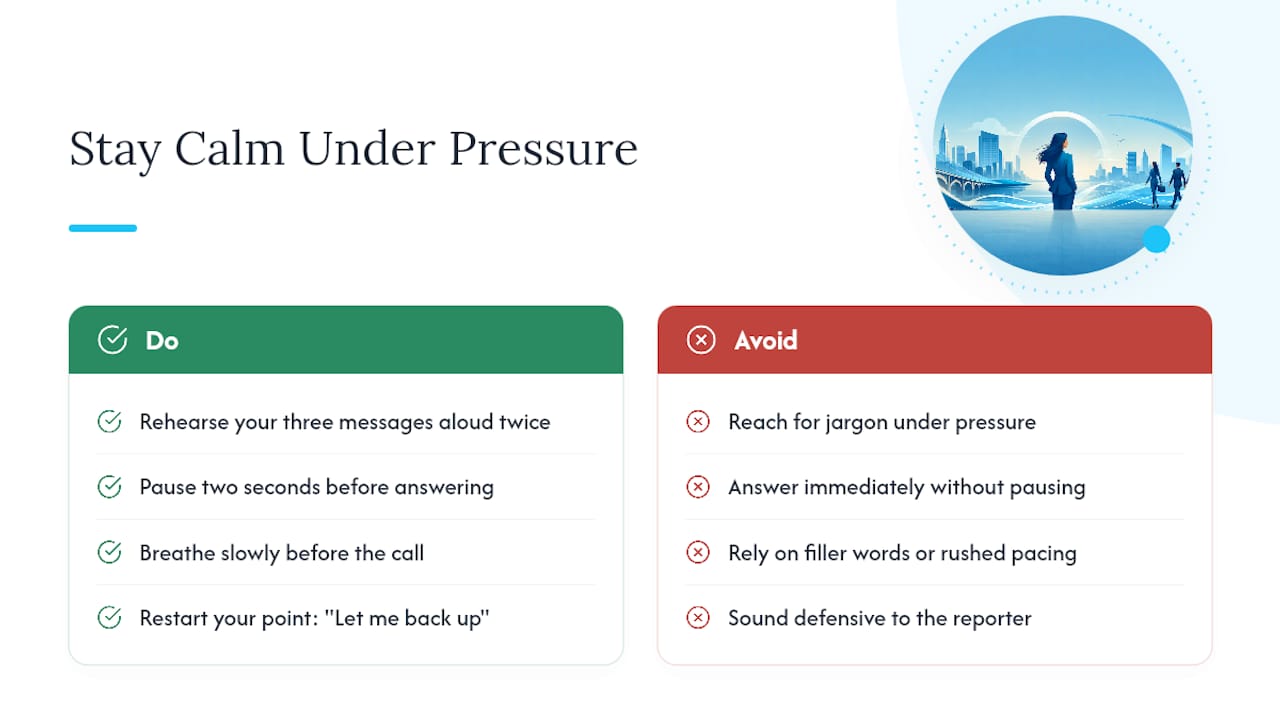
Nerves show up as filler words, rushed pacing, or a defensive tone, and reporters notice all three. The fix isn’t confidence you don’t feel. It’s preparation specific enough that you’re not improvising in the moment.
Before the call, run through your three messages twice, out loud, even if you feel silly doing it. Rehearsal is what separates a lawyer who sounds composed from one who sounds like they’re reading a legal memo for the first time. Attorneys who skip this step are the ones most likely to reach for jargon mid-interview, because jargon is a crutch when the plain-language version hasn’t been practiced.
If a question catches you off guard, pause before answering. A two-second pause reads as thoughtful. A rushed, wrong answer reads as unprepared, and it’s far harder to walk back once it’s in print.
Breathe before you pick up the phone. It sounds basic, but a few slow breaths measurably slow your speaking pace, and speaking pace is one of the biggest tells of stress to a reporter who’s interviewed dozens of nervous sources. If the interview is going sideways, it’s fine to say, “Let me back up and make sure I answer that clearly,” and restart your point. Reporters would rather get a clean quote the second time than a garbled one they have to guess at.
What Legal Pitfalls Should You Watch for When Speaking to the Media?
The biggest ethical risk isn’t saying too little. It’s saying something that damages your client’s case or violates a professional obligation you didn’t think through in the moment.
Coordinate with litigation counsel before any high-profile interview, particularly one with potential juror exposure. Statements that seem harmless in a hallway conversation can resurface in a courtroom, and a comment framed around process and timelines carries far less risk than one that touches disputed facts a jury might later weigh. This coordination step matters more the higher the stakes of the underlying case.
Confidentiality obligations, attorney-client privilege, and firm media policies don’t pause because a reporter is on the line. Review what you can and can’t discuss before the call, not during it. Resources like The Jewish Legal News cover the boundaries attorneys regularly navigate around confidentiality and conflicts, and they’re worth a periodic read even outside an active media request.
If you’re representing a client rather than speaking for yourself, get explicit sign-off on your talking points beforehand. A quote that seems like harmless color to you might contradict a strategic position your client’s litigation team is building elsewhere.
What Information Counts as Legally Sensitive or Confidential?
Some categories are non-negotiable regardless of how skilled the reporter is at getting information out of you. Settlement amounts under a confidentiality clause, privileged attorney-client communications, and any sealed court record stay off-limits no matter how the question is phrased.
Facts that could prejudice a pending jury deserve special caution even when they’re technically public. A detail buried in a filing might be fair game legally but still risky to repeat in a quote that could end up read by a juror before trial. When in doubt, describe the process rather than the substance: the next hearing date, the general timeline, or the applicable legal standard, without characterizing disputed facts.
Client identities in certain matters, ongoing settlement negotiations, and internal firm strategy also stay off the table. If a reporter pushes on any of these, the honest answer is simply that it’s not something you can discuss, paired with an offer of whatever public information you can share instead. That’s a substantive, respectful non-answer, and it reads far better in print than a flat “no comment.”
Using Anecdotes and Case Studies Without Breaching Confidentiality
A well-placed anecdote makes a legal point memorable in a way that statistics rarely do. The trick is separating the illustrative value of a story from any detail that could identify the actual client behind it.
Strip out names, locations, and any combination of details that would let a reader piece together who the case involves. Change the identifying specifics while keeping the legal principle intact. If you handled a case involving a specific type of contract dispute, describe the pattern, “clients in this situation commonly face…”, rather than the individual facts of the matter itself.
Composite examples work well here. Describing a general pattern you’ve seen across several matters, rather than one identifiable case, gives a reporter the texture they want without exposing anything a client shared in confidence. If a case is already part of the public record through a filed opinion or court document, you have more latitude, but confirm with the client or your firm before treating anything as fair game simply because it’s technically public.
Why This Approach Works: A Newsroom-Facing Perspective
Ryan McCormick leads media strategy at a public relations firm founded in 2010 by former members of the media and named one of America’s best PR firms by Forbes in 2021. That newsroom-side experience shapes the advice here more than any theory does.
Reporters on deadline don’t reward eloquence. They reward the source who calls back fast and hands them a usable quote before the clock runs out. Attorneys who treat media training, message rehearsal, and interview prep as optional are the ones who end up misquoted, not because reporters were careless, but because nothing quotable was offered in the first place. Firms that build this into standard practice, rehearsing sound bites the way they’d rehearse an opening statement, consistently get cleaner, more favorable coverage.
— Ryan McCormick
How Goldman McCormick PR Prepares Attorneys for Media Interviews
Most attorneys only think about media training after a bad quote has already run. The stronger move is preparing before the first call comes in, so you’re never improvising your firm’s message in front of a reporter on deadline.
Goldman McCormick PR works directly with attorneys and legal spokespeople on exactly this preparation, including:
- Media training sessions that simulate hostile questions and deadline pressure
- Message development and sound bite scripting tailored to your practice area
- Interview rehearsals ahead of high-stakes press conferences or breaking coverage
If you want a firm that’s spent over a decade getting legal clients placed accurately in newspapers, on radio, and on TV, reach out to Goldman McCormick PR to talk through what your next interview needs before the reporter calls.