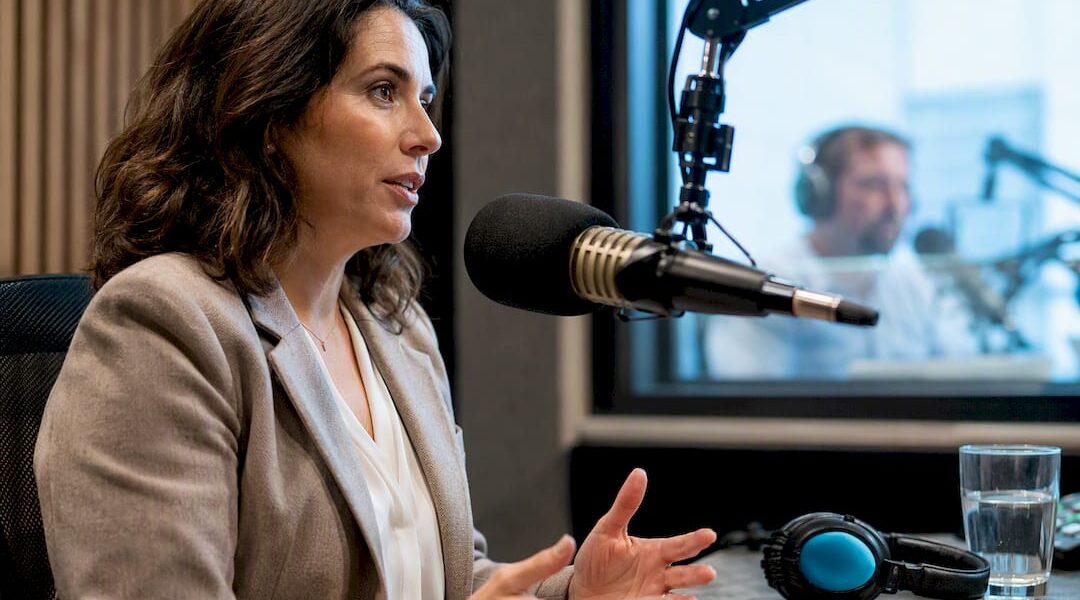
A specialized PR firm can secure radio interviews for psychologists, and the process runs on producer relationships, not luck. PR Newswire’s own media tour guidance recommends a pitching window of several weeks to book segments reliably. If you’re a psychologist or practice owner ready to get heard, the next move is a media consultation and audit with a PR firm like Goldman McCormick PR.
TL;DR:
- Producer relationships are crucial for shortening the booking process and securing radio interviews more reliably than cold pitches.
- A radio media tour can efficiently generate multiple segments in a single day, significantly expanding reach across markets.
- Clear scope, timelines, and cancellation terms are essential when signing with a PR firm, along with verifying their media contacts and track record.
- Effective interview preparation includes developing key messages, rehearsing specific formats, and ensuring technical quality to maximize on-air success.
- Post-interview activities like content amplification and reputation management are vital for building ongoing media presence and securing repeat bookings.
Table of Contents
- Why hire a PR firm for radio placements
- What does a PR firm actually do to book radio interviews?
- How do you choose the right PR firm?
- How should psychologists prepare for a radio interview?
- What does a radio placement campaign cost and how long does it take?
- How do you measure success after a radio placement?
- Goldman McCormick PR’s credentials for psychologist media placements
- What should you expect in a PR firm contract?
- What happens after the interview airs?
- The gap between “get me on the radio” and building a real media presence
- Ready to get your voice on the radio?
- Sources
Why hire a PR firm for radio placements
A PR firm’s real value is its producer relationships. Cold pitches from an unknown practice rarely land; a firm with standing contacts and a tailored angle gets read, and often gets booked. Roxhill’s spokesperson guidance notes that media training and professional delivery materially raise the odds a producer invites a guest back, which compounds the value of that first booking.
Firms also handle the parts psychologists don’t have time for: message development, scheduling, and technical logistics.
Statistic Callout: Batching interviews through a radio media tour lets one psychologist complete a full day of pre-booked segments across multiple markets from a single studio or remote setup, according to PR Newswire’s RMT/VMT guidance — far more efficient than pitching one station at a time.
What a firm can’t do is promise a specific outlet or air date. Booking depends on story fit, news cycles, and producer schedules.
- Producer relationships shorten the path from pitch to booking
- Firms manage timing, tech checks, and message consistency
- Radio media tours (RMTs) multiply reach in a single day
- No agency can legally guarantee placement, only effort and access
What does a PR firm actually do to book radio interviews?
Booking a psychologist on radio involves more than sending an email. A firm typically works through four connected stages.
- Pitch development. The firm crafts a timely angle tied to your specialty, then builds a one-page brief covering the topic, target outlet, deadline, and two to three key messages, following the same brief structure media-prep guidance for expert sources recommends.
- Media outreach. Personalized pitches go to a curated list of producers who cover mental health, wellness, or relevant news topics, followed by a disciplined follow-up cadence rather than a single blast.
- Booking and logistics. Once a producer bites, the firm confirms scheduling, sends prep materials, and coordinates any technical requirements ahead of time.
- Media tour formats. Depending on scope, this could mean a single in-studio appearance, a phone-in, or a full radio media tour (RMT) where you complete several pre-booked interviews in one day.
Radio segments typically run up to several minutes including transition time, so firms build schedules with realistic buffers between bookings, per PR Newswire’s tour-planning guidance. A well-run RMT can turn one prep session into a week’s worth of media coverage.
- Angle and brief creation
- Producer outreach and follow-up
- Scheduling, tech checks, and confirmations
- Single placements or full media tours
How do you choose the right PR firm?
Not every firm that lists “media placement” as a service actually has radio producer relationships. Vetting matters as much as budget.
Ask for examples of past work with health professionals or clinicians, and request a producer reference if the firm claims regular placements. Ask what’s included in the fee versus billed separately: media training, brief writing, and follow-up pitching should be spelled out, not assumed. Request the KPIs they’ll report on and how often. A vague “we’ll keep you posted” answer is itself a warning sign.
Watch for these red flags before signing anything:
- Guarantees of a specific placement or air date
- No client or producer references available on request
- Deliverables described only in broad terms, never itemized
- Pricing that changes mid-conversation without explanation
Weigh selection on four criteria: demonstrated media reach, familiarity with the mental-health or healthcare space, in-house media-training capability, and verifiable client outcomes.
Pro Tip: Ask a prospective firm to walk you through one recent placement start to finish, from the original pitch angle to the aired segment. How they answer tells you more than their pitch deck ever will.
How should psychologists prepare for a radio interview?
Getting booked is half the job. Performing well on air is what turns one interview into a recurring segment.
- Build your key messages. Draft a few core points with a short soundbite version of each, then a longer plain-language expansion for when a host wants more detail. Media-prep guidance for expert sources recommends exactly this two-tier structure.
- Rehearse for the format. Live and taped segments demand different pacing. Practice pivoting a tangential question back to your key messages without sounding evasive.
- Run the tech checklist. Confirm microphone quality, find a quiet room, use a wired connection if you’re calling in remotely, and keep a backup phone line ready. Roxhill’s broadcast prep guidance treats tech setup as a top priority, not an afterthought.
- Mind your on-air behavior. Keep answers concise, skip clinical jargon, use careful phrasing around sensitive mental-health topics, and follow up with anything you promised the host within 24 hours.
Pro Tip: Test your connection and run one 30-second answer aloud about 15 minutes before a remote segment. That single dry run catches pacing problems before a producer ever hears them, a habit freelance-expert prep guides specifically recommend.
What does a radio placement campaign cost and how long does it take?
Start pitching several weeks before your target air date. That window gives producers time to plan segments around your availability and theirs, a timeframe PR Newswire’s media tour guidance treats as standard for radio and satellite tours alike.
Statistic Callout: A full radio media tour typically blocks out one dedicated day, with interview slots running up to several minutes each plus transition time between segments, based on PR Newswire’s RMT scheduling guidance.
Cost drivers vary by firm and scope:
- Agency seniority and the experience level of the team assigned
- Scope: a single placement versus a full RMT across multiple markets
- Production needs, including any studio time or remote setup support
- Travel, if any segments require in-person studio visits
Ask any firm for a clear, written scope of work before signing, including which costs are pass-through (studio fees, travel) versus bundled into the retainer.
How do you measure success after a radio placement?
Track four numbers after every campaign: placements booked, estimated audience impressions, referral traffic to your practice website, and inbound leads or consultation requests tied to the air date.
PR Newswire’s guidance on broadcast tours stresses setting these KPIs before the campaign starts, not after, so results can be measured against a real baseline. Once a segment airs, a competent firm should help you repurpose it: clipping the audio for your website, promoting it across social channels, and pitching a follow-up appearance while the topic is still timely.
- Placements booked and audience impressions
- Website traffic and inbound leads tied to air dates
- Social promotion and clip reuse
- Follow-up pitches to secure repeat bookings
Ask for a sample report before signing so you know exactly what “success” looks like on paper, not just in conversation.
Goldman McCormick PR’s credentials for psychologist media placements
Goldman McCormick PR was founded in 2010 by active and former members of the media, and the firm specializes in getting clients heard on radio, seen on TV, and read about in newspapers, including producing nationally syndicated radio programs on the Genesis Communications Network and Starcom Radio Network.
That production background matters when you’re vetting a firm for radio work specifically, since running your own programs means genuine familiarity with studio logistics and producer expectations, not just pitch-writing.
The firm’s outside recognition includes a Forbes citation as one of America’s best PR firms in 2021, a Gold Award in Bulldog Reporter’s CSR Awards for Best Cause/Advocacy Campaign in 2016, and a New York Observer citation in 2014 naming it one of the top five agencies for legal PR. For a psychologist evaluating firms, that track record translates into practical advantages: existing producer access, real production experience, and in-house media-training capability rather than a subcontracted afterthought.
What should you expect in a PR firm contract?
A radio-placement engagement should spell out scope, timeline, and exit terms before you sign anything, not after the first invoice arrives.
Most firms structure engagements one of two ways: a project-based agreement for a single campaign, like one radio media tour, or a retainer for ongoing media outreach over several months. Either format should specify the deliverables schedule up front: when you’ll receive the media brief, when producer outreach begins, and when you can expect the first booking update. A firm that can’t commit to a rough timeline for these milestones hasn’t run the process before.
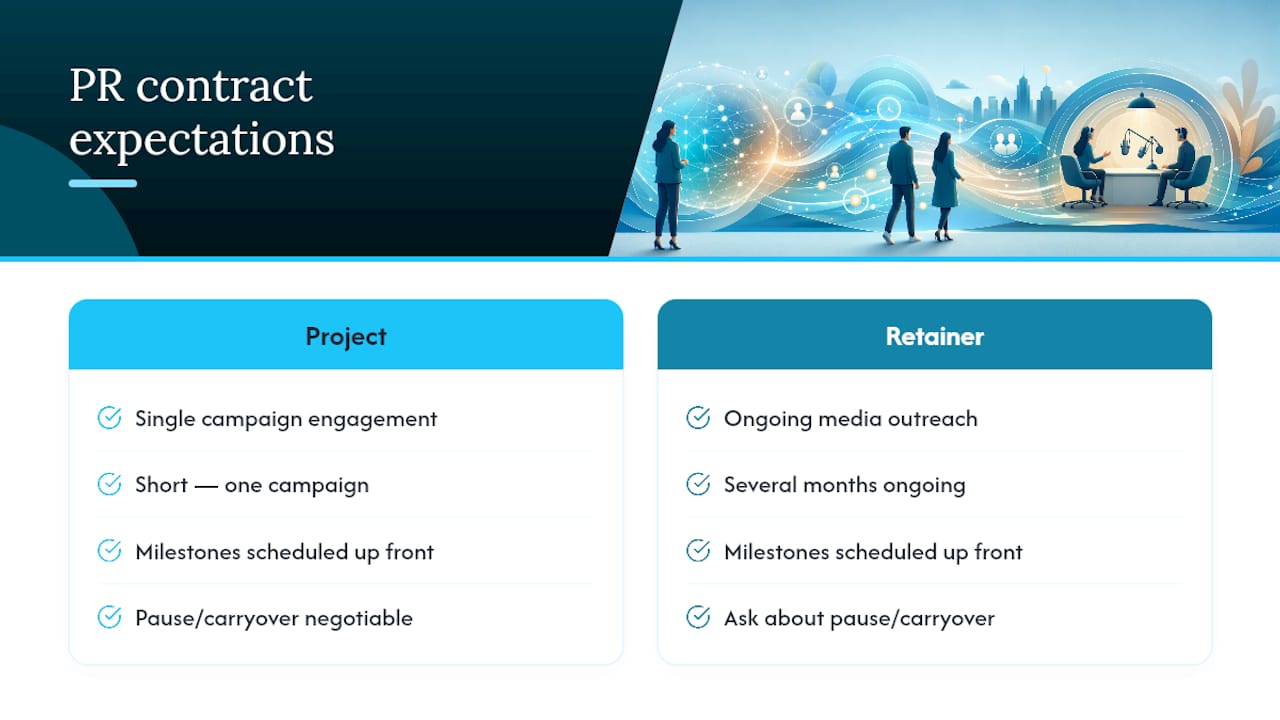
Cancellation terms deserve particular attention. Ask what happens if you need to pause the engagement after 30 days, whether unused pitching time carries over, and whether there’s a notice period required before ending a retainer. Reasonable firms build in a 30-day notice window; anything that locks you into a long-term commitment with no exit should raise questions.
Also clarify who owns the pitch materials and media list if you switch firms later. A brief written for your practice and a curated producer contact list represent real work product, and a fair contract states plainly whether those assets transfer to you at the end of the engagement or stay proprietary to the agency.
Get all of this in writing before the first pitch goes out. Verbal assurances about “flexibility” mean nothing once a dispute actually happens.
What happens after the interview airs?
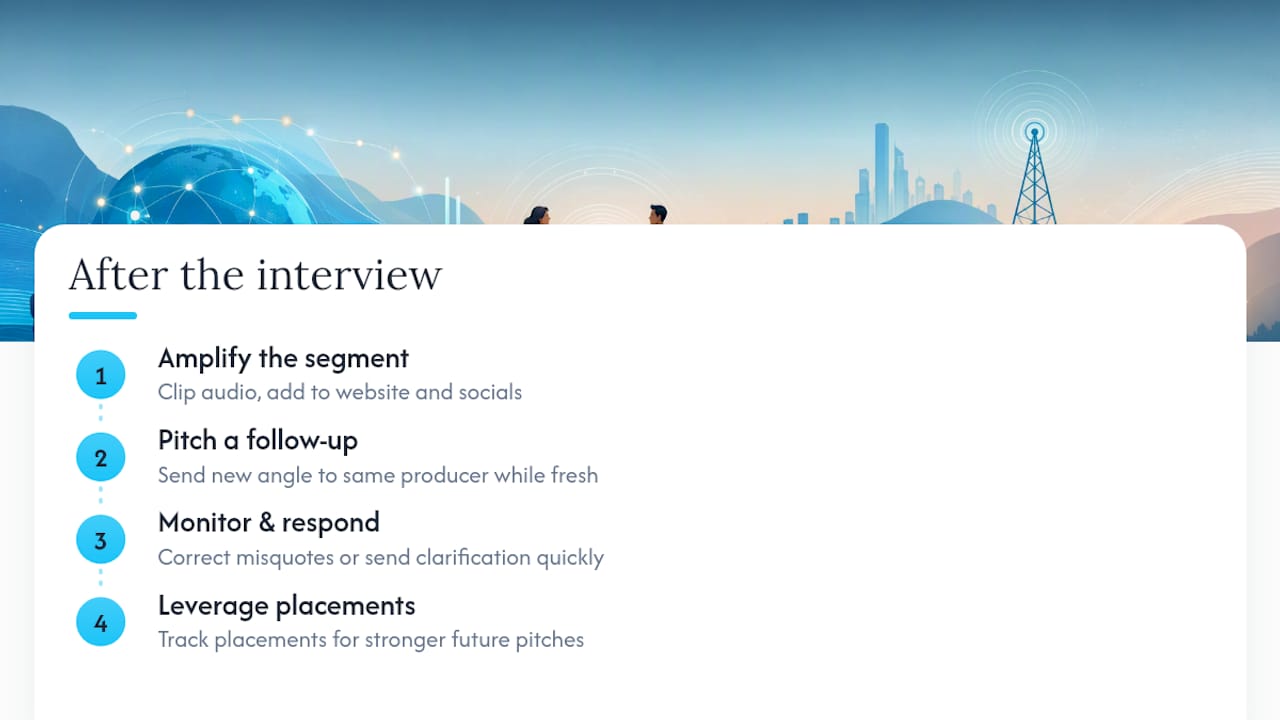
The work doesn’t end when the segment goes live. A firm worth hiring treats the aired interview as raw material for ongoing reputation management, not a closed file.
That starts with amplification: clipping the audio for your practice website, sharing it across your social channels, and adding it to a running media page that shows prospective patients and referral sources you’re a credible voice in your field. From there, a good firm pitches a follow-up angle to the same producer while the topic is still fresh, since repeat guests are far easier to book than first-timers.
Reputation management also means monitoring how the interview lands. If a host mischaracterizes a clinical point or a comment gets clipped out of context online, your firm should already have a response plan, whether that’s a follow-up clarification pitch or a direct note to the producer. Silence after a rough moment on air does more damage than a calm, prompt correction.
Longer term, each successful placement becomes leverage for the next pitch. A producer list that already includes “recently featured on [station]” is a stronger pitch than a cold introduction, and a firm that tracks this systematically will fold it into future outreach rather than starting from zero every time you want more coverage.
The gap between “get me on the radio” and building a real media presence
Most psychologists come to this looking for a single win: one interview, one credibility boost, done. That instinct undersells what actually moves the needle. A single radio hit fades from memory in a week. What builds a referral pipeline is the second invitation, then the third, and that only happens when the first appearance was handled well enough that a producer remembers you.
The conventional advice on this topic focuses almost entirely on the pitch, as if getting booked were the hard part. It isn’t. Getting booked once is achievable with a decent angle and persistence. Getting invited back is the actual test, and it depends on preparation most people skip: rehearsing for the specific format, having genuinely useful takeaways instead of scripted talking points, and following through on anything promised on air.
If you’re evaluating firms, prioritize the ones who talk about repeat bookings and reputation management resources for speakers as much as the first placement. That’s the difference between a PR firm and a pitch-writing service.
— Ryan McCormick
Ready to get your voice on the radio?
If you’ve read this far, you already know what separates a real media placement strategy from a hopeful email blast: producer relationships, a disciplined pitch process, and preparation that turns one booking into several. Goldman McCormick PR built its practice on exactly that foundation, with a founding team drawn from working media professionals and a production history that includes nationally syndicated radio programming, not just outside pitching.
A consultation with Goldman McCormick PR starts with a media audit: a review of your current visibility, a sample pitch angle built around your specialty, and a draft prep plan so you know what a real engagement looks like before committing to one. In a typical first 30 to 60 days, that becomes a written media brief, a curated producer list, a two-week pitching plan, and a media-training session to get you camera and mic ready. If you’re ready to move past a single interview and build an actual radio presence, schedule a consultation with Goldman McCormick PR and get the process started.