Defense counsel may speak to the media, but only inside the narrow band the ABA Model Rule 3.6 allows: no extrajudicial statement that you know, or reasonably should know, will be publicly disseminated and carries a substantial likelihood of materially prejudicing the proceeding. The U.S. Supreme Court locked in that “substantial likelihood” standard in Gentile v. State Bar of Nevada (1991), and it remains the operative test today. When a reporter calls, the move is not silence and it is not spin. It is verification, restraint, and coordination.
Do this first:
- Pause before responding. Nothing said off the cuff is unsaid later.
- Check the public record. You may cite it; you may not go beyond it.
- Loop in ethics counsel or a PR partner like Goldman McCormick PR before the second call comes in.
Do not opine on guilt, innocence, or a witness’s credibility. That single habit causes more Rule 3.6 trouble than any other.
Key Takeaways
Rule 3.6 permits defense counsel to speak publicly only about facts already in the public record, never about guilt, credibility, or inadmissible evidence.
| Point | Details |
|---|---|
| Know the standard | Rule 3.6 bars statements with a substantial likelihood of materially prejudicing the proceeding, per Gentile. |
| Use the safe harbors | Rule 3.6(b) and © permit public-record facts, scheduling, and narrow rebuttal statements only. |
| Never opine on guilt | Character attacks and inadmissible-evidence disclosures are the top triggers for discipline. |
| Script surrogate statements | Family and PR spokespeople aren’t bound by Rule 3.6, but unscripted comments still create prejudice risk. |
| Bring in ethics-first PR support | Goldman McCormick PR builds statements around the same public-record standard bar panels apply. |
Table of Contents
- What The Trial Publicity Rule Actually Says
- The Narrow Safe Harbors You Can Actually Rely On
- How To Handle A Media Call Without Tripping The Rule
- Working With Surrogates And PR Counsel Without Crossing The Line
- When To Ask The Court For Help Instead Of Managing It Yourself
- What Actually Gets Defense Lawyers Disciplined
- What A PR Professional Sees Working With Defense Counsel
- Ethics-First Media Support From Goldman McCormick PR
- Sources
What The Trial Publicity Rule Actually Says
Rule 3.6(a) bars a lawyer involved in a matter from making a public statement he or she knows, or should know, will likely cause material prejudice to the proceeding. That is deliberately vague language, and it is vague on purpose. Subsections (b) and © narrow it by carving out specific safe harbors: factual, public-record statements are fine; a limited rebuttal to correct someone else’s prejudicial publicity is fine too.
Gentile is the case every defense attorney should actually read, not just cite. The Court examined a Nevada rule nearly identical to Model Rule 3.6, and split badly on vagueness grounds, but a majority upheld the substantial-likelihood standard itself. The opinion turned heavily on two variables: who is speaking and when.
A lawyer’s statement carries more weight with the public than a stranger’s, and a statement made the week before jury selection carries more prejudicial risk than one made a year before trial. Timing and identity are not side issues in this analysis. They are the analysis.
Sheppard v. Maxwell (1966) is the cautionary tale behind all of this. Saturation press coverage, a circus-like courtroom, and a jury effectively marinated in prejudicial reporting led the Supreme Court to overturn Sam Sheppard’s conviction and set the stage for decades of trial publicity doctrine that followed.
- Rule 3.6(a): the prohibition (substantial likelihood of material prejudice)
- Rule 3.6(b): the safe harbors (facts, public record, scheduling, and more)
- Rule 3.6©: the narrow rebuttal exception
The Narrow Safe Harbors You Can Actually Rely On
Rule 3.6(b) is short, and every word in it matters. Stray outside these categories and you are improvising.
- General nature of the claim or defense, stated without argument or characterization
- Information already in the public record
- Scheduling and procedural status (hearing dates, filing deadlines)
- Requests for public assistance in obtaining evidence
- Warnings of danger where public safety is genuinely at issue
- Limited identity and arrest facts in criminal matters: the charge, the identity of the accused, and time and place of arrest
Rule 3.6© is different and stricter. It permits a lawyer to make a statement that “a reasonable lawyer would believe is required to protect a client from the substantial undue prejudicial effect of recent publicity not initiated by the lawyer or the lawyer’s client.” That is a rebuttal safe harbor, not a soapbox. It only covers mitigating someone else’s damage, and only to the extent necessary.
Pro Tip: Before any statement goes out, run it through a three-part filter: is it a fact, is it already in the public record, and would a transcript of it embarrass you in front of the trial judge? If it fails any one of those, it doesn’t go out.
How To Handle A Media Call Without Tripping The Rule
The pattern that gets defense lawyers in trouble is almost always the same: a reporter calls, catches counsel off guard, and gets a quote that sounds reasonable in the moment and reads as an opinion on guilt in print. Build a triage process before you need one.
- Verify the public record first. Pull the docket, the charging document, and any filed motions before saying anything.
- Confine the statement to fact. No adjectives, no characterization of the evidence, no commentary on the accuser or witnesses.
- Clear it with co-counsel or your client when the statement touches strategy or case posture at all.
- Use a short written statement, not a live, unscripted interview. A single paragraph reduces the odds of an off-the-record comment becoming an on-the-record problem.
Three usable templates: a citation to the public record (“The complaint, filed 2026, alleges…”), a factual correction (“Contrary to earlier reports, no weapon was recovered at the scene, per the police report filed 2026”), or a request for assistance (“We are asking anyone with information about [event] to contact…”).
Social media deserves its own caution. Personal accounts get subpoenaed, screenshotted, and read into the record more often than lawyers expect. Limit personal commentary entirely during an active matter, route anything public through a single official channel, and keep timestamps and metadata on anything you do post. It might matter later, in voir dire or in a bar complaint.

Working With Surrogates And PR Counsel Without Crossing The Line
Family members, character witnesses, and communications professionals are not personally bound by Rule 3.6, but their statements can still prejudice the jury pool just as effectively as a lawyer’s would. That distinction cuts both ways: it gives you flexibility, and it gives you exposure if you are not careful.
- Use written scripts. A surrogate improvising in front of a camera is a liability, not an asset.
- Anchor every surrogate statement to the public record. Nothing else.
- Keep privileged strategy out of every conversation a surrogate has with press, family, or anyone outside the defense team.
- Retain PR counsel early, before the case gets loud, not after a bad headline forces your hand.
An ethics-first PR engagement should start with the same question your ethics counsel would ask: does this statement stay inside 3.6(b) or 3.6©? If a firm cannot answer that clearly, that is a signal to look elsewhere.
When To Ask The Court For Help Instead Of Managing It Yourself
Some publicity problems are bigger than a press statement can fix. Courts have several tools, and judges reach for them in a fairly predictable order of severity: admonitions to counsel and witnesses first, expanded voir dire and careful jury instructions next, then sequestration, change of venue, or a gag order in the most extreme cases.
- Gag orders restrict trial participants’ public statements, but courts apply real skepticism given the First Amendment interests at stake. Overbroad orders get challenged and sometimes overturned.
- Change of venue addresses saturation coverage in one geographic market. It is a heavy remedy, reserved for genuinely Sheppard-level situations.
- Expanded voir dire lets counsel probe jurors’ exposure to coverage directly, often the most practical first move.
Seek judicial intervention when a correction or PR strategy cannot realistically undo the damage. Handle it yourself when a factual clarification will do the job.
What Actually Gets Defense Lawyers Disciplined
The ABA Journal’s coverage of Rule 3.6 pitfalls and firm-level enforcement summaries point to a consistent pattern.
- Publicly asserting a client’s innocence in argumentative terms rather than describing the plea entered, which reads as opinion, not fact.
- Repeating evidence a judge has ruled inadmissible, which can taint a jury pool even after the ruling.
- Attacking a witness’s or accuser’s credibility in a press interview, the single most common trigger for bar complaints.
The lesson from each: stick to the docket, not your theory of the case.
What A PR Professional Sees Working With Defense Counsel
Most of the work is quiet: monitoring coverage, drafting a factual correction, and saying no to a reporter’s request more often than saying yes. Goldman McCormick PR has been recognized by Forbes as one of America’s best PR firms and by the New York Observer among the top legal PR agencies, which matters less as a credential and more as evidence the firm has sat through enough of these calls to know which ones are landmines.
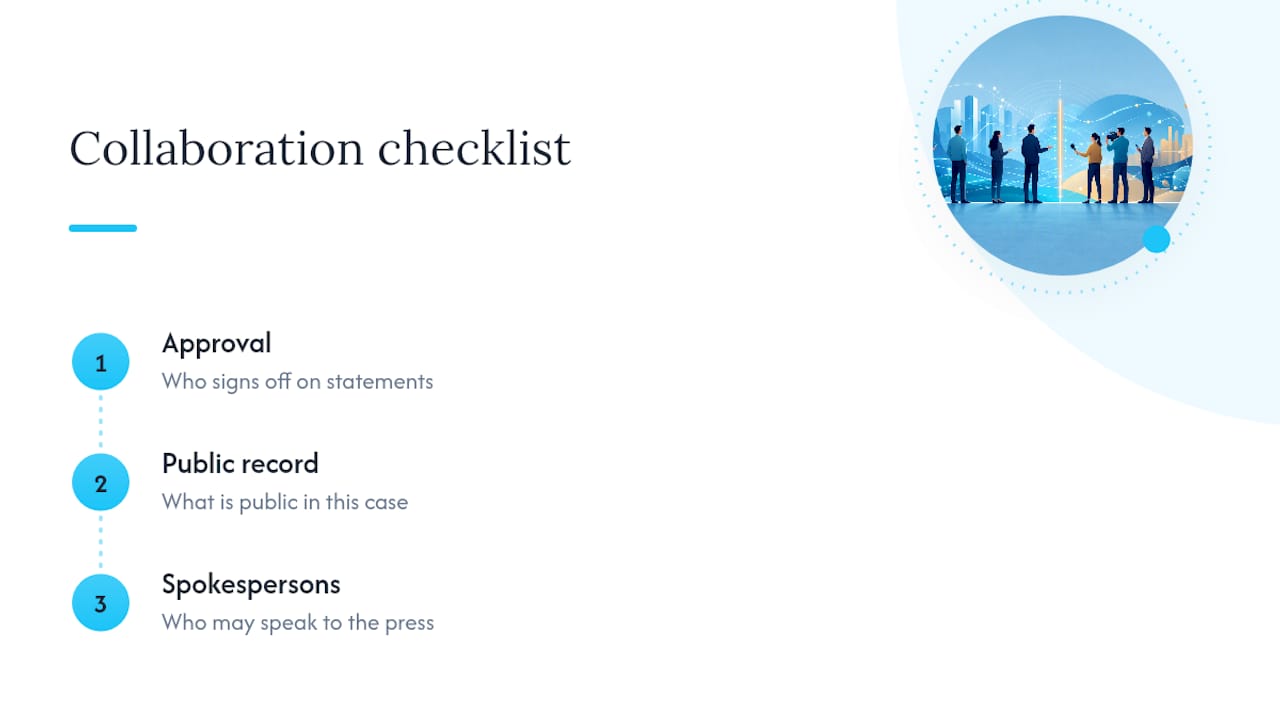
The best collaborations start with a short checklist: who approves language before it leaves the building, what counts as public record in this specific case, and who is authorized to talk to press at all.
— Ryan McCormick
Ethics-First Media Support From Goldman McCormick PR
Goldman McCormick PR built its legal PR practice around exactly the tension this article walks through: attorneys need a public voice, but Rule 3.6 leaves almost no margin for error. Where a general crisis-communications shop might push for maximum visibility, Goldman McCormick PR’s legal clients get scripted, public-record-anchored statements reviewed against the same substantial-likelihood standard a bar disciplinary panel would apply.
That approach is part of why Forbes named the firm one of America’s best PR firms, Bulldog Reporter gave it a Gold Award for its cause and advocacy campaign work, and the New York Observer listed it among the top legal PR agencies in the country. If a media situation is developing around your case, talk to Goldman McCormick PR about an ethics-first intake call. Expect a review of what is already public, a draft statement inside Rule 3.6’s safe harbors, and a plan for who speaks if the story keeps moving.
Sources
- Rule 3.6: Trial Publicity — American Bar Association
- Watch out for these ethical constraints and pitfalls when speaking with the media — ABA Journal
This article is general information, not a substitute for advice from a qualified lawyer. Consult a qualified legal professional about your own circumstances before acting on anything here.