
Radio appearances are worth it for most law practices, and the evidence is consistent. AM/FM and audio advertising excel at reach, repetition, and long-term brand recognition, with people typically needing multiple exposures before a name sticks. Criminal defense attorney Karen Conti, who built a nationally recognized media profile partly through radio, credits the medium’s ability to let lawyers control the narrative and position themselves as trusted community resources. Goldman McCormick PR, named by Forbes as one of America’s Best PR Firms for 2021, has placed attorneys on radio programs across the country and consistently finds the same pattern: radio builds credibility first, and clients follow.
The core case for radio appearances is brand recall over time, not instant leads. Expect credibility gains and top-of-mind awareness within the first few months, inbound inquiries building over a 6–12 month window, and referral volume growing as your name becomes synonymous with a practice area in your market.
Table of Contents
- What are the real benefits of radio appearances for lawyers?
- What should you realistically expect: timeline, costs, and ROI?
- Which radio formats work best for different practice areas?
- What does a PR firm actually do to secure your radio placements?
- How should you prepare for a radio appearance?
- How do you measure whether radio appearances are working?
- Should you hire a PR firm or handle radio yourself?
- Key Takeaways
- Why radio’s long game is the most underrated move in legal marketing
- Goldman McCormick PR places lawyers on radio that builds real authority
- Useful sources and further reading
What are the real benefits of radio appearances for lawyers?
Radio does something most digital channels cannot: it puts your voice in someone’s ear during a moment of undivided attention, usually a commute. That intimacy translates into trust faster than a display ad or a search result ever will.
The practical benefits stack up quickly:
- Credibility and authority. Being introduced as a legal expert by a host the audience already trusts is an implicit endorsement. It positions you above competitors who only advertise.
- Narrative control. You choose the framing, the examples, and the takeaway. Unlike a news story where a reporter edits your words, a radio interview gives you the floor.
- Brand recall through repetition. A sustained radio presence builds unaided awareness in your market over time, as demonstrated by a St. Cloud law firm’s long-term campaign that produced measurable brand-lift metrics including unaided awareness and ad recall.
- Local reach and frequency. Local stations reach the exact geography you serve. Appearing regularly on the same program builds familiarity with a consistent audience.
- Digital amplification. Radio supports your SEO and digital campaigns by increasing receptivity when prospects later encounter your firm online.
Karen Conti’s “helper strategy” captures the relationship-building side of this:
Each benefit maps to a measurable outcome. Credibility drives referrals from other professionals. Narrative control protects your reputation during high-profile cases. Repetition produces organic website traffic spikes after each appearance, and local frequency converts listeners into consultation requests over time.

What should you realistically expect: timeline, costs, and ROI?
Set a 6–12 month evaluation window before judging radio’s impact. Some media analysts recommend at least a six-month minimum to assess effectiveness for law-firm campaigns. Here is how the timeline typically unfolds:
- Weeks 1–4: Agency builds a targeted show list, researches program demographics, and drafts initial pitches.
- Weeks 4–8: Producer outreach, follow-up, and first booking confirmed.
- Weeks 8–12: First appearance airs; clip collected and repurposed.
- Months 3–6: Website traffic lift and inbound inquiry uptick become measurable.
- Months 6–12: Brand recall and referral volume show meaningful movement.
On costs, earned placements through a PR firm differ sharply from paid radio advertising. Paid spots are typically purchased at a flat rate or on a CPM (cost per 1,000 impressions) basis. Earned placements, where a PR firm pitches you as a guest expert, carry no airtime cost but do require a PR retainer or project fee. Production costs for audio editing and repurposing rights add a modest line item.
KPIs worth tracking from day one:
- Inbound consultation requests (track source at intake)
- Website traffic lift in the 30 days following each appearance
- Earned media mentions and clip volume
- Referral volume from professional contacts who heard the segment
- Consult-to-client conversion rate over a rolling 90-day window
Pro Tip: Set up a dedicated phone number or landing page URL to mention on-air. It is the simplest attribution tool available and costs almost nothing to implement.
Radio is a long-game channel. Do not measure it against pay-per-click lead volume in month two.
Which radio formats work best for different practice areas?
| Format | Best Practice Areas | Pros | Cons |
|---|---|---|---|
| Guest interview (single episode) | Criminal defense, personal injury, family law | Low commitment, broad reach, easy to repurpose | One-time exposure; limited recall without follow-up |
| Recurring expert segment | Employment law, estate planning, business law | Builds familiarity and authority over time | Requires consistent availability and prep |
| Call-in legal Q&A | Family law, immigration, consumer rights | Direct listener engagement, high trust signal | Unpredictable questions; requires quick thinking |
| Syndicated segment | Criminal defense, high-profile litigation | National reach, strong credibility signal | Harder to book; requires polished delivery |
| Podcast crossover | Any niche practice area | Evergreen content, searchable, repurposable | Smaller live audience than broadcast radio |
For criminal defense attorneys, syndicated radio and recurring expert segments produce the strongest credibility signal. Personal injury lawyers benefit most from local drive-time spots and call-in formats where listeners with fresh injuries are already in the audience. Family law and estate planning attorneys tend to thrive in longer interview formats where nuance and empathy come through.
Local station dominance matters more than syndication for firms serving a single metro area. If your entire client base lives within a 50-mile radius, owning one local station’s legal segment is more valuable than a national syndicated slot that reaches listeners you cannot serve.
What does a PR firm actually do to secure your radio placements?
The process is more systematic than most lawyers expect. A good agency does not simply email a producer and wait.
The agency-driven placement process runs roughly like this:
- Audience targeting: Research local and regional stations, map program demographics to your practice area, and build a prioritized show list.
- Show research: Listen to target programs, learn the host’s style, and identify the angles that fit each show’s audience.
- Pitch development: Write a concise, story-led pitch that frames you as the expert a producer needs, not the lawyer who wants airtime.
- Producer outreach and follow-up: Direct outreach to producers with persistent, professional follow-up over several weeks.
- Booking and pre-brief: Confirm logistics, prep talking points, and conduct a pre-interview brief with the attorney.
- Post-show asset collection: Request the digital clip and confirm usage rights so the audio can be published on the firm’s website and social channels.
The difference between paid advertising and earned placement is significant. A paid spot is purchased media. An earned placement is editorial, which means the host’s credibility transfers to you. Producers book guests they trust to serve their audience, so the pitch must lead with listener value, not attorney credentials.
Deliverable checklist from a PR firm: targeted media list, pitch slate, prepped talking points, recorded clip, usage permissions confirmed, and a post-show analytics snapshot.
How should you prepare for a radio appearance?
Preparation separates attorneys who get rebooked from those who get one shot. The core framework:
Three message pillars: Identify the three points you want every listener to remember. Everything you say should connect back to one of them.
30-second intro: Practice a clean, jargon-free opening that states who you are, what you do, and why it matters to the listener, not to you.
15–20 second closing call to action: Tell listeners exactly how to reach you. A phone number or a simple URL works better than a firm name alone.
For delivery, audio-first storytelling means painting a picture with words. Producers prefer clear, relatable explanations over legalese. Record practice runs and review them to cut filler words before going live.
The helper strategy in practice: after your first appearance, email the producer with a brief note offering to answer follow-up questions or provide background research for future segments. No pitch, no ask. That single habit converts a one-time booking into a recurring relationship.
Ethics reminders: never promise outcomes on-air, preserve client confidentiality in every example you use, and keep public comments compliant with your state bar’s advertising rules.
Pro Tip: Keep a lean media kit in your car: a professional jacket, a one-sheet bio, and a list of three ready-to-go topics. Karen Conti’s guidance emphasizes being physically ready for last-minute bookings, which producers offer to attorneys they already trust.
How do you measure whether radio appearances are working?
| Metric | What it measures | Attribution window |
|---|---|---|
| Inbound consultation requests | Direct lead generation | 30 days post-appearance |
| Website traffic lift | Brand awareness and search intent | 30–90 days post-appearance |
| Earned media mentions | Credibility and share of voice | Ongoing |
| Referral volume | Professional network trust | 90 days |
| Consult-to-client conversion rate | Quality of inbound leads | Rolling 90 days |
Attribution is genuinely hard with radio. The practical fix is to ask every new consultation how they heard about you and track it consistently. Over 6–12 months, patterns emerge. Repurposing clips on your website and social channels extends each appearance’s reach and creates a second attribution signal through digital analytics.
For brand building, reach and mention volume matter most. For lead generation, track inbound inquiries and conversion rates. Expect the two curves to diverge early and converge around month nine.
Should you hire a PR firm or handle radio yourself?
The honest answer depends on three things: your existing producer relationships, your available time, and how quickly you need results.
Hire a PR firm when:
- You have no existing media relationships
- Your time is worth more than the retainer cost
- You want syndicated or multi-market placements
- You need media training before going on-air
- You want post-show repurposing handled professionally
DIY makes sense when:
- You already have a relationship with a local host or producer
- You have prior media training and on-air experience
- You are targeting a single local station with a clear editorial fit
Questions to ask any PR firm you interview: How many legal clients have you placed on radio in the past 12 months? Can you share sample placements and producer contacts? What is your reporting cadence and what metrics do you deliver? How do you handle usage rights and clip distribution?
Red flags: vague promises about “guaranteed placements,” no legal PR experience, inability to name specific shows or producers they work with, and no clear reporting structure.
A solo practitioner with a tight budget and one target market may get strong results from a focused local campaign. A firm with multiple practice areas and regional ambitions will almost always see faster, broader results with agency support.
Key Takeaways
Radio appearances build credibility and brand recall over time, making them a long-game investment that pays off most clearly in the 6–12 month window after consistent placement.
| Point | Details |
|---|---|
| Long-game channel | Radio builds brand recall and credibility over months, not days; set a 6–12 month evaluation window. |
| Earned vs. paid placements | Earned guest appearances transfer host credibility to you; paid spots do not carry the same trust signal. |
| Preparation drives rebooking | Three message pillars, a 30-second intro, and the helper strategy convert single appearances into recurring slots. |
| Measure what matters | Track inbound consultations, website traffic lift, and referral volume with a 30-day attribution window. |
| Goldman McCormick PR | Named by Forbes as one of America’s Best PR Firms for 2021, with a track record placing attorneys on radio nationally. |
Why radio’s long game is the most underrated move in legal marketing
Most attorneys evaluate radio the wrong way. They run a few spots or do one interview, see no immediate phone surge, and write it off. That is the wrong measurement entirely.
Radio’s real value is what it does to every other channel you are already running. When a prospect Googles your name after hearing you on the radio, your conversion rate on that search goes up. When a referral source mentions your name, the person they are talking to already has a mental file on you. That compounding effect is invisible in a 30-day analytics report and obvious in a 12-month one.
The attorneys who get the most from radio are not the ones who do the best single interview. They are the ones who show up consistently, build producer relationships through the helper strategy, and treat each appearance as a deposit in a long-term credibility account. The payout is not a spike. It is a floor that keeps rising.
Goldman McCormick PR places lawyers on radio that builds real authority
Goldman McCormick PR was founded by active and former members of the media, which means the firm’s producer relationships are real, not cold-call lists. For attorneys who want earned radio placements handled professionally, from show targeting and pitching through media training and clip repurposing, Goldman McCormick PR delivers the full process. The firm produces nationally syndicated radio programs heard on the Genesis Communications Network and Starcom Radio Network, and its legal PR work earned recognition from Forbes, Bulldog Reporter, and the New York Observer.
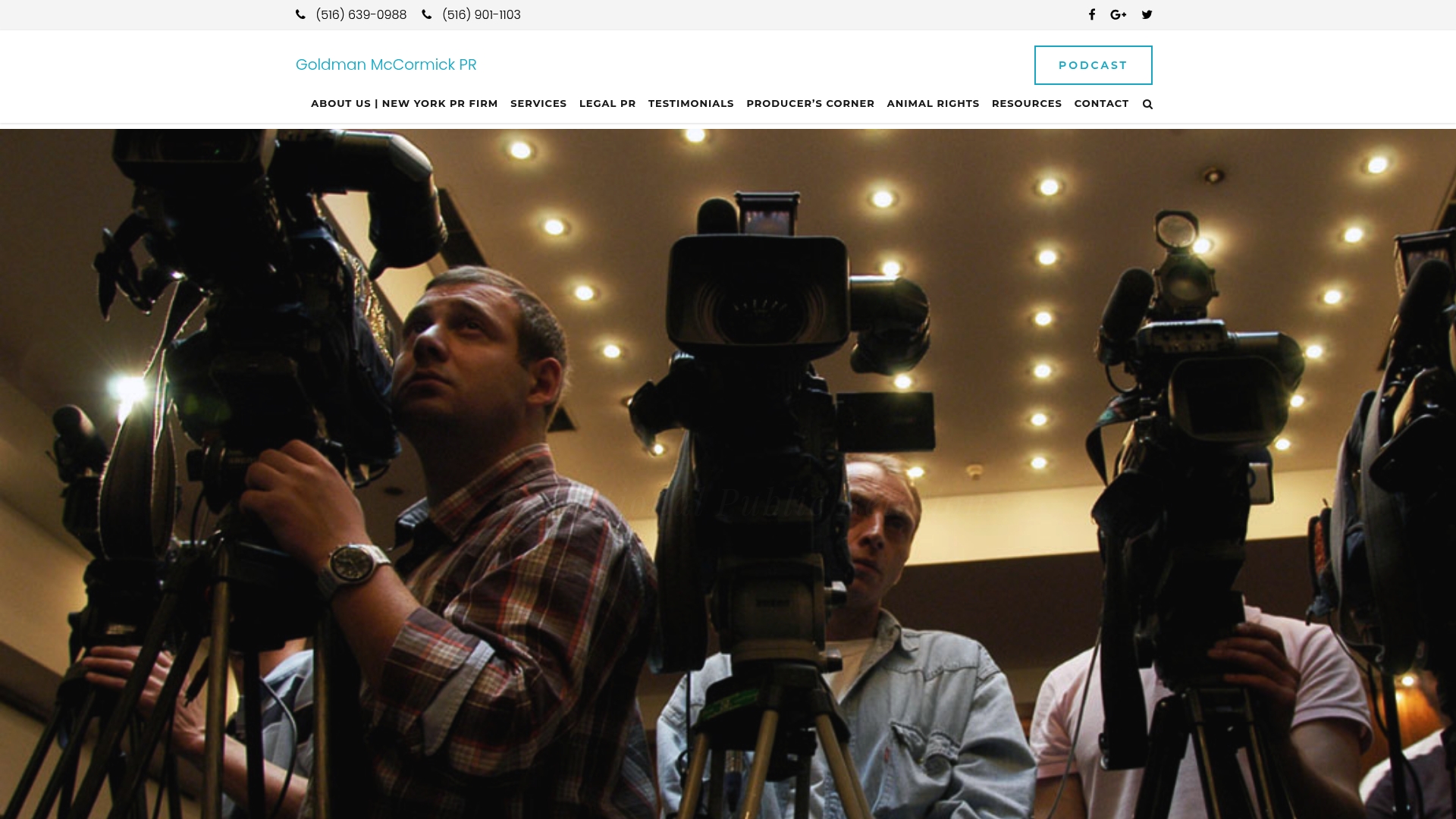
If you are ready to turn radio into a consistent part of your firm’s reputation strategy, contact Goldman McCormick PR for a placement audit. The firm will identify the right shows for your practice area, outline a 90-day placement plan, and handle every step from pitch to published clip. Reach out at goldmanmccormick.com to get started.
Useful sources and further reading
- Gavl Marketing: Law Firm Radio Advertising — long-game brand recognition and frequency data for law firms
- Karen Conti on True Crime, Public Branding, and Media Secrets — helper strategy and narrative control guidance
- Furia Rubel: Public Relations for Lawyers — audio-first storytelling, usage rights, and delivery tips
- Radio Ink: St. Cloud Law Firm Case Study — station dominance and brand-lift metrics
- OptimizeMyFirm: Is Radio Marketing Still Effective for Law Firms? — recommended evaluation windows and reach data
- Goldman McCormick PR — legal PR services, radio placements, and media training
- SOSEI: AI-ready law firm websites — technical guidance for publishing and repurposing media assets on your firm’s site
- Franjo Vucic: Strategic Legal Services — strategic communication and PR partner evaluation for law firms