
Proactive PR for attorneys is defined as the deliberate, ongoing effort to build a positive and authoritative public reputation before any crisis or controversy arises. Unlike reactive damage control, this approach treats reputation as a capital asset that compounds over time through earned media placements, thought leadership, and consistent media relationships. The New York Observer named Goldman McCormick PR one of the top five legal PR agencies in 2014, and the firm has spent over a decade helping attorneys build exactly this kind of durable public presence. Attorneys who invest in proactive legal PR create a predictable engine for client trust and referrals rather than scrambling to contain damage after the fact.
What is proactive PR for attorneys?
Proactive PR for attorneys is the practice of shaping public perception through planned media engagement, owned content, and relationship building with journalists. The industry term for the underlying goal is “Reputation Capital,” which refers to the reserve of credibility an attorney builds through consistent, third-party validated coverage. That reserve pays dividends when a competitor attacks, a case draws scrutiny, or a prospective client searches your name before calling.
The mechanism works across three tiers. First, horizon scanning monitors media sentiment and emerging narratives before they become problems. Second, asset cultivation builds owned platforms such as blogs, podcasts, and bylined articles that establish expertise on the record. Third, pre-vetted conflict response protocols ensure that any public interaction aligns with FTC guidelines and State Bar rules. Together, these tiers form a three-tier defense strategy that protects and grows an attorney’s public standing simultaneously.
Earned media placements also serve a technical function that most attorneys overlook. Interviews and bylined articles in reputable publications act as trust signals that AI platforms use to recommend legal professionals. This practice is called answer engine optimization, and it means your media coverage directly influences whether ChatGPT or Perplexity recommends you when a prospective client asks for an attorney in your practice area.
- Horizon scanning: Monitor news cycles, social sentiment, and competitor coverage weekly.
- Asset cultivation: Publish bylined articles, podcast appearances, and blog posts on a consistent schedule.
- Conflict response protocols: Draft and pre-approve responses to likely scenarios before they occur.
- Media relationship building: Develop direct relationships with journalists who cover your practice area.
- AI citation positioning: Place earned media in publications that AI platforms treat as authoritative sources.
Pro Tip: Pitch journalists during slow news cycles, typically mid-week in the morning, when editors are actively looking for expert sources. A single well-placed quote in a national outlet generates more client trust than a year of paid advertising.
What are the key benefits of proactive PR for legal professionals?

The core benefit of proactive public relations for attorneys is authenticity. Third-party media coverage builds deeper client trust than any self-promotional content because clients rely on neutral journalistic validation when choosing legal representation. A profile in a regional business journal or a quoted opinion in a legal trade publication carries weight that a firm’s own website simply cannot replicate.
The benefits extend well beyond trust signals:
- Thought leadership: Regular media appearances position attorneys as the go-to expert in their practice area, generating inbound referrals from journalists, peers, and prospective clients.
- Compounding visibility: Each press placement builds domain authority through high-quality backlinks, which improves Google rankings and AI search visibility over time.
- Referral generation: Attorneys featured in credible outlets attract referrals from other professionals who read those publications.
- Reputation fireproofing: A strong bank of positive coverage makes it harder for a single negative story to define your public image.
- Competitive differentiation: Proactive PR creates a sustainable advantage in crowded legal markets where most attorneys rely solely on directories and paid ads.
“Authenticity is the core value proposition of proactive PR. Clients facing high-stakes legal decisions trust neutral journalistic validation far more than any message an attorney crafts about themselves. Earned media is not just visibility. It is proof.”
The compounding nature of this work is what separates it from advertising. A paid ad disappears when the budget runs out. A bylined article in a respected publication continues to generate search traffic, AI citations, and referrals for years.
How does proactive PR differ from reactive PR in legal settings?
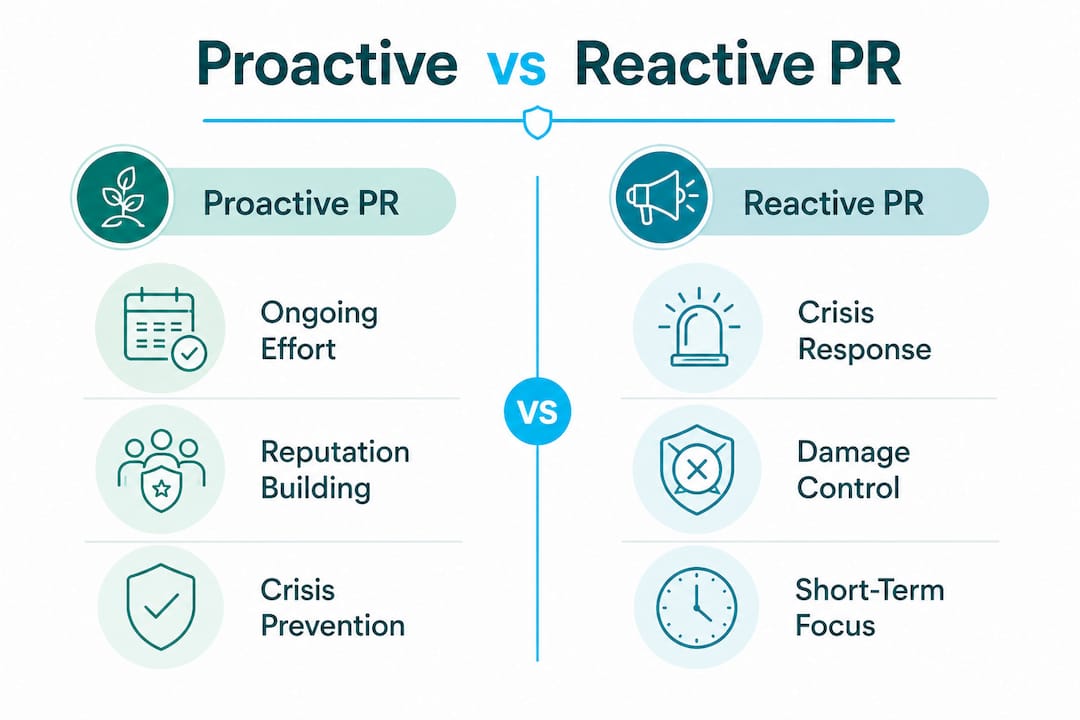
Reactive PR is crisis damage control. Proactive PR is reputation fireproofing. The distinction matters because the timing, intent, and outcomes of each approach are fundamentally different.
| Factor | Proactive PR | Reactive PR |
|---|---|---|
| Timing | Ongoing, before issues arise | Triggered by a specific crisis or negative event |
| Intent | Build Reputation Capital and visibility | Minimize damage and restore credibility |
| Outcome | Compounding trust and referral growth | Return to baseline at best |
| Cost | Predictable, planned investment | Often expensive and urgent |
| Control | Attorney shapes the narrative | Media or opposing parties shape the narrative |
Reactive PR forces attorneys into a defensive posture where someone else controls the story. A firm that has spent two years building earned media coverage enters any controversy with a reservoir of credibility that a reactive-only firm simply does not have. Proactive legal PR strategies also integrate with reputation management, which focuses on search results and review profiles. PR and reputation management are complementary disciplines: PR builds the brand story through media offense, while reputation management defends search results and reviews. A balanced strategy requires both.
What practical steps can attorneys take to implement proactive PR?
Attorneys can start a proactive PR program without a large budget. The first step is setting up basic sentiment monitoring using Google Alerts for your name, firm name, and key practice area terms. This gives you a baseline understanding of what the public record says about you before you begin building on it.
From there, the practical steps follow a clear sequence:
- Develop owned assets: Launch a blog or podcast focused on your practice area. Consistent publishing builds a searchable archive of expert content that journalists and AI platforms reference.
- Build media relationships: Identify three to five journalists who cover your practice area and engage with their work before pitching yourself as a source. Relationships precede placements.
- Draft conflict response protocols: Write pre-approved responses to the five most likely negative scenarios your firm could face. Align every response with FTC and State Bar rules, which in 2026 mandate no incentives for reviews, mandatory disclaimers on testimonials, and strict confidentiality in client-related responses.
- Pitch bylined articles: Offer original opinion pieces to legal trade publications, regional business journals, and bar association newsletters. These placements build both credibility and backlinks.
- Track your KPIs: Monitor review velocity, share of search, and sentiment score on a monthly basis. These metrics tell you whether your PR investment is generating measurable reputation health.
Pro Tip: Partner with a legal news outlet that covers your practice area to establish a regular column or commentary series. Consistent bylines in the same publication build name recognition faster than scattered one-off placements. Lance P. Richard’s law news coverage is a strong example of how attorneys use trusted media to build sustained authority.
The FTC compliance piece deserves special attention. Attorneys who solicit reviews with incentives or publish testimonials without proper disclaimers face regulatory exposure on top of reputational risk. Ethical compliance is not optional in legal PR. It is the foundation.
Key Takeaways
Proactive PR for attorneys builds Reputation Capital through earned media, owned content, and ethical compliance, creating compounding visibility that reactive PR can never replicate.
| Point | Details |
|---|---|
| Define your Reputation Capital goal | Identify the three media outlets and two practice areas where you want to be the recognized expert. |
| Build the three-tier defense | Combine horizon scanning, owned asset creation, and pre-approved conflict protocols from day one. |
| Prioritize earned media over paid | Third-party coverage builds client trust and AI citation authority that advertising cannot match. |
| Stay FTC and State Bar compliant | Ensure all testimonials, reviews, and public responses meet 2026 ethical requirements without exception. |
| Track KPIs monthly | Monitor review velocity, share of search, and sentiment score to measure and adjust your program. |
Why proactive PR is the most underused tool in a lawyer’s arsenal
Most attorneys I work with come to Goldman McCormick PR after a crisis. That is the wrong time to start. By the time a negative story breaks or a bad review goes viral, the window to shape the narrative has already closed. The attorneys who fare best are the ones who treated their public reputation the same way they treat case preparation: methodically, in advance, and with a clear strategy.
What surprises most legal professionals is how quickly earned media compounds. A single well-placed profile in a regional publication generates backlinks, AI citations, and referral calls for years. That is not marketing theory. That is what I have watched happen repeatedly for attorneys across practice areas. The media relationships that drive those placements take time to build, but they are far more durable than any paid campaign.
The ethical dimension is also underappreciated. Legal PR operates under constraints that most industries do not face. State Bar rules, FTC guidelines, and client confidentiality requirements all shape what you can and cannot say publicly. Attorneys who ignore these constraints while chasing visibility create liability for themselves. The right proactive PR program treats ethical compliance as a feature, not a limitation. It builds a public record that is both credible and defensible.
— Ryan McCormick
Goldman McCormick PR works with attorneys who are ready to build
Attorneys who want to build a lasting public reputation need more than a press release. They need a consistent media presence, relationships with journalists who cover their field, and a program that compounds over time.
Goldman McCormick PR has specialized in legal PR services since 2010, earning recognition from Forbes Magazine as one of America’s Best PR Firms for 2021 and a citation from the New York Observer as a top five legal PR agency. The firm places attorneys on television, radio, and in print, and produces podcasts and nationally syndicated radio programs through the Genesis Communications Network and Starcom Radio Network. If you are ready to build Reputation Capital that works for your practice, Goldman McCormick PR delivers the media access and expertise to make it happen. Visit goldmanmccormick.com to learn more about PR strategy for legal professionals.
FAQ
What is proactive PR for attorneys?
Proactive PR for attorneys is the planned, ongoing effort to build a positive public reputation through earned media, thought leadership, and media relationships before any crisis occurs. The goal is to accumulate Reputation Capital that protects and grows a firm’s visibility over time.
How does proactive PR differ from reactive PR?
Reactive PR responds to crises after they happen, while proactive PR builds credibility in advance so attorneys enter any controversy with an established reservoir of public trust. Proactive strategies generate compounding returns; reactive strategies aim only to restore the status quo.
What do PR attorneys do on a day-to-day basis?
PR attorneys, or attorneys working with a legal PR firm, pitch bylined articles, conduct media interviews, publish owned content, and monitor sentiment to maintain a consistent and authoritative public presence. They also maintain pre-approved conflict response protocols aligned with FTC and State Bar rules.
How does proactive PR improve search rankings?
Earned media placements generate high-quality backlinks that build domain authority, which improves Google rankings and increases the likelihood that AI platforms recommend the attorney in relevant searches. Each placement compounds the effect of previous ones.
How do I find proactive PR specialists for attorneys?
Look for firms with a documented track record in legal PR, including named media placements and recognition from credible industry sources. Goldman McCormick PR was cited by the New York Observer as one of the top five legal PR agencies and named by Forbes as one of America’s Best PR Firms for 2021.