
Media placement is defined as the strategic process of securing brand content on external, third-party platforms to maximize reach, credibility, and influence over target audiences. Unlike paid advertising, which audiences immediately recognize and discount, editorial media placement carries the weight of journalistic vetting. That distinction shapes how buyers, investors, and stakeholders respond to your brand. Goldman McCormick PR, named by Forbes Magazine as one of America’s Best PR Firms for 2021, has built its practice on exactly this principle: credible placement beats volume every time.
What does media placement mean, and what forms does it take?
Media placement falls into three distinct categories, and understanding each one changes how you build a campaign.
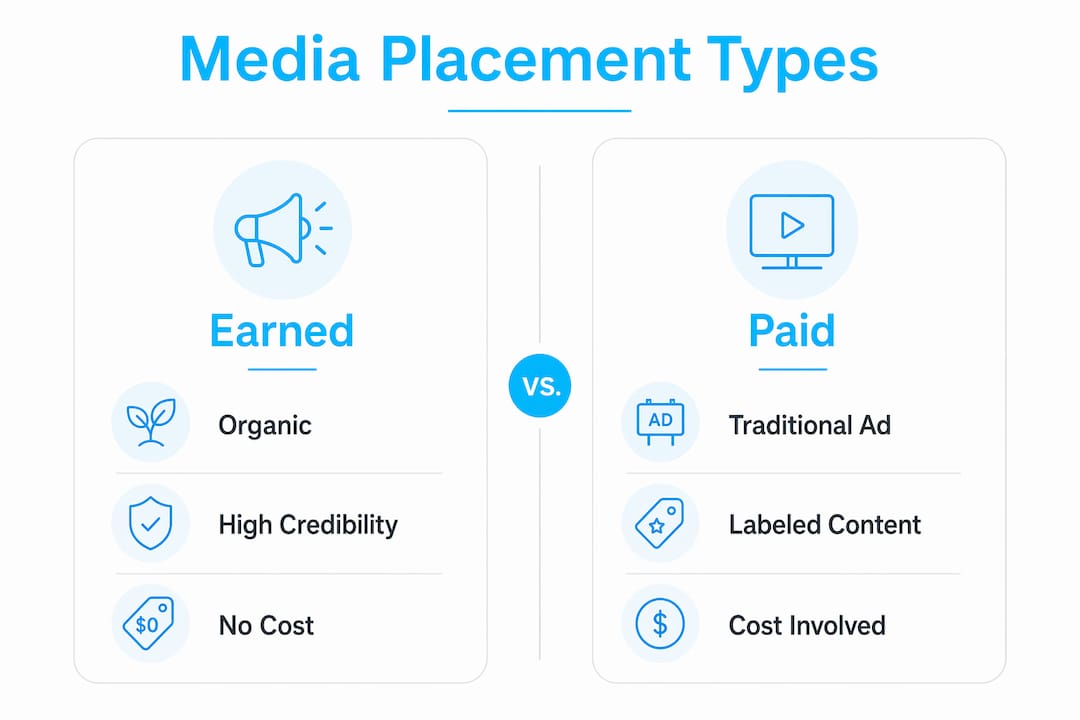
Earned media placement is organic press coverage secured by pitching journalists and editors. No money changes hands for the placement itself. A reporter covers your story because it is genuinely newsworthy. Earned coverage is widely considered the most credible form because editorial standards vet the content before it reaches readers. PR professionals call it the “holy grail” of brand authority for good reason.
Paid media placement is traditional advertising. It is clearly labeled as an ad, and audiences treat it accordingly. Paid placements deliver predictable reach, but they carry less persuasive weight than editorial coverage because readers know a brand paid for the space.

Guaranteed editorial placement sits between the two. A brand pays for placement, but the content is written and published under editorial standards rather than promotional labeling. The result is predictable outcomes with stronger credibility than a standard ad.
| Type | How it works | Credibility level | Best use case |
|---|---|---|---|
| Earned | Pitched to journalists, no payment | Highest | Long-term authority building |
| Paid | Purchased ad space, labeled as ad | Lowest | Immediate reach and awareness |
| Guaranteed editorial | Paid but published under editorial standards | Moderate to high | Predictable placement with credibility |
Each type serves a different role in a balanced media plan. Most marketing professionals use all three in combination.
Why is strategic media placement vital for marketing success?
The core advantage of editorial media placement is third-party validation. Readers trust a journalist’s endorsement far more than a brand’s own claims. Paid bulk distribution to low-authority sites lacks influence on high-level decision-makers and delivers little SEO equity. That is a critical point for any business owner measuring return on investment.
Strategic placement reaches decision-makers where they already read and consume information. A CFO reading a trade publication is far more receptive to a story about your financial software than the same message delivered as a banner ad. Placement in the right outlet at the right moment converts brand narrative into verified third-party authority.
Key benefits of well-executed media placement include:
- Trust building: Editorial coverage signals that a credible outlet stands behind your story.
- SEO equity: High-authority publications pass link value that improves search rankings.
- Audience precision: Placement in niche outlets reaches specific buyers, not a generic crowd.
- Longer content lifespan: Editorial articles remain indexed and discoverable long after publication.
- Stakeholder influence: Investors and partners respond to press coverage in ways they rarely respond to ads.
Pro Tip: Prioritize outlets where your buyers actually read, not outlets with the largest general audience. A placement in a respected industry trade publication outperforms a placement in a high-traffic general news site for most B2B brands.
How does the media placement process work?
Media placement is not static. It is a continuous cycle of research, execution, monitoring, and adjustment. Treating it as a one-time campaign is the most common mistake marketing professionals make.
The process follows a clear sequence:
- Audience research. Identify where your buyers, stakeholders, and decision-makers consume content. Map their preferred outlets, formats, and topics.
- Channel selection. Choose media channels that align with your audience’s habits, whether that is television, radio, print, digital publications, or podcasts.
- Content development and pitching. Craft a story angle that serves the outlet’s editorial needs, not just your brand’s promotional goals. Pitch it to editors or negotiate guaranteed placement terms.
- Execution and publication. Secure the placement and publish on schedule.
- Performance monitoring. Track engagement, traffic, backlinks, and audience response across every channel.
- Optimization. Adjust the channel mix and messaging based on what the data shows. Consumer behavior shifts, and your placements must shift with it.
This cycle repeats. Brands that treat media placement as iterative consistently outperform those that run a single campaign and wait.
Pro Tip: Build direct relationships with editors and journalists at your target outlets. Direct editorial relationships produce better placement outcomes than bulk press release distributions, which rarely reach the decision-makers you need to influence.
How do AI and search engines shape media placement today?
AI-driven search engines now index and elevate editorial content above promotional material. AI models rank third-party validated content higher than branded advertising, which means your media placement strategy now serves two audiences: human readers and AI recommendation systems. Brands that ignore this dynamic lose visibility in both search results and AI-generated answers.
The practical implication is significant. A feature article in a respected publication does not just reach the outlet’s readers. It gets indexed, cited by AI tools, and surfaced in search results for months or years. That compounding effect makes editorial placement one of the highest-return activities in a modern marketing budget.
Aligning your placement strategy with AI-driven ranking factors means focusing on:
- Authority of the outlet: AI systems weight content from high-domain-authority publications more heavily.
- Editorial independence: Content that reads as genuinely editorial, not promotional, earns higher trust signals from AI indexing.
- Relevance and specificity: Placements in niche, topic-specific outlets signal expertise to both readers and AI systems.
- Consistency of coverage: Regular placements across credible outlets build a cumulative authority signal that AI models recognize over time.
Understanding AI’s role in content strategy is no longer optional for marketing professionals. It is a core component of how media placement delivers value in 2026.
Key Takeaways
Media placement is the practice of securing editorial brand content on credible external platforms, and its effectiveness depends on choosing the right type, outlet, and optimization cycle.
| Point | Details |
|---|---|
| Three placement types | Earned, paid, and guaranteed editorial each serve distinct roles in a balanced media plan. |
| Editorial credibility wins | Third-party vetted coverage influences buyers and AI systems more than labeled advertising. |
| Continuous optimization required | Monitoring performance and adjusting channel mix sustains ROI as consumer behavior shifts. |
| AI indexing changes the stakes | Editorial placements earn higher rankings from AI-driven search, compounding visibility over time. |
| Relationships over bulk distribution | Direct editorial relationships outperform mass press release distribution for reaching decision-makers. |
Why I think most brands misunderstand media placement
After years of working in this space, the pattern I see most often is brands treating media placement as a one-time announcement rather than an ongoing presence. They secure one strong placement, see a spike in traffic or inquiries, and then go quiet for six months. That approach wastes the momentum a good placement creates.
The brands that build lasting authority treat media placement the way a good investor treats a portfolio: diversified, monitored, and regularly rebalanced. Earned coverage in a trade publication, a guaranteed editorial feature in a regional business journal, and a radio segment on a nationally syndicated program all work together. Each placement reinforces the others.
The other mistake I see constantly is chasing reach over relevance. A placement in a publication your buyers never read is noise. A placement in the outlet your top three prospects check every morning is a conversation starter. Quality and relevance beat quantity every time. That is not a theory. It is what the data shows, campaign after campaign.
— Ryan McCormick
How Goldman McCormick PR secures placements that move the needle
Goldman McCormick PR has spent over a decade placing clients on television, radio, and in print publications where their buyers actually pay attention. The firm’s approach centers on editorial relationships built over years, not bulk distribution lists.
Goldman McCormick PR develops placement strategies specific to each client’s audience, industry, and goals. Whether the objective is national television exposure, coverage in a respected trade publication, or a segment on a syndicated radio program heard on the Genesis Communications Network or Starcom Radio Network, the firm matches the outlet to the audience. Clients who want to understand how professional media placement services translate into measurable brand authority can explore Goldman McCormick PR’s full range of services at goldmanmccormick.com.
FAQ
What is the media placement definition in marketing?
Media placement is the strategic process of securing brand content on external platforms, including television, radio, print, and digital publications, to reach target audiences and build credibility.
How does earned media placement differ from paid advertising?
Earned media placement is secured through editorial pitching and carries no promotional label, making it more trusted by readers and AI systems than paid advertising.
What does media placement mean for SEO?
Editorial media placements on high-authority outlets generate backlinks and AI indexing signals that improve a brand’s search visibility over time, delivering compounding SEO value.
How often should a brand adjust its media placement strategy?
Media campaigns require continuous monitoring and regular adjustments because consumer behavior shifts rapidly, making static placements less effective over time.
What is news media placement specifically?
News media placement refers to securing brand coverage within news outlets, including broadcast television, radio news programs, and online news publications, where editorial standards apply and audiences assign high credibility to the content.