
Reputation management for psychologists is defined as the ethical, ongoing process of monitoring, shaping, and protecting their digital presence across directory profiles, review platforms, and public media. This process reduces patient anxiety and builds professional trust before any clinical contact occurs. Understanding what does reputation management mean for psychologists requires recognizing that it sits at the intersection of HIPAA compliance, APA ethics, and authentic self-presentation. A poorly managed online profile does not just cost referrals. It can expose a practice to legal risk and erode the trust that clinical work depends on.
What does reputation management mean for psychologists ethically and legally?
Psychologists operate under stricter rules than most professionals when it comes to online reputation. HIPAA prohibits confirming or denying a patient relationship publicly, including in responses to online reviews. This applies even when the patient has already disclosed the relationship themselves in a public forum.
The most common trap is what practitioners call the “Acknowledgment Trap.” A psychologist reads a negative review, feels the urge to clarify the situation, and posts a response that implicitly confirms the reviewer was a patient. That single response constitutes a HIPAA breach, regardless of intent or tone.
Proactive reputation management is the only compliant path. The following practices form the ethical foundation:
- Post a clear privacy statement on your website explaining that you cannot respond to reviews to protect patient confidentiality.
- Add a similar statement to intake forms so patients understand the policy before therapy begins.
- Avoid responding to both negative and positive reviews publicly, since responding to reviews publicly constitutes a HIPAA breach in either direction.
- Never use generic reputation management services that rely on template responses, since generic tools not specialized in healthcare risk regulatory scrutiny.
- Document your no-response policy internally so it reflects a deliberate professional choice, not neglect.
Pro Tip: Frame your silence on review platforms as a privacy commitment, not an absence. A single sentence on your website, such as “We do not respond to online reviews to protect patient confidentiality,” reframes inaction as professionalism.
How does reputation management affect the psychological well-being of psychologists?
The psychological impact of reputation management on clinicians is real and measurable. A 2026 study found that online social evaluation impacts psychological distress, with self-esteem influencing 37.1% of that effect. For psychologists, who are trained to recognize these dynamics in patients, the irony of experiencing them personally is not lost.
Obsessive impression management creates a performance anxiety loop. Checking reviews compulsively, crafting the perfect bio, and worrying about star ratings activates neural pathways similar to social anxiety. The behavior intended to reduce professional risk ends up increasing personal stress.
The research is clear on the solution. Acquisitive impression management correlates with higher anxiety, while authentic self-presentation predicts better mental health outcomes for psychologists. The distinction matters in practice:
- Acquiescent impression management means shaping your profile to match what you think patients want to see, even if it does not reflect your actual clinical approach or specialty.
- Authentic self-presentation means accurately representing your training, methods, and values so that the patients who find you are genuinely suited to your practice.
- Structured internal feedback means collecting patient experience data through HIPAA-compliant intake and discharge forms rather than relying on public review platforms.
- Proactive digital presence means maintaining consistent, accurate profiles on Psychology Today and Google Business Profile so your actual work speaks for itself.
“Authentic reputation strategies support mental health for professionals because they eliminate the cognitive dissonance of performing a version of yourself that does not match your clinical reality.” — Online Impression Management and Mental Health
What practical reputation management strategies work for psychologists?
Reputation management strategies in psychology require a different toolkit than those used in retail or hospitality. The goal is not to accumulate five-star reviews. The goal is to build a credible, consistent, and compliant digital presence that gives prospective patients enough confidence to make first contact.

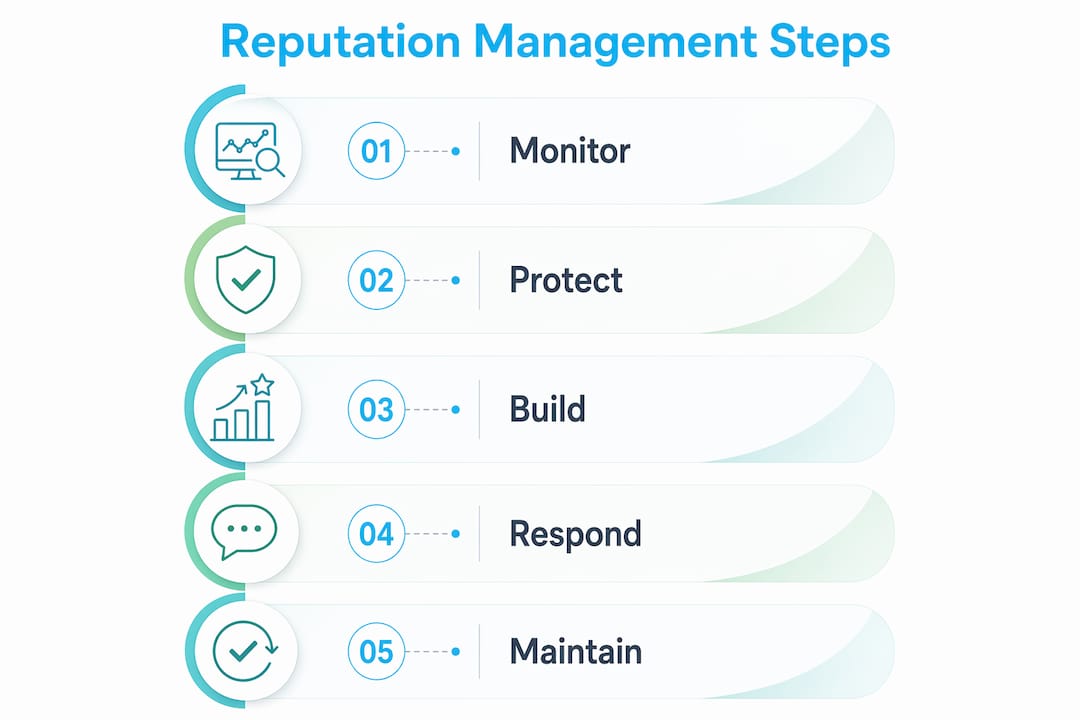
Monitoring comes first. Tools like ReviewTrackers and Podium alert clinicians in real time to new mentions across platforms. Google Alerts provides a free baseline for tracking name mentions. These tools enable awareness without requiring public responses.
Building positive social proof requires a different approach than most industries. Proactively collecting anonymous, HIPAA-compliant testimonials on your own website offsets occasional negative reviews without triggering confidentiality violations. This approach, sometimes called “reputation architecture,” collects feedback at natural clinical milestones such as intake, mid-treatment check-ins, and discharge.
Directory and profile consistency matters more than most psychologists realize. A mismatched address between your Psychology Today profile and your Google Business Profile signals unreliability to both search engines and prospective patients. Audit every directory listing at least twice a year.
Pro Tip: Use personal branding strategies built around ethical self-presentation rather than visibility tactics. A well-written specialty description on Psychology Today outperforms a generic five-star rating in converting the right patient.
How do reputation needs differ for individual psychologists versus clinics?
The scope of reputation management differs significantly between solo practitioners and larger mental health clinics. Clinics manage operational reputation covering staff consistency, scheduling reliability, and physical location experience. Individual psychologists focus on personal credentials, clinical specialty, and therapeutic fit.
| Factor | Individual Psychologist | Mental Health Clinic |
|---|---|---|
| Primary platform | Psychology Today, personal website | Google Business Profile, Healthgrades |
| Reputation driver | Personal credentials and specialty | Operational consistency and team experience |
| Management approach | Profile-driven, personal brand | System-driven, multi-staff coordination |
| Review response policy | Strict no-response, privacy statement | Coordinated no-response policy across staff |
| Social proof method | Anonymous testimonials on owned site | Aggregate ratings, clinic-level feedback |
Both models share one goal: giving prospective patients enough confidence to make that first call or send that first message. The path to that goal simply runs through different platforms and requires different levels of coordination.
Key Takeaways
Reputation management for psychologists is an ethical, proactive process that protects patient confidentiality, supports clinician well-being, and builds the trust that converts online searches into clinical relationships.
| Point | Details |
|---|---|
| HIPAA governs review responses | Never confirm or deny patient status publicly, even in response to positive reviews. |
| Silence is a professional choice | A no-response policy must be backed by active digital presence management, not inactivity. |
| Authenticity reduces clinician stress | Authentic self-presentation predicts better mental health outcomes than impression inflation. |
| Monitoring tools enable compliance | ReviewTrackers and Google Alerts provide real-time awareness without requiring public responses. |
| Clinics and solo practices differ | Individual psychologists prioritize profile-driven branding; clinics manage operational reputation across teams. |
Why I think most psychologists are managing their reputation backwards
Most psychologists I work with come to reputation management reactively. A negative review appears, panic sets in, and the instinct is to respond, explain, or defend. That instinct is understandable. It is also the fastest route to a HIPAA violation.
The professionals who manage this well do the opposite. They build their digital presence before any crisis arrives. They write a clear specialty description. They maintain consistent directory profiles. They collect anonymous feedback through structured internal systems. When a negative review does appear, they have enough positive social proof already in place that one bad data point does not define them.
The deeper issue is that many psychologists treat reputation management as a marketing function when it is actually a clinical integrity function. How you present yourself online signals your values to prospective patients before they ever speak with you. A profile that is vague, outdated, or inconsistent communicates something about your practice whether you intend it to or not.
Goldman McCormick PR has worked with professionals across industries who face exactly this challenge: the gap between clinical excellence and public perception. The answer is never to inflate the perception. The answer is to accurately represent the excellence that already exists, through the right channels, with the right ethical guardrails in place.
— Ryan McCormick
How Goldman McCormick PR supports psychologists’ ethical reputation
Psychologists and mental health professionals face a reputation challenge that most PR firms are not equipped to handle. The confidentiality requirements, HIPAA constraints, and APA ethics guidelines demand a specialized approach, not a generic visibility campaign.

Goldman McCormick PR, named by Forbes Magazine as one of America’s Best PR Firms for 2021, works with professionals who need their public presence to reflect their clinical credibility. From media placement to profile strategy, the firm builds ethical reputation frameworks that respect the boundaries your practice requires. If your digital presence does not yet reflect the quality of your clinical work, that gap is worth closing.
FAQ
What does reputation management mean for psychologists?
Reputation management for psychologists is the ethical, ongoing process of monitoring and shaping their digital presence across directories, review platforms, and public media. It builds patient trust while maintaining strict confidentiality compliance under HIPAA and APA ethics guidelines.
Can psychologists respond to negative online reviews?
No. Responding to negative reviews publicly constitutes a HIPAA breach because it risks confirming a patient relationship. The recommended approach is a clear no-response policy communicated to patients before therapy begins.
How do psychologists manage reputation without violating HIPAA?
Psychologists manage their reputation proactively by maintaining accurate directory profiles, collecting anonymous HIPAA-compliant testimonials on their own websites, and using monitoring tools like ReviewTrackers and Google Alerts to stay aware of new mentions.
Why is reputation management important for psychologists specifically?
A psychologist’s online presence directly influences whether a prospective patient feels safe enough to make first contact. Inconsistent or absent profiles increase patient anxiety, while a credible, consistent presence reduces it before any clinical interaction occurs.
Does reputation management affect a psychologist’s mental health?
Yes. Research shows that obsessive impression management triggers anxiety loops, while authentic self-presentation predicts better mental health outcomes for clinicians. Managing reputation through authentic, structured strategies protects both the practitioner and the practice.