
Corporate social responsibility in psychology firms is defined as structured initiatives that deliver measurable mental health, social, or community benefits beyond standard clinical services. The best examples of CSR campaigns in psychology firms include Lotte Department Store’s Rejoice campaign, which donated nearly 10 billion won over 10 years to subsidized counseling centers serving vulnerable populations at 50% of market cost. Project SURAKSHA reached over 14,000 students and trained 4,185 frontline workers in suicide prevention. The Atmanirbhar Project at Regional Mental Hospital Nagpur equipped recovering patients with vocational rehabilitation machinery to rebuild skills and support social reintegration. These three campaigns alone illustrate the range of what psychology sector CSR can accomplish at scale.
1. What makes CSR campaigns in psychology firms successful?
Successful CSR campaigns in psychology firms share four defining features: scalability, cultural relevance, authentic motivation, and role-specific design. Each feature directly affects whether a campaign delivers lasting community impact or fades after the press release.
- Scalability: Tapestry’s integration of Mental Health First Aid at Work for retail employees since 2018 shows how a training model can be customized to job-specific stressors and then replicated across large workforces. Generic mental health programs rarely achieve this.
- Cultural relevance: Authentic Patient and Public Involvement and Engagement, known as PPIE, ensures that psychology CSR programs are clinically sound and community-trusted. Involving service users and carers in program design is not a courtesy. It is a quality control mechanism.
- Authentic motivation: Research confirms that intrinsic motivation in cause marketing produces stronger, longer-lasting engagement than guilt-based appeals. Campaigns that emphasize personal satisfaction and moral identity alignment outperform those that lean on shame or urgency.
- Avoiding consumer skepticism: Messaging that centers beneficiary stories rather than brand achievements consistently reduces negative consumer reactions. This is not a stylistic preference. It is a documented behavioral outcome.
Pro Tip: When designing a CSR campaign for a psychology practice, pilot the program with a small community cohort first. Collect qualitative feedback before scaling. This mirrors the PPIE model and protects against costly redesigns later.
2. Notable CSR campaign case studies in psychology

The following case studies represent some of the most measurable and replicable examples of CSR initiatives in the psychology sector. Each one demonstrates a distinct strategic approach.
Lotte Department Store’s Rejoice campaign
Lotte Department Store’s Rejoice campaign is one of the most sustained corporate mental health CSR efforts on record. Over 10 years, the campaign channeled nearly 10 billion won into subsidized psychological counseling centers. Vulnerable populations accessed services at approximately 50% of standard market rates. The campaign’s longevity is its most instructive feature. Most CSR efforts peak in year one and decline. Rejoice maintained funding and community presence for a decade, which is the benchmark for what sustained commitment looks like in practice.
Project SURAKSHA
Project SURAKSHA is a community-based suicide prevention initiative that has reached over 14,000 students and conducted more than 300 stakeholder visits since 2023. The program trained 4,185 frontline workers including police officers and healthcare staff across the Ramanagara district. That combination of community outreach and professional training is what separates SURAKSHA from awareness-only campaigns. Frontline worker training creates a multiplier effect. Each trained officer or nurse becomes a local intervention point.
The Atmanirbhar Project
The Atmanirbhar Project at Regional Mental Hospital Nagpur takes a vocational approach to mental health CSR. The program provides recovering patients with machinery for incense stick making and mop production, giving them marketable skills and a path toward economic independence. Vocational rehabilitation addresses a gap that clinical treatment alone cannot fill. Patients who leave hospital settings without income skills face high relapse risk. This project directly targets that vulnerability.
Nurture Counseling’s multilingual access model
Nurture Counseling built a multilingual mental wellness platform specifically to remove language as a barrier to psychological care. This approach reflects a growing recognition that access gaps in mental health are often structural, not clinical. Offering therapy in multiple languages is a CSR act in itself. It signals that the firm’s commitment to community wellbeing extends beyond clients who already have cultural and linguistic privilege.
3. How do psychology firms balance internal culture and external CSR perception?
Internal consistency is the single most overlooked factor in psychology firm CSR. Employees notice when a firm’s public messaging does not match its internal culture. That gap erodes trust faster than any external criticism could.
Research confirms that employee perception of authenticity directly affects organizational trust and CSR success. A psychology firm that promotes mental health externally while ignoring staff burnout internally will face credibility problems. Those problems surface in staff turnover, client referrals, and eventually public reputation.
The fix is structural. Involve employees in CSR program design from the start. When staff contribute to shaping a program, they become its advocates rather than its skeptics. Internal engagement also reduces the risk of tokenism, where CSR becomes a marketing exercise rather than a genuine organizational commitment.
“Shifting focus away from brand glorification minimizes negative consumer reactions.” — Authenticity in CSR Marketing
Pro Tip: Run an internal culture audit before launching any external CSR campaign. Ask staff directly whether the campaign reflects how the firm actually operates. Their answers will tell you whether the campaign will land as authentic or performative.
4. Comparing CSR approaches by type, scale, and resource need
Not every psychology firm has the budget for a decade-long campaign like Rejoice. The table below compares the three primary CSR approaches by scope, resource requirements, and best-fit scenario.
| CSR type | Impact scope | Resource level | Best fit |
|---|---|---|---|
| Community engagement (SURAKSHA model) | Regional, high reach | Medium to high | Large clinics, hospital systems |
| Vocational rehabilitation (Atmanirbhar model) | Individual to local | Low to medium | Inpatient or residential facilities |
| Service accessibility (multilingual, subsidized) | Local to national | Medium | Private practices, group clinics |
| Cause marketing with intrinsic framing | Broad, brand-level | Low to medium | Any size firm with marketing capacity |
| Employee wellbeing programs (MHFA model) | Internal, scalable | Low to medium | Corporate psychology teams, EAP providers |
A few practical observations from this comparison:
- Small practices benefit most from service accessibility campaigns. Offering sliding-scale fees or multilingual intake is low-cost and immediately impactful.
- Hospital-affiliated psychology departments are best positioned for community engagement models like SURAKSHA, which require institutional partnerships and sustained outreach infrastructure.
- Cause marketing is accessible to any firm, but only works when the messaging centers beneficiary outcomes rather than firm achievements.
Key takeaways
The most effective CSR campaigns in psychology firms combine measurable community outcomes, authentic internal alignment, and motivational strategies grounded in intrinsic reward rather than guilt.
| Point | Details |
|---|---|
| Sustained funding drives impact | Lotte’s Rejoice campaign ran for 10 years, proving longevity matters more than launch size. |
| Frontline training multiplies reach | Project SURAKSHA trained 4,185 workers, turning each into a local intervention resource. |
| Vocational rehab fills clinical gaps | The Atmanirbhar Project addresses post-treatment economic vulnerability that therapy alone cannot resolve. |
| Intrinsic motivation outperforms guilt | Cause marketing built on moral satisfaction produces stronger loyalty than guilt-based appeals. |
| Internal culture must match messaging | Employee perception of authenticity determines whether CSR builds or erodes organizational trust. |
What I’ve learned from watching psychology CSR campaigns succeed and fail
I have spent years watching organizations announce CSR campaigns with real ambition and then watch them collapse within 18 months. The pattern is almost always the same. The campaign was designed for the press release, not for the community.
The cases that hold up, like Project SURAKSHA and the Atmanirbhar Project, share one quality that rarely gets discussed: they were built around a specific, named problem. SURAKSHA targeted suicide prevention in a defined geographic area. Atmanirbhar targeted post-discharge economic vulnerability in a specific hospital population. Neither campaign tried to solve mental health broadly. That specificity is what made measurement possible and what kept stakeholders engaged.
The PPIE model deserves far more attention than it gets in CSR planning circles. Involving service users in program design is not just ethically correct. It is strategically superior. Programs designed with lived-experience input require fewer revisions, face less community resistance, and generate more credible stories for communications.
My honest concern for the psychology sector is the growing use of mental health language in CSR campaigns that do not actually deliver mental health services. Posting about awareness months is not a CSR campaign. It is content marketing. The firms that will build lasting reputations are those willing to commit resources, not just words, to community mental health outcomes.
— Ryan McCormick
How Goldman McCormick PR supports psychology firm CSR campaigns
Goldman McCormick PR has built its reputation on turning substantive CSR work into media coverage that reaches the audiences who matter most.
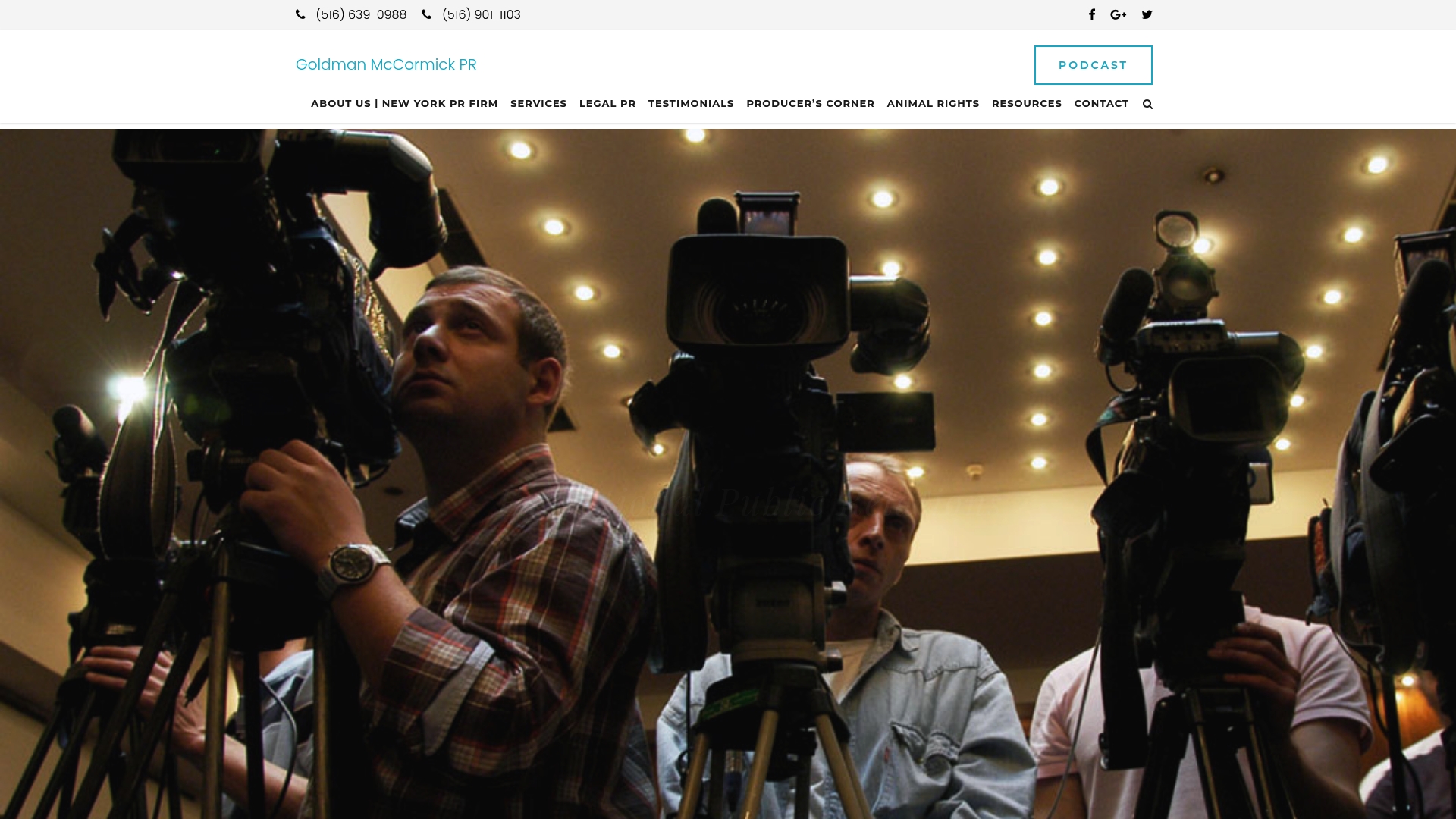
Named by Forbes Magazine as one of America’s Best PR Firms for 2021 and a Gold Award winner in Bulldog Reporter’s “Best Cause/Advocacy Campaign” category, Goldman McCormick PR understands what separates a campaign that generates coverage from one that generates trust. The firm specializes in CSR campaign communications across TV, radio, and print, with nationally syndicated programs on the Genesis Communications Network and Starcom Radio Network. For psychology firms ready to build a CSR program that earns both community impact and media attention, Goldman McCormick PR delivers the strategic communications infrastructure to make it happen. Explore how the firm’s corporate communications expertise can amplify your next initiative.
FAQ
What are the best examples of CSR campaigns by psychology firms?
The strongest examples include Lotte Department Store’s Rejoice campaign, Project SURAKSHA’s suicide prevention training, and the Atmanirbhar Project’s vocational rehabilitation program. Each delivers measurable community outcomes tied to specific mental health needs.
How do psychology firms avoid greenwashing in CSR?
Psychology firms avoid greenwashing by aligning external CSR messaging with internal organizational culture and involving employees in program design. Research confirms that inconsistencies between messaging and actual culture erode employee and public trust.
What role does cause marketing play in psychology firm CSR?
Cause marketing works best when it emphasizes intrinsic rewards like personal satisfaction and moral identity rather than guilt. Guilt-based appeals trigger consumer skepticism and reduce long-term campaign loyalty.
How can small psychology practices run effective CSR campaigns?
Small practices can focus on service accessibility, such as subsidized fees, multilingual intake, or sliding-scale pricing. These approaches require minimal infrastructure and deliver direct community benefit without large-scale program management.
What is PPIE and why does it matter for psychology CSR?
PPIE stands for Patient and Public Involvement and Engagement. It is the practice of including service users and carers in program design, and it improves both the clinical relevance and community acceptance of psychology CSR initiatives.