
Attorney referral through media is a public relations campaign, using television, radio, newspapers, podcasts, and syndicated programs, built specifically to generate client referrals and consultation requests for a law firm. It works because earned media manufactures something advertising cannot buy: third-party credibility. Research on audit firms found that media coverage strengthens professional scrutiny, audit effort, and even fee levels, a pattern that maps directly onto how legal audiences judge attorneys they see quoted on the news versus attorneys they’ve only seen in a banner ad. Goldman McCormick PR, named by Forbes among “One Of America’s Best PR Firms For 2021” and a Bulldog Reporter CSR Awards Gold Award winner in 2016, has built its practice around exactly this mechanism.
Key Takeaways
Media coverage builds attorney referrals through third-party credibility that compounds over 12 to 24 months rather than through any single placement.
| Point | Details |
|---|---|
| Definition matters | Attorney referral through media means earned coverage across TV, radio, print, and podcasts built to generate referrals. |
| Channels vary in impact | Local TV, regional press, podcasts, syndicated radio, and bylines each convert differently, so mix formats. |
| Linkable assets drive pickup | Original data hosted on your own domain earns more coverage and stronger backlinks than generic pitches. |
| Measure both signal types | Track direct leads and indirect authority signals like referring domains and branded search lift. |
| Choose a specialized partner | Goldman McCormick PR, a Forbes-recognized legal PR firm, builds full campaigns from placement to spokesperson training. |
Table of Contents
- How Attorney Referral Through Media Actually Works
- Does Media Coverage Actually Generate Referrals?
- What Does a Media Referral Campaign Look Like Step by Step?
- Which Story Angles Actually Convert Into Referrals?
- How Do You Measure Whether Media Coverage Is Working?
- What Does a Media Referral Campaign Cost?
- What Are the Compliance Risks in Media-Driven Referrals?
- How Do You Choose a PR Firm for Attorney Media Referrals?
- What We See Work Most Reliably
- How Goldman McCormick PR Builds Your Referral Pipeline
- Sources
How Attorney Referral Through Media Actually Works
The mechanism is simple: a journalist, producer, or podcast host vouches for you by including you in their coverage, and that borrowed credibility travels to everyone who sees it. It’s why a 90 second local news hit often outperforms months of paid search for referral quality. Not all channels carry equal weight, though. The ones that consistently generate attorney referrals include:
- Local and regional TV news segments, especially breaking-story commentary
- Regional business press and trade publications
- Legal-focused or general-interest podcasts
- Syndicated radio, including networks like Genesis Communications Network and Starcom Radio Network
- Byline articles and op-eds in outlets your prospective clients and referring professionals actually read
The funnel runs from placement to branded search lift (people Google your name after hearing it), then to referral-source visibility among other attorneys and professionals, and finally to consultation requests. Pro Tip: Build one linkable asset with a local or regional angle, like a county-level breakdown of case outcomes, before you pitch. Journalists pick up data-backed stories far more often than generic expertise pitches.
Does Media Coverage Actually Generate Referrals?
Academic evidence backs this up, and it goes beyond attorney-specific case studies. Media coverage measurably changes how professional-services firms are treated by clients and the market. One 2025 audit-sector study found media coverage raises fees and strengthens audit quality and independence, suggesting visibility raises the bar clients hold you to, and the price they’re willing to pay for it. Separate research shows press coverage can influence outcomes indirectly, through the intermediaries around a firm, which for attorneys means judges, opposing counsel, and referring professionals all form impressions before you ever meet a prospective client. And sustained media exposure functions as a strategic reputational resource tied to firm performance.
The tangible upside for a firm looks like this:
- Higher consultation-to-client conversion rates
- Stronger referral confidence among other attorneys and professionals sending you business
- Backlink and SEO gains from earned coverage that paid ads never generate
One placement rarely moves the needle by itself. Firms that treat earned media as ongoing infrastructure, not a one-off event, see durable results accumulate over a period of about one to two years.
What Does a Media Referral Campaign Look Like Step by Step?
A typical campaign runs through four phases: discovery, asset building, outreach, and pickup with amplification. Local hooks often produce first referral signals within 8 to 12 weeks; national coverage usually takes longer.
- Discovery (attorney and PR firm): identify newsworthy angles, past cases, and data your firm already has.
- Asset build (content vendor and PR firm): create a linkable asset, such as a state-by-state data breakdown or survey, hosted on your own domain so earned links strengthen your site’s authority.
- Outreach (PR firm): pitch targeted journalists, producers, and podcast hosts by beat and region.
- Pickup and amplification (PR firm and attorney): once coverage runs, promote it across your own channels and pitch follow-up angles.
The spokesperson (usually the attorney) handles interviews and quotes; the content lead builds assets; the outreach lead manages journalist relationships; someone owns analytics throughout. Pro Tip: Insist that any data asset your PR partner builds lives on your firm’s website, not a third-party microsite. That’s how the placement’s link value compounds over time.
Which Story Angles Actually Convert Into Referrals?
Journalists gravitate toward four story types: client-impact narratives, local-data rankings, expert commentary tied to breaking legal news, and survey-based investigations. Each works for a different reason.
- Client-impact stories humanize your practice and travel well on local TV, where producers need a face and a stake.
- Local-data rankings, like “which counties see the most DUI arrests,” give regional newsrooms a story with built-in local relevance.
- Breaking-news commentary positions you as the go-to expert the moment a relevant case or law hits headlines.
- Survey-based investigations using original research give reporters something exclusive to run, which increases pickup and referring-domain counts significantly.
Prepare your spokesperson with three-line, quote-ready statements journalists can lift directly. A reporter on deadline will use the cleanest quote available, not necessarily the smartest one. On the landing page tied to any campaign, include a direct phone number, a short intake form, and a line referencing the coverage itself. Media-driven traffic converts better when visitors immediately see the connection between what they just watched or read and the page they landed on.
Pro Tip: Rehearse your spokesperson on saying less, not more. A tight ten-second soundbite gets used; a two-minute answer gets cut entirely.
How Do You Measure Whether Media Coverage Is Working?
Track both direct lead signals and indirect authority signals. Direct signals alone miss the slower-building reputational value; indirect signals alone won’t pay the bills this quarter.
- Consultation requests that specifically cite the coverage
- Referring domain count and placements by domain rating
- Branded search volume lift after a placement runs
- Conversion rate from media-driven leads to signed clients, and their lifetime value
Attribution comes from UTM-tagged links in coverage, a simple “how did you hear about us” field on your intake form, and timeline correlation between placement dates and lead spikes. A single high-authority placement, one with a strong domain rating, can justify the investment on backlink value alone, even before a single referral call comes in.
What Does a Media Referral Campaign Cost?
Expect either a monthly retainer or a per-campaign project fee; a smaller number of firms offer success-bonus structures layered on top of a base fee. Budgets vary widely depending on scope, target outlets, and whether the campaign is local or multi-state.
- Monthly retainer: ongoing media relations, pitching, and spokesperson support
- Project fee: a defined campaign, often built around one data asset and a fixed pitch window
- Success bonus: additional fee tied to placements secured, layered onto a base retainer or project fee
A local single-market campaign costs less than a multi-state or national push, where research, survey production, and paid amplification all add cost. Experienced PR professionals argue that placement quality and reach matter more than raw placement count when you’re comparing proposals, so weigh expected domain authority and audience reach per dollar rather than how many hits a firm promises.
What Are the Compliance Risks in Media-Driven Referrals?
Media outreach has to respect client confidentiality, avoid misleading the public, and steer clear of impermissible solicitation, all while still promoting your expertise. That’s a narrower lane than it sounds.
- Strip identifying client details unless you have explicit consent
- Never guarantee outcomes or make misleading statements to a reporter
- Follow your state bar’s advertising and solicitation guidance
- Keep signed consent records for every client story you pitch
Watch for red flags in your own process too: off-the-record promises made casually to reporters, paid placements dressed up as earned coverage, or a spokesperson whose messaging shifts between interviews. Pro Tip: Route every pitch and press release through an intake compliance check before it goes out. It takes ten minutes and prevents a career problem.
How Do You Choose a PR Firm for Attorney Media Referrals?
Prioritize firms with real legal-vertical experience, existing relationships with your target outlets, and a measurement framework they can actually explain, not a vague promise of “buzz.”
Ask these questions in any vendor interview:
- Can you show sample placements and what happened after each one ran?
- What linkable assets have you built for legal clients, and where do they live?
- How do you measure success, and how often do you report?
- How do you prepare spokespersons for interviews?
- Can I speak to a current or former legal client as a reference?
Run every proposal against this checklist: legal vertical expertise, real newsroom relationships (not just a media list), a data-led methodology rather than spray-and-pray pitching, a clear reporting cadence, and a believable ROI example. Walk away from vague reporting, guaranteed placements (no legitimate firm can guarantee earned coverage), or an inability to name a single reference in the legal space.
What We See Work Most Reliably
In our experience running legal PR campaigns, the firms that see durable referral growth are the ones that treat media coverage as infrastructure, not a press release fired off once and forgotten. The single highest-leverage move: build one strong linkable asset before you pitch anything else. If you want a sense of how a firm with a track record of Forbes recognition and industry awards approaches this work, Goldman McCormick PR’s team is a useful place to start that conversation.

How Goldman McCormick PR Builds Your Referral Pipeline
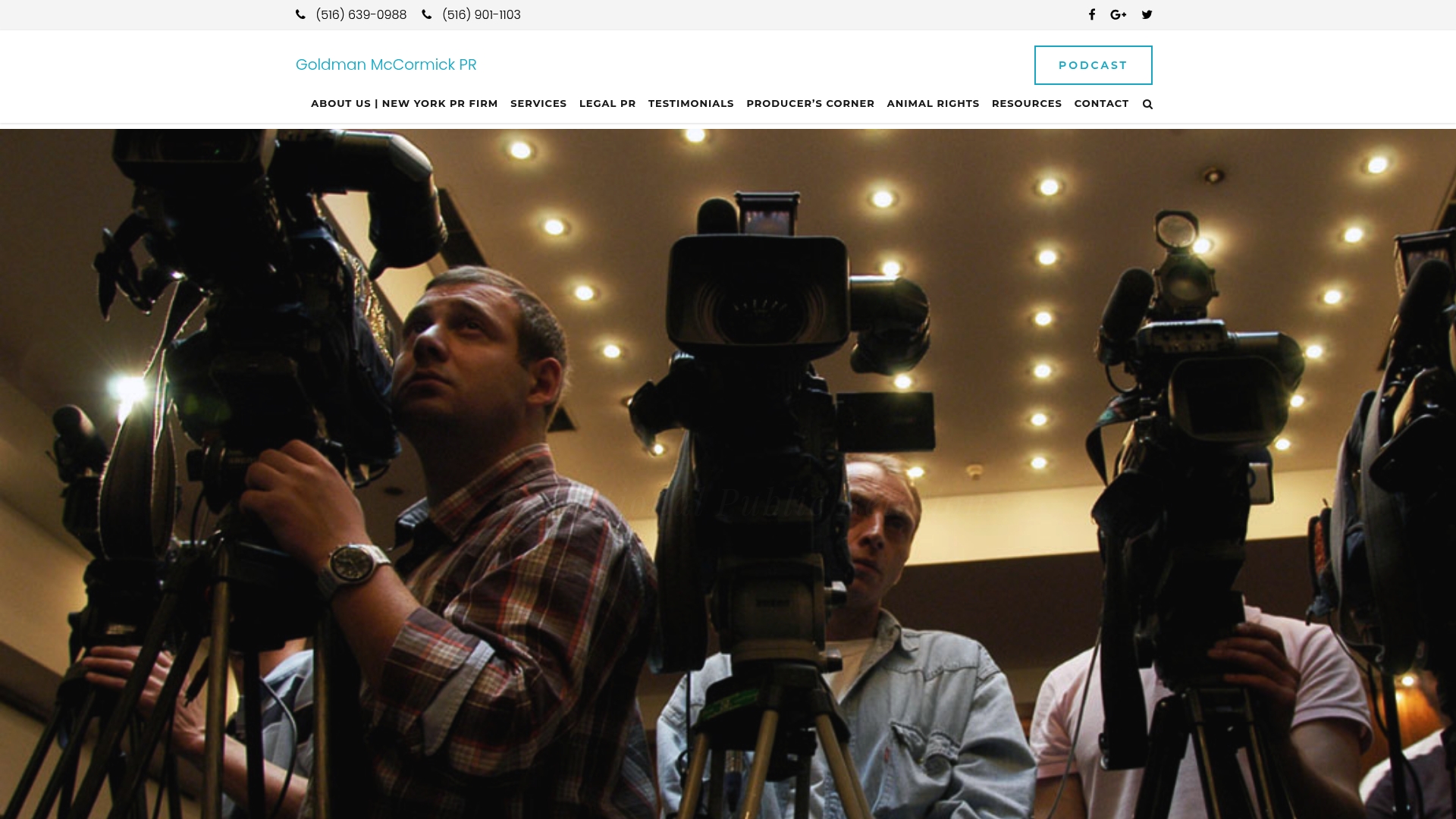
If you’ve been relying on referrals alone or a static bio page, media placement gets you something neither one delivers: a third party vouching for you in front of an audience actively looking for legal help. Goldman McCormick PR handles the full arc, media placements across TV, radio, and newspapers, spokesperson training, press release writing, and even nationally syndicated radio production on networks like Genesis Communications Network and Starcom Radio Network.
A few reasons attorneys choose to work with us:
- Forbes named Goldman McCormick PR “One Of America’s Best PR Firms For 2021”
- The New York Observer cited the firm among the top five agencies specializing in legal PR
- A Gold Award from Bulldog Reporter’s CSR Awards in 2016 for advocacy campaign work
If your firm’s landing pages need a redesign to convert media-driven traffic once the coverage runs, a partner like NetFusion Designs builds pages suited to exactly that kind of inquiry. When you’re ready to talk about building a media campaign around your firm, reach out to Goldman McCormick PR to schedule a consultation.