
Media pitching is the practice of sending a targeted proposal to a journalist that argues why their audience needs your story right now. Pitching a story to NYC journalists demands more precision than almost any other media market in the world. New York City newsrooms at outlets like The New York Times, the New York Post, and WIRED receive hundreds of pitches daily. Journalists scan pitches in 3 to 5 seconds, which means your subject line and opening sentence carry most of the weight. The best pitches run 100 to 180 words, land in inboxes at 8:00 AM, and speak directly to a reporter’s beat. Goldman McCormick PR has worked within this market since 2010, and the rules below reflect what actually works.
How to pitch a story to NYC journalists: finding the right reporter first
The single biggest mistake PR professionals make is pitching a publication instead of a person. Beat-first pitching targets the specific reporter who covers your exact topic, and it outperforms generic outlet lists by a wide margin. A pitch about healthcare policy sent to a food writer is not just ignored. It damages your credibility for future outreach.
Start by reading the masthead of your target publication. Most major NYC outlets publish staff directories online. From there, read the reporter’s last five to ten articles to confirm their current beat. Beats shift constantly in New York newsrooms, and a reporter who covered real estate six months ago may now be focused on city politics.
Vet journalists thoroughly by checking their published pitch guidelines, social media activity, and any public statements about what they are looking for. Many NYC reporters post pitch preferences on Twitter/X or LinkedIn. That information is free and almost no one uses it.
- Identify the reporter’s beat from their recent bylines, not just their job title.
- Check for published pitch guidelines on their bio page or social profiles.
- Confirm the reporter is still at the outlet before sending. Staff turnover in NYC media is high.
- Note whether they prefer email, social DMs, or a specific submission form.
Pro Tip: Search a reporter’s name plus “pitch” or “story ideas” on Twitter/X. You will often find direct statements about what they want and what they will delete without reading.
What should an effective pitch email to NYC journalists include?
A strong pitch email has three parts: a personalized opener, a concise story hook, and a clear offer. Pitches should open with a direct reference to the journalist’s recent work and a sentence explaining why your story fits their beat. Skip generic flattery. Phrases like “I love your work” are invisible to a reporter who receives 200 emails a day.

The story hook is the core of your pitch. It answers two questions: what is the story, and why does it matter right now? A pitch differs from a press release because it focuses on urgency and narrative conflict, not company announcements. Tie your story to a current news cycle, a regulatory change, a seasonal trend, or a data point that has not been widely reported.
Support your hook with one or two pieces of evidence. A statistic, a named source willing to speak on record, or a trend backed by recent data all increase credibility. Then close with a specific offer: an interview, an exclusive data set, or a comment from an expert. Keep the entire email under 180 words.
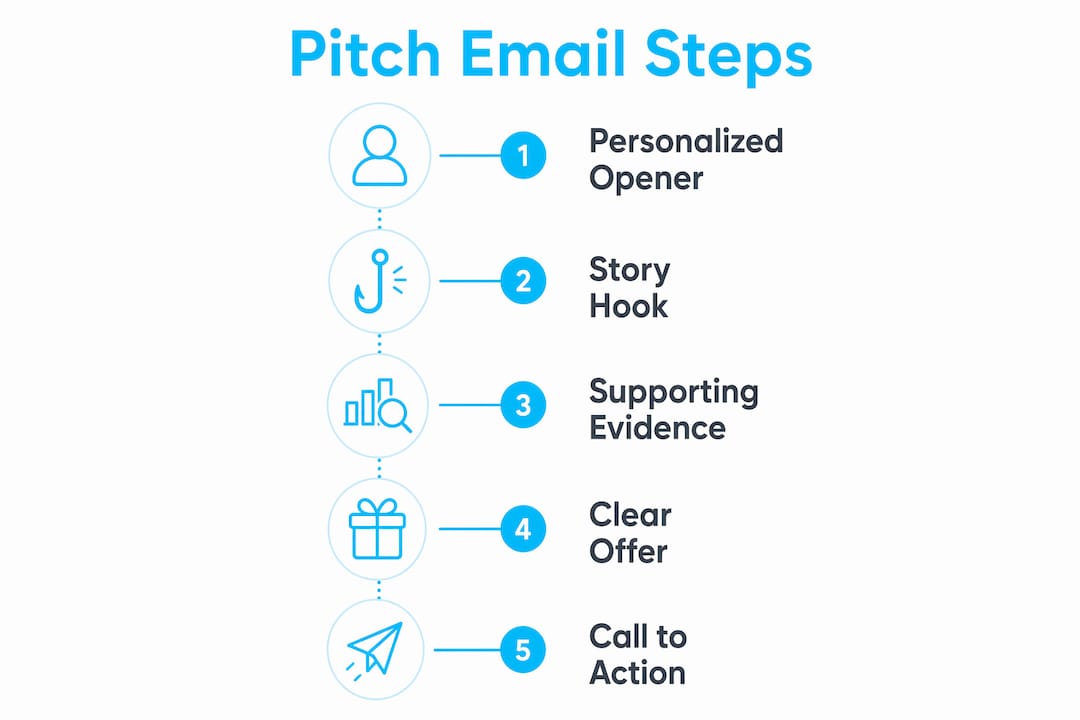
| Pitch element | Purpose | Length |
|---|---|---|
| Subject line | Earns the open | 6–10 words |
| Personalized opener | Shows you read their work | 1–2 sentences |
| Story hook | Explains the story and its urgency | 2–3 sentences |
| Supporting evidence | Proves newsworthiness | 1–2 sentences |
| Offer and sign-off | Makes next steps easy | 1–2 sentences |
Pro Tip: Start your subject line with “Pitch:” followed by the story angle in plain language. Subject line clarity is the fastest way to separate your email from the noise.
When is the best time to send pitches to NYC journalists?
Timing a pitch email is not a minor detail. It determines whether your message sits at the top of an inbox or gets buried under overnight traffic. Send pitches Tuesday through Thursday for the best response rates. Mondays are overloaded as reporters return from the weekend, and Fridays risk being forgotten over the following two days.
The optimal send time is 8:00 AM using a scheduled send feature in your email client. That places your pitch at the top of the inbox when the reporter opens their laptop, before the day’s news cycle takes over. Scheduling tools in Gmail and Outlook handle this without any manual effort.
- Send Tuesday, Wednesday, or Thursday between 8:00 AM and 9:00 AM Eastern Time.
- Avoid Mondays, Fridays, and the day before or after a major holiday.
- Limit follow-ups to one or two. Each follow-up must add new information, not just ask if they saw your last email.
- Never include attachments in the initial email. NYC newsroom spam filters block them regularly. Offer to send files upon request.
Common mistakes that kill pitches to NYC reporters
The most common pitching errors are avoidable with basic preparation. Avoid simultaneous pitching to multiple outlets at the same time. Give one editor a clear deadline before approaching others. Mass pitching signals that you do not value the reporter’s time or the outlet’s editorial process.
Marketing jargon and generic praise destroy pitches faster than any other mistake. Reporters at The New York Times and WIRED are trained to recognize copy that reads like an advertisement. Your pitch must demonstrate that you understand their coverage and their readers.
“Pitches should not read like press releases. Editors want to know why this story matters now to their specific readers, not why your client is impressive.”
— Editors from The New York Times and WIRED, via Pitch Posse NYC
Offer something exclusive when possible. A data set, a first-look interview, or an angle no other outlet has received signals that you respect the reporter’s competitive position. Generic pitches with no exclusive element get deprioritized in every newsroom.
- Never cold-call a reporter without prior email contact and confirmed beat relevance.
- Do not send a pitch that reads like a company press release or product announcement.
- Show familiarity with the outlet’s tone. A pitch suited for the New York Post reads very differently from one aimed at The Atlantic.
- Give editors a deadline when your story is time-sensitive. It creates urgency without pressure.
Key Takeaways
Pitching NYC journalists successfully requires beat-specific targeting, a concise story hook under 180 words, and a Tuesday-to-Thursday send at 8:00 AM.
| Point | Details |
|---|---|
| Target the reporter, not the outlet | Identify beat reporters by reading recent bylines before sending any pitch. |
| Keep pitches under 180 words | Concise pitches with a clear hook and evidence perform best in NYC newsrooms. |
| Send midweek at 8:00 AM | Tuesday through Thursday morning sends reach inboxes before the news cycle takes over. |
| Skip attachments in the first email | NYC spam filters block attachments; include all key information in the email body. |
| Avoid simultaneous pitching | Give one editor a deadline before approaching other outlets to protect your relationships. |
What 15 years of pitching NYC newsrooms actually taught me
Most people treat the pitch as the hard part. After years of working in this market, I can tell you the research is harder and more important. A perfectly written pitch sent to the wrong reporter is wasted effort. The reporters who respond consistently are the ones you have read, followed, and understood before you ever sent a word.
The other lesson that took time to learn: press releases are not pitches. PR professionals sometimes send a formatted release and call it a pitch. Editors see through it immediately. A real pitch is a conversation starter. It says, “Here is a story your readers need, and here is why you are the right person to tell it.”
Persistence matters, but it has to be respectful. One follow-up with new information is professional. Two follow-ups with nothing new is noise. The reporters who remember you positively are the ones you treated like professionals with limited time, not targets to be converted.
NYC newsroom culture shifts constantly. Reporters move between outlets, beats change, and editorial priorities rotate with the news cycle. The PR professionals who succeed long-term are the ones who monitor those shifts and update their media lists every quarter.
— Ryan McCormick
How Goldman McCormick PR supports your NYC media outreach
Crafting pitches that land in NYC newsrooms takes more than a good story. It takes knowledge of the reporters, the timing, and the editorial culture of each outlet.
Goldman McCormick PR has built relationships across New York City’s media landscape since 2010. Named by Forbes Magazine as one of America’s Best PR Firms for 2021, the firm specializes in placing clients on TV, radio, and in print. The team handles pitch writing, reporter targeting, and follow-up strategy so your story reaches the right desk at the right time. If you are ready to get serious about NYC media coverage, Goldman McCormick PR offers the expertise and the contacts to make it happen.
FAQ
How long should a pitch to an NYC journalist be?
Keep your pitch between 100 and 180 words. NYC journalists scan emails in 3 to 5 seconds, so every sentence must earn its place.
What day is best for sending a pitch email?
Tuesday, Wednesday, and Thursday perform best. Mondays are overloaded and Fridays risk being overlooked before the weekend.
Should I attach a press release to my pitch email?
No. Attachments trigger spam filters in NYC newsrooms. Include all key information in the email body and offer additional materials upon request.
What makes a pitch different from a press release?
A pitch explains why a specific reporter’s audience needs the story right now. A press release announces news without addressing the reporter’s editorial needs or audience.
How many times should I follow up after sending a pitch?
Follow up once or twice at most, and only when you have new information to add. Repeating the same message without new value damages your relationship with the reporter.