
A PR strategy for mental health experts is defined as a planned, sustained effort to shape public perception, build credibility, and expand reach through earned media, thought leadership, and targeted communication. Nearly 50% of consumers now use AI tools to research healthcare providers, a figure that more than doubled in just 12 months. That shift means your online presence and media footprint directly influence whether potential clients find and trust you. Without a deliberate communication strategy, even the most qualified practitioners lose ground to louder, less credible voices.
Why mental health experts need a PR strategy to build credibility
Earned media is the foundation of credibility for mental health professionals. A feature in a national outlet, a quoted opinion in a health publication, or a radio interview on a syndicated network carries far more weight than a paid ad. That trust gap between advertising and earned coverage is especially wide in mental health, where clients are making deeply personal decisions about who to trust with their care.
Spokesperson-led PR programs produce measurable results. A behavioral health firm secured 115+ media mentions including national outlets, with 30% classified as high-impact coverage over 18 months. That kind of consistent presence builds the name recognition that turns a practitioner into a go-to authority.
PR also directly feeds Answer Engine Optimization (AEO). AEO refers to the practice of structuring your public presence so that AI tools like ChatGPT and Perplexity surface your name and expertise when people ask health-related questions. Earned media citations are the primary signal those platforms use. A practitioner with no media footprint simply does not appear in those results.
- Earned media builds trust that paid advertising cannot replicate in mental health contexts.
- Spokesperson programs create a sustained media presence that compounds over time.
- AEO readiness requires consistent citation in credible outlets, not just a polished website.
- Evidence-based messaging differentiates you from wellness influencers and unqualified voices online.
Pro Tip: Pitch yourself to journalists as a source before you pitch a story. Reporters need reliable experts on call. Being available and quotable builds relationships that generate ongoing coverage.
How PR shapes the role of destigmatizing mental health conversations
PR is the most effective tool for shifting public attitudes about mental health at scale. Clinical work changes lives one session at a time. A well-placed media campaign can reach millions and normalize help-seeking behavior in ways that individual practice never could.

Authenticity-first storytelling is the method that works. Campaigns built around real experiences, specific communities, and honest language outperform generic awareness messaging every time. The Megan Thee Stallion partnership campaign drove 40,000+ new visitors to a youth mental health resources website. That result came from pairing a trusted cultural figure with a message that felt genuine to the audience.
The most effective destigmatization PR follows a clear structure:
- Identify the specific stigma barrier your audience faces, whether that is fear of judgment, cultural taboos, or cost concerns.
- Choose messengers your audience already trusts, including community leaders, public figures, or peers with lived experience.
- Use consistent language that frames mental health care as normal and accessible, not exceptional or crisis-driven.
- Sustain the campaign over time. A single press release changes nothing. Repeated, coordinated messaging shifts norms.
“Qualified mental health experts have a responsibility to shape public discourse and prevent the spread of misinformation by non-experts and AI-generated content.” — Dr. Charlotte Russell
PR sustains awareness in ways paid media cannot. Once a story runs, it lives in archives, gets cited by other journalists, and feeds AI search results indefinitely. That compounding effect makes earned media the most cost-efficient long-term investment in public education a mental health expert can make.
How to build thought leadership as a mental health professional
Thought leadership is a long-term commitment built on authentic communication of niche expertise, not a quick marketing tactic. The practitioners who become trusted media sources are the ones who pick a lane and stay in it. A therapist who specializes in adolescent anxiety becomes the journalist’s first call when a story on teen mental health breaks.
The clearest path to thought leadership runs through original data. Proprietary research and consumer surveys create newsworthy hooks that generic commentary cannot. One behavioral health organization used an AI perception survey to win coverage in Forbes, HuffPost, and PYMNTS. The story was not “here is our service.” The story was “here is what the data shows about a trend you care about.”
- Define your niche. Generalist experts are forgettable. Specialists in trauma, grief, adolescent care, or workplace mental health are quotable.
- Pursue speaking engagements. Conference appearances and webinars build credibility with peers and generate media opportunities.
- Write authored content. Op-eds, journal contributions, and guest columns establish a public record of your thinking.
- Invest in media training. Clinical communication and media communication are different skills. One is built for depth; the other is built for clarity and speed.
- Generate original data. Even a small practitioner survey on a timely topic can produce a press-worthy finding.
Pro Tip: Pair your original research with a timely news hook. If your data connects to a current cultural conversation, journalists have a reason to cover it now rather than file it for later.
What are the biggest challenges in mental health PR?
Media engagement requires a distinct craft from clinical work, involving clarity, pacing, and framing that develop with practice. Most practitioners are trained to communicate with nuance and caution. Journalists need a clear, quotable point in 15 seconds. That gap is real and takes time to close.
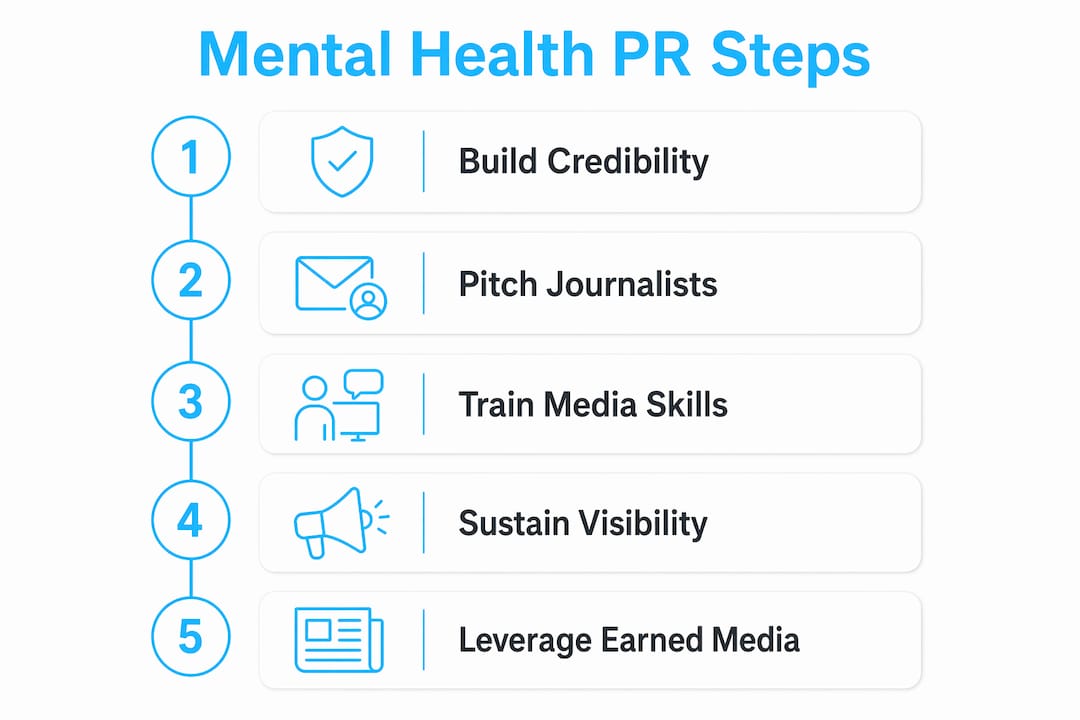
Institutional reputation adds another layer of complexity. Regulated mental healthcare organizations need executive-level oversight and defined communication protocols, not ad hoc responses to media inquiries. Reputation architecture, which includes defensible claims, escalation pathways, and approved spokesperson lists, protects the organization when a story goes sideways.
| Challenge | Best practice |
|---|---|
| Clinical vs. media communication style | Invest in media training to develop clarity and brevity |
| Balancing personal brand and institutional role | Define which spokesperson speaks on which topics |
| Managing reputational risk | Build escalation protocols before a crisis occurs |
| Avoiding sensationalism | Anchor all media statements in evidence-based language |
| Building journalist relationships | Offer yourself as a source consistently, not just when you have news |
The practitioners who succeed in PR treat it as a professional skill, not an occasional task. Mental health professionals must embrace media engagement as part of their ethical responsibility to combat misinformation. That framing shifts PR from a marketing expense to a professional obligation.
Key takeaways
A mental health expert’s PR strategy builds earned credibility, reduces stigma at scale, and positions practitioners as trusted authorities in an AI-driven media environment.
| Point | Details |
|---|---|
| Earned media drives trust | Consistent media coverage builds credibility that paid advertising cannot replicate. |
| AI tools change the stakes | Nearly 50% of consumers use AI to research providers, making media presence critical for visibility. |
| Destigmatization requires sustained effort | One campaign changes nothing; repeated, authentic messaging shifts public norms over time. |
| Original data creates news hooks | Proprietary research generates coverage in outlets like Forbes and HuffPost. |
| Media skills must be developed | Clinical communication and media communication are separate crafts that require distinct training. |
What I have learned about PR and mental health practice
The practitioners I have seen succeed with PR share one trait: they treat it as a professional responsibility, not a vanity project. The mental health field is drowning in misinformation. AI tools are surfacing unqualified advice alongside expert guidance, and the public often cannot tell the difference. When a qualified psychologist or therapist stays silent, that silence gets filled.
What surprises most practitioners is how gradually media relationships build. You pitch, you follow up, you get ignored, and then six months later a journalist remembers your name when a story breaks. Patience is not optional. It is the strategy. The practitioners who quit after two pitches never see the return. The ones who stay consistent for 18 months become the names in the story.
The other thing I would push back on is the idea that PR is separate from clinical ethics. Sharing your expertise publicly, correcting misinformation, and making mental health information accessible are extensions of the same duty you feel in the therapy room. A thoughtful media presence is not self-promotion. It is public service.
— Ryan McCormick
Goldman McCormick PR works with mental health experts who are ready to be heard
Mental health practitioners face a media environment that rewards visibility and punishes silence. Goldman McCormick PR, named by Forbes as one of America’s Best PR Firms for 2021, specializes in getting clients seen on TV, heard on radio, and read about in newspapers. The firm also produces podcasts and nationally syndicated radio programs on the Genesis Communications Network and Starcom Radio Network.
Mental health experts bring the expertise. Goldman McCormick PR builds the platform. From spokesperson training to media placement and crisis communication, the firm understands the specific demands of regulated healthcare communication. If you are ready to shape the conversation rather than watch others define it for you, Goldman McCormick PR is the place to start.
FAQ
Why do mental health experts need a PR strategy?
A PR strategy gives mental health experts control over their public narrative, builds credibility through earned media, and positions them as trusted sources in an environment crowded with misinformation and unqualified voices.
How does PR help reduce mental health stigma?
PR campaigns that use authentic storytelling and trusted messengers shift public attitudes at scale. The Megan Thee Stallion partnership campaign, for example, drove 40,000+ new visitors to a youth mental health resources website.
What is the role of PR for mental health experts in an AI-driven world?
Nearly 50% of consumers use AI tools to research healthcare providers. Earned media citations are the primary signal AI platforms use to surface reputable experts, making consistent media presence a direct driver of new client discovery.
How long does it take for mental health PR to produce results?
Media relationships and thought leadership build gradually. A sustained spokesperson program typically requires 12–18 months to generate significant coverage volume and measurable authority.
What skills do mental health professionals need for effective PR?
Media communication requires clarity, brevity, and framing skills that differ from clinical communication. Most practitioners benefit from formal media training to develop the ability to deliver quotable, accurate statements under time pressure.