You need two permits to hold a legal press conference in New York City: a press conference permit from the Mayor’s Office of Citywide Event Coordination and Management (CECM), filed at least 10 days out with a non-refundable processing fee, and an NYPD sound-device permit if you’re using a microphone or speakers, filed at your local precinct at least five days out with a fee of $45. Start both at E-Apply now, and upload your site plan, run-of-show, and insurance certificate early to avoid getting stuck in agency review.
TL;DR:
- Secondary permits for sound equipment, lighting, or vehicles can significantly delay approval if filed separately and too late, so submit all at the same time.
- A complete application must include a detailed site plan, a minute-by-minute run-of-show, and an insurance certificate with the city as an additional insured to prevent rejection.
- If the event involves fundraising, sales, or a moving march, reclassifying it as another type can drastically change permit timelines and requirements.
- Emergency or breaking news press conferences may qualify for expedited approval with proper documentation, but timing is not guaranteed.
- Handling multiple agency permits professionally reduces the risk of last-minute delays, permit denial, or on-site enforcement issues that could derail your event.
Table of Contents
- What Permits Cover Press Conferences, Rallies, and Demonstrations
- How to Apply Through E-Apply and the CECM Permit Process
- Timeline, Fees, and Who Reviews Your Application
- Agency-Specific Requirements: NYPD, DOB, FDNY, and DOT
- Documents SAPO and Partner Agencies Expect to See
- Classification Rules, Prohibited Activities, and What Happens If You Break Them
- When You Need a Last-Minute Permit: The Unforeseen Need Exception
- A Practical Checklist and Timeline You Can Copy
- Why Permitting Is Strategic, Not Just Paperwork
- Running the Event: What Actually Trips People Up on the Day
- Let Goldman McCormick PR Handle the Filing While You Focus on the Message
- Official Pages to Start Your Filing
- Sources
What Permits Cover Press Conferences, Rallies, and Demonstrations
The Street Activity Permit Office (SAPO), which operates under CECM, treats press conferences, rallies, and stationary demonstrations as a distinct category from street fairs, block parties, or filming shoots. That distinction isn’t bureaucratic hairsplitting. It determines your timeline, your fee, and what you’re allowed to do once you’re standing on that sidewalk with a microphone.
SAPO classifies your event based on function, not size. A press conference with 200 attendees and a rally with 10 people can both fall under the same permit type if neither involves commerce. The moment fundraising, ticket sales, or product promotion enters the picture, SAPO reclassifies the event, which changes your application timeline and required documentation entirely.
Here’s how the three categories break down:
- Press conference: A scheduled media event, typically with a podium, speakers, and press risers, focused on announcements or statements.
- Rally: A gathering built around advocacy or public expression, often with chants, signage, and a march component.
- Stationary demonstration: A fixed-location gathering with no movement, similar to a rally but confined to one spot.
If your event includes a moving component, like a march to a courthouse, or involves selling merchandise, SAPO may reclassify it as a street event or production shoot, both of which carry longer lead times and different permit-process requirements. Get the classification right at the outset. It’s the single biggest factor in whether your application clears in days or gets bounced back for revision.
How to Apply Through E-Apply and the CECM Permit Process
E-Apply is the only portal SAPO uses for press conference submissions, and the workflow is more forgiving than most city permit systems once you know what to have ready before you start.
- Create an E-Apply account and select “Press Conference” as your event type from the dropdown. Choosing the wrong category here is the most common reason applications get sent back.
- Enter sponsor and producer contact details, including a phone number someone will actually answer during the review window. SAPO and the precinct handling your NYPD filing may both call.
- Select your date and exact location, down to the specific block, sidewalk, or pedestrian plaza. Vague location entries (“in front of City Hall”) get rejected; you need cross streets or a plaza name.
- Upload your supporting documents: a site plan, a run-of-show, and your insurance certificate, in the file formats E-Apply specifies (PDF works reliably for all three).
- Pay the $25 processing fee online through the portal. This fee is non-refundable regardless of whether the event happens.
- Track routing status as your application moves through SAPO, NYPD, your local Community Board, and any plaza partner with jurisdiction over the space.
That routing step is where most delays happen, not the initial filing. Once submitted, your application doesn’t just sit at SAPO; it gets forwarded to whichever agencies have a stake in your location, and each one can flag an issue independently.
Pro Tip: If you can’t access E-Apply or need help mid-application, SAPO takes calls during business hours. Have your event date, location, and organization name ready before you dial so the call moves fast.
Don’t wait until day nine to start this. E-Apply timestamps your submission, and agencies work off that timestamp when calculating whether you’ve met the lead-time requirement.
Timeline, Fees, and Who Reviews Your Application
Ten days is the number to build your entire planning calendar around. That’s the minimum lead time SAPO requires for press conference applications, and it’s measured from the date of submission, not the date you started thinking about the event.
Your baseline costs look like this:
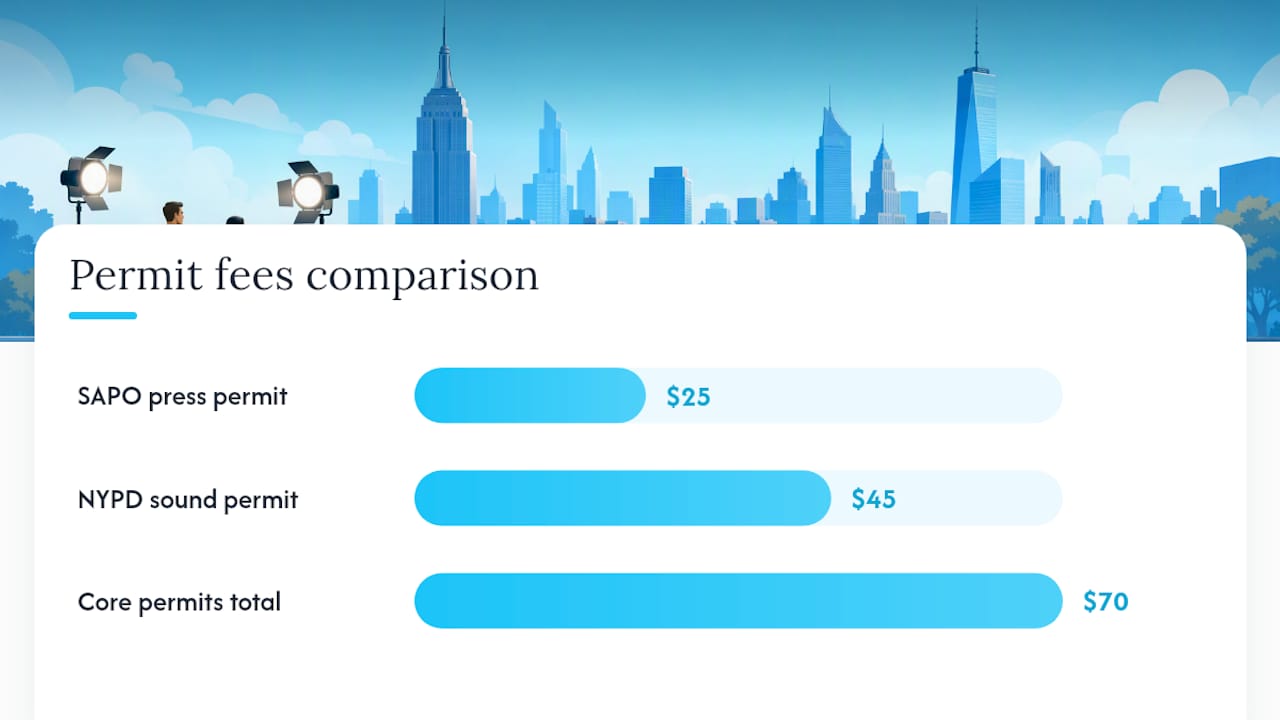
- $25 non-refundable processing fee to SAPO for the press conference permit itself
- $45 fee to NYPD for a sound-device permit, if you’re amplifying anything
- Vendor and insurance costs, which vary depending on your setup and aren’t set by the city
By the numbers: A press conference permit costs $25 and a sound permit costs $45, meaning most organizers can secure both core permits for $70 total, not counting insurance or vendor fees.
Once submitted, your application gets reviewed by more than one office. SAPO handles the core approval, NYPD weighs in on sound and crowd safety, your local Community Board gets notice of the event, and if you’ve chosen a pedestrian plaza, the plaza’s managing partner reviews it too. Each of these stakeholders can raise a flag, so a clean, complete application at the ten-day mark gives everyone enough runway to sign off without scrambling.
Agency-Specific Requirements: NYPD, DOB, FDNY, and DOT
The SAPO permit covers the press conference itself, but the moment you add sound equipment, a stage, a generator, or a large vehicle, you’re now dealing with a second agency, and each one has its own rules.
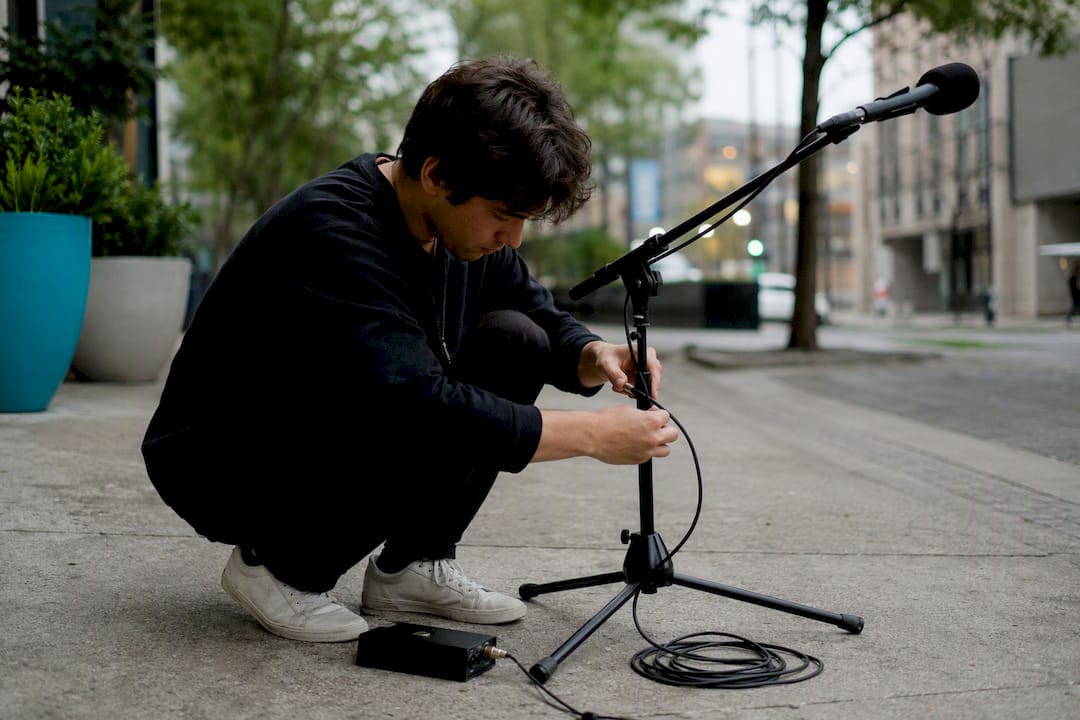
NYPD sound permits apply anytime you’re using a microphone, PA system, or speakers. File at your local precinct at least five days before the event, and expect to pay a $45 fee by certified check or money order. Most precincts don’t take cash or personal checks for this, so confirm the accepted payment method with your specific precinct ahead of time. Permits are often ready for pickup the day of the event or as the precinct directs.
DOB permits come into play if you’re erecting a stage, platform, or tent taller than 10 feet, or making any structural alteration to the space. If your press conference includes a raised podium for cameras or a tented staging area, check with the Department of Buildings before you assume SAPO’s approval covers it.
FDNY certificates are required for generators. If your generator exceeds 40kw, the Department of Environmental Protection gets involved too. Broadcast trucks and lighting rigs often push power needs past that threshold without organizers realizing it until the vendor mentions it.
DOT permits apply to over-dimensional vehicles, specifically anything longer than 55 feet. Satellite trucks and mobile broadcast units frequently hit this mark, so ask your media vendors for exact vehicle length before assuming you’re clear.
- File NYPD, DOB, FDNY, and DOT permits at the same time you submit to SAPO, not after.
- A missing secondary permit is one of the most common reasons a fully compliant SAPO application still gets held up.
- Vendors supplying generators or sound equipment should confirm their own insurance and technical specs before you build them into your run-of-show.
Pro Tip: If your event involves a live band, amplified announcements, or a broadcast feed, treat the sound permit as non-negotiable. Resources on noise-management for live events are worth a look if your press conference has any performance component attached.
Filing everything in parallel instead of sequentially is the difference between a two-week process and a four-week one.
Documents SAPO and Partner Agencies Expect to See
A clean submission comes down to three documents, each with specific content SAPO reviewers are trained to look for.
- Site plan: This needs to show staging location, equipment placement (podium, speakers, cameras), anticipated crowd flow, and any impact on pedestrian or vehicle traffic. A hand-drawn sketch is acceptable as long as it’s legible and to scale enough to make sense of the space.
- Run-of-show: List your event timing minute by minute, including sound checks, speaker order, and camera positioning for broadcast crews. This document does double duty. It tells SAPO what to expect and gives your own team a script for the day.
- Insurance certificate: SAPO typically expects a certificate of insurance (COI) naming the City of New York as an additional insured party, with coverage minimums that vary by event scale. Ask your insurance provider for a COI specifically formatted for NYC public-space events; a generic liability certificate often gets kicked back for missing the additional-insured language.
Vendors should also hand you their own technical specs: amplification wattage, generator output, and their own insurance documentation. Folding these into your submission upfront saves a round of follow-up requests later.
Classification Rules, Prohibited Activities, and What Happens If You Break Them
SAPO defines a press conference as a non-commercial event, and that classification comes with real limits on what you can do once you’re permitted.
- No fundraising or solicitation of donations during the event
- No sales of goods, services, or merchandise
- No use of designated rain dates. Press conference permits are typically issued for a single date, not a backup date
Cross one of these lines and you risk more than an awkward conversation with an inspector. SAPO can deny the permit outright, reclassify your event mid-process (which restarts your timeline), or, in the worst case, have NYPD intervene on-site if the activity clearly violates the permit’s terms. Fines are possible depending on severity.
The fix is straightforward: file for exactly what you’re doing, and don’t blur a press conference into a fundraiser or product launch to save time on paperwork. A precise application with complete documentation is your best protection against enforcement headaches.
When You Need a Last-Minute Permit: The Unforeseen Need Exception
Breaking news doesn’t wait 10 days, and CECM knows that. There’s an unforeseen need exception for press conferences responding to events that genuinely couldn’t have been anticipated, like a sudden legal development or breaking public statement.
To improve your odds of expedited approval, come prepared with news coverage or timestamps showing when the triggering event occurred, a clear explanation of why the standard 10-day window doesn’t work, and contact information for someone who can answer questions immediately. Call SAPO directly rather than relying only on E-Apply for these requests. Even with strong documentation, expedited approval isn’t guaranteed, so have a backup plan, like a private venue or a phone press briefing, ready in case timing doesn’t work out.
A Practical Checklist and Timeline You Can Copy
Break your planning into three phases and you’ll rarely miss a deadline.
- 10 days out: Reserve your location, submit your SAPO application through E-Apply, and file any needed NYPD, DOB, FDNY, or DOT permits simultaneously.
- 7 days to 48 hours out: Confirm insurance is finalized, lock in vendor contracts, and send media advisories to your press list.
- Day of: Assign an on-site manager, set up press check-in, and have a contingency plan ready in case sound equipment fails or crowd size exceeds expectations.
| Phase | Key actions | Deadline |
|---|---|---|
| Two weeks out | Reserve site, submit E-Apply, file secondary permits | 10 days before event |
| One week out | Confirm insurance, finalize vendors, send media advisories | 48 hours to 7 days before |
| Day of | Staff check-in table, verify sound/AV, activate backup plan | Event day |
Why Permitting Is Strategic, Not Just Paperwork
Getting the permit isn’t the finish line. It’s what keeps your event from getting bumped by a competing permit holder or shut down mid-statement because a detail got missed. Securing your space and time formally through SAPO removes the ambiguity that lets conflicts arise on the sidewalk.
Handling permits professionally means more than filing forms. It means managing vendor insurance, coordinating with precinct staff on sound approval, and making sure a broadcast truck’s dimensions don’t trigger a DOT issue nobody caught until the morning of the event. Goldman McCormick PR, named by Forbes as one of America’s best PR firms, has built this kind of operational coordination into how it runs press events for attorneys and other professionals who can’t afford a permit delay to become a media story of its own. The firm’s Bulldog Reporter award for advocacy campaign work and its citation by the New York Observer as a top legal PR agency both reflect the same skill set this kind of filing demands: precision under a deadline.
If your event is small, low-risk, and doesn’t involve amplified sound or structures, filing it yourself through E-Apply is entirely manageable. Once you’re adding broadcast vendors, tight timelines, or high-visibility stakes, professional coordination stops being a convenience and starts being risk management.
Running the Event: What Actually Trips People Up on the Day
Permits get you access to the space. What happens once you’re standing in it is a different problem, and it’s the one I see organizers underestimate most.
Camera sightlines get overlooked constantly. Broadcast crews need a clean shot of the podium without a light pole or a passerby cutting through frame, so walk your site plan with a camera operator’s eye, not just a crowd-flow eye. Mic backups matter more than people think. A dead battery mid-statement is the kind of thing that ends up as the story instead of your announcement. Bring a backup mic and confirm your sound permit covers a test run beforehand.
Brief your speakers specifically for the format. TV wants a tight, quotable line early. Live radio wants pacing that survives dead air. A speaker who’s great in a courtroom isn’t automatically great on a five-second soundbite, so rehearse that distinction, not just the message.
Coordinating with the precinct and Community Board ahead of time, rather than treating them as a box to check, tends to smooth out day-of friction that a permit alone won’t prevent.
— Ryan McCormick
Let Goldman McCormick PR Handle the Filing While You Focus on the Message
Filing four different agency permits while also writing talking points and briefing reporters is a lot to carry alone, and a missed detail in any one filing can cost you the whole event date. Goldman McCormick PR is the alternative to handling this solo: our team coordinates permit filings, produces the run-of-show, manages media outreach, and staffs the event itself, so you’re not simultaneously playing city bureaucrat and press secretary on the same afternoon.
We’ve built relationships with the agencies and vendors involved in these filings because press logistics is a core part of what we do for attorneys, psychologists, and other professionals who need media exposure without the operational risk of a permit getting bounced back three days before the event. That coordination extends to insurance documentation, vendor vetting, and on-site management, so nothing falls through between SAPO’s approval and your speaker stepping up to the podium.
If you’ve got a press conference on the calendar and want someone else carrying the permit and logistics load, reach out to Goldman McCormick PR to talk through your event and timeline.
Official Pages to Start Your Filing
File directly through these agency sources rather than third-party guides: the SAPO press conference permit page and its E-Apply portal, the NYPD sound-device application form, and CECM’s permit FAQ page for edge cases specific to your event.