
Law firms lose clients before a single consultation happens. 66% of potential clients prefer lawyers with active online reviews, and 87% of businesses never respond to negative feedback at all. Those two facts together explain why so many firms with strong courtroom records still struggle to grow. The most common legal reputation pitfalls have nothing to do with losing cases. They come from ignoring reviews, letting websites go stale, posting carelessly on social media, and mishandling client communication. Here is what to watch for:
- Ignoring online reviews entirely, positive or negative
- Responding defensively or dismissively to criticism
- Outdated attorney bios, broken links, and stale website content
- Inconsistent name, address, and phone details across directories
- Unprofessional courtroom behavior that reaches public attention
- Social media posts that reveal confidential information or invite controversy
- Slow or generic responses to client inquiries
- Failing to monitor what is being said about the firm online
- Conflicts of interest that become public without a prepared response
- Soliciting reviews in ways that violate bar ethics rules
## 1. What are the most common legal reputation pitfalls firms face?
The reputation risks that damage law firms most are rarely dramatic. They accumulate quietly. A bio that still lists a partner who left three years ago. A Google listing with the wrong phone number. A one-star review sitting unanswered for six months. Each one signals to a prospective client that the firm does not pay attention.

The 2021 Justice Gap Measurement Survey found that 35% of low-income clients report financial impacts from legal issues, which means clients arrive already stressed and already scrutinizing every signal of trustworthiness. A firm that looks disorganized online does not get a second look.
2. Why online reviews can make or break client acquisition
Reviews are now a primary filter. Clients check Google, Avvo, and Yelp before they call. When a firm has no reviews or leaves negative ones unanswered, the silence reads as indifference. Responding professionally to criticism, on the other hand, can turn a dissatisfied client into a public demonstration of accountability.
A defensive or dismissive reply frequently does more damage than the original complaint. The right move is a calm, brief acknowledgment that avoids revealing any case details. Lawyers must also remember that even when a client discloses information publicly in a review, attorney-client confidentiality still applies to the firm’s response.
Pro Tip: Ask for reviews consistently and from all clients, not just the ones you expect will be positive. Selective solicitation violates bar ethics rules and exposes the firm to disciplinary action.
Review volume also matters. With a large enough base of reviews, a single one-star rating barely moves the overall score. With only a handful of reviews, one angry client can define the firm’s entire online identity.
3. How ethical conduct protects your firm’s long-term credibility
Legal analyst John G. Browning, a former justice on the Fifth Court of Appeals in Dallas, put it plainly: “It takes years to build a reputation,” but one ill-advised statement can unravel it fast. Browning’s advice for courtroom conduct applies equally online. Civility, candor, and adherence to ethical codes pay dividends over time.
The specific behaviors that create legal reputation risks include:
- Filing frivolous motions or repeating failed arguments before the same judge
- Posting complaints about judges, opposing counsel, or clients on social media
- Sharing confidential case details in public forums, even indirectly
- Engaging in online arguments that undermine professional standing
- Allowing staff to post content that identifies client matters
Judges talk. Browning noted that a lawyer’s reputation with the bench follows them from courtroom to courtroom. A firm that earns a reputation for candor and professionalism gains credibility precisely when it needs judicial goodwill most.
4. Why your digital presence is a direct signal of competency
An outdated website signals stagnation. Clients equate a modern, accurate digital presence with legal competence, and firms that neglect it lose ground to those that do not. This is reputation by omission: the firm is not doing anything wrong, it is simply failing to show up.
A large proportion of consumers lose trust in local businesses when they encounter inconsistent contact information online. For law firms, where trust is the entire product, that figure carries real weight. A mismatched suite number across three directories is enough to send a prospective client elsewhere.
A practical digital footprint audit should cover attorney bios, practice area pages, Google Business Profile, legal directories, and social media accounts. Broken links and slow load times hurt both search rankings and first impressions.
5. Advanced reputation strategies that experienced firms use
Proactive monitoring is the difference between catching a problem early and discovering it after it has already shaped public perception. Negative information spreads faster than positive and can dominate search results for years unless actively addressed.
Effective reputation management for law firms includes:
- Setting up Google Alerts and monitoring legal review platforms regularly
- Preparing holding statements before a crisis, not during one
- Training staff on social media conduct and confidentiality obligations
- Building a consistent review request process that complies with bar rules
- Responding to all client inquiries promptly, since slow responses signal that a client’s matter is not a priority
- Maintaining a reputation management framework that covers both proactive and reactive scenarios
Transparency consistently outperforms suppression. Attempting to delete a negative review without a valid policy violation rarely works, and a hostile response to criticism draws more attention to the original complaint. The firms that recover fastest from reputation damage are the ones that respond calmly, correct what they can, and let their volume of positive signals do the rest.
Goldman McCormick PR, named by Forbes Magazine as one of America’s Best PR Firms for 2021 and recognized by the New York Observer in 2014 as one of the top five agencies specializing in legal PR, brings exactly this kind of media-informed perspective to law firm reputation work.
Goldman McCormick PR helps law firms protect what they have built
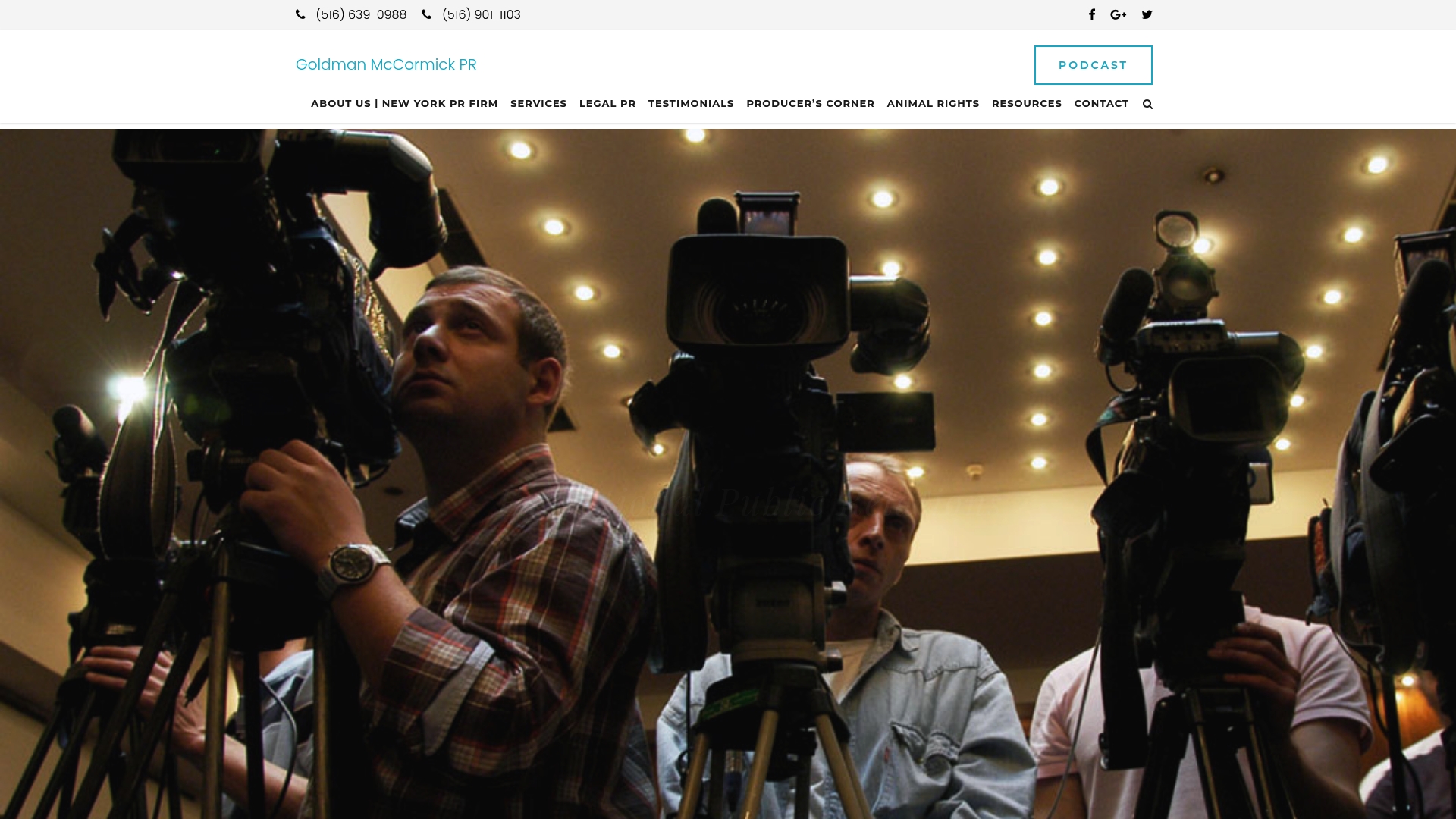
Law firms that have spent years building a reputation deserve a PR partner who understands both the media and the legal world. Goldman McCormick PR was founded by active and former media professionals, which means the firm knows how stories get placed, how negative coverage spreads, and how to get a law firm’s name in front of the right audience through TV, radio, newspapers, and nationally syndicated programs on the Genesis Communications Network and Starcom Radio Network.
The 2016 Bulldog Reporter Gold Award for Best Cause/Advocacy Campaign reflects the kind of work Goldman McCormick PR does for clients who need more than a press release. For law firms navigating a reputation challenge or looking to build stronger public visibility before one arises, the next step is straightforward. Visit Goldman McCormick PR to learn how the firm can put your practice in front of the audiences that matter.
Key Takeaways
Law firms that actively manage online reviews, maintain ethical conduct, and keep their digital presence current are significantly better positioned to attract and retain clients than those that do not.
| Point | Details |
|---|---|
| Reviews drive decisions | 66% of potential clients prefer lawyers with active online reviews, making engagement a direct factor in acquisition. |
| Response tone matters | A defensive reply to a negative review often causes more reputational harm than the original complaint. |
| Consistency builds trust | 80% of consumers lose trust when they encounter inconsistent contact information across online directories. |
| Ethical conduct is public | Courtroom behavior, social media posts, and client communication all shape a firm’s public reputation. |
| Goldman McCormick PR | Named by Forbes as one of America’s Best PR Firms for 2021, Goldman McCormick PR specializes in legal PR and media placement for law firms. |