
Digital PR for attorneys is defined as the ongoing process of earning authoritative online media coverage and high-quality backlinks to build a law firm’s credibility, search visibility, and reputation across digital platforms. Unlike a one-time press release, digital PR for lawyers is a sustained campaign targeting legal news outlets, industry blogs, and podcasts. It directly supports SEO by earning backlinks that signal expertise to search engines and AI platforms like Google AI Overviews. The E-E-A-T framework (Experience, Expertise, Authoritativeness, Trustworthiness) governs how Google evaluates legal content, making earned media placements a direct ranking factor. Attorneys who treat digital PR as a core practice function, not a marketing afterthought, gain measurable advantages in client acquisition and reputation management.
What is digital PR for attorneys, and how does it work?
Digital PR for attorneys is the industry term for legal public relations conducted exclusively through online channels. The standard PR industry calls this “earned media,” meaning coverage you did not pay for and cannot fully control. For attorneys, that means bylined articles in legal publications, expert quotes in news stories, podcast appearances, and backlinks from authoritative legal websites.
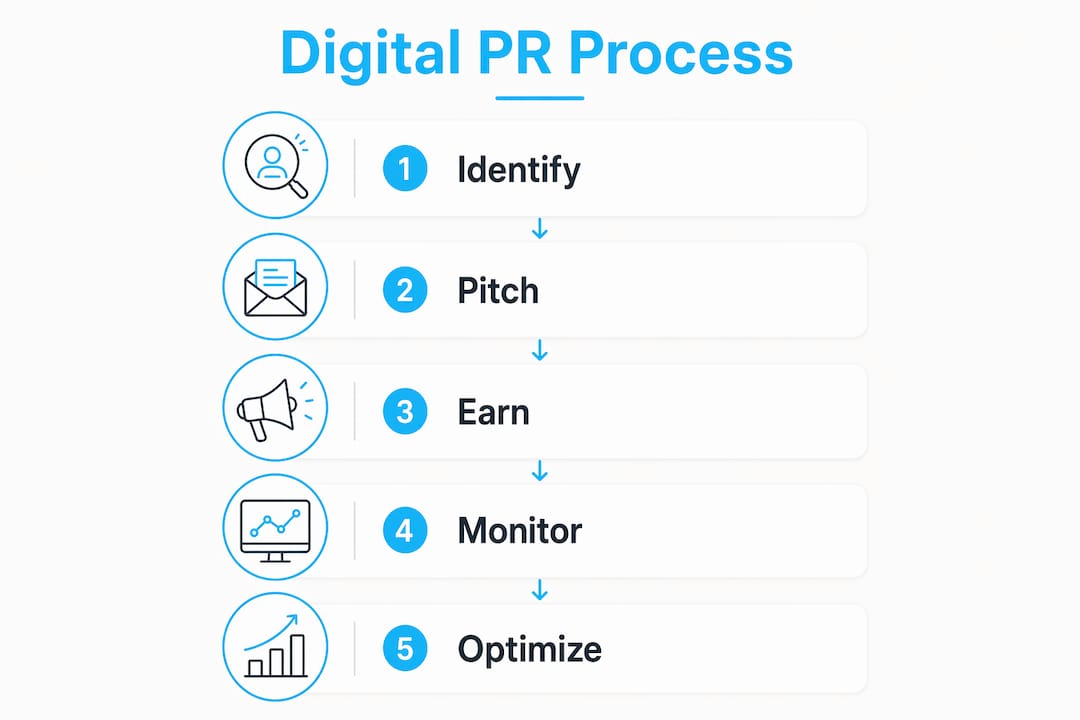
The process works in three stages. First, attorneys or their PR teams identify media opportunities, such as trending legal topics where a lawyer’s expert comment adds value. Second, they pitch journalists, editors, or podcast hosts with a clear, newsworthy angle. Third, the resulting coverage earns backlinks and brand mentions that improve search rankings and build public trust.

High-quality earned backlinks are now essential SEO signals for law firms. That means a single placement in a respected legal publication can improve a firm’s Google ranking for competitive practice-area keywords. For attorneys competing in markets like personal injury, criminal defense, or corporate law, that visibility directly translates to client inquiries.
How does digital PR differ from traditional PR for attorneys?
Traditional PR relies on print newspapers, television, and radio. Digital PR operates entirely online, and that distinction changes everything about how results are measured and used.
Here are the four most significant differences:
- Measurability. Digital PR tracks referral traffic, backlink quality, and audience engagement in real time. Traditional PR offers circulation estimates and media value equivalencies, which are far less precise.
- SEO value. Every online mention with a link passes authority to your website. A print mention passes none.
- Longevity. A digital article stays indexed and searchable for years. A newspaper story is gone the next day.
- Audience targeting. Digital channels allow attorneys to reach specific practice-area audiences through legal news sites, niche blogs, and specialized podcasts.
The one area where traditional PR holds an edge is message control. Broadcast and print journalists often work within tighter editorial structures, while online media moves faster and can amplify a story in unexpected directions.
Pro Tip: Track your digital PR results using referral traffic reports in Google Analytics alongside a backlink monitoring tool. This gives you a clear picture of which placements actually drive client inquiries, not just website visits.
What are the ethical considerations for attorney digital PR?
Attorneys face ethical obligations that most other professionals do not. Model Rules 3.6 and 7.1 govern attorney communications directly. Rule 3.6 restricts statements that could prejudice a pending case. Rule 7.1 prohibits false or misleading communications about legal services.
These rules create a specific compliance checklist for any digital PR campaign:
- Truthfulness. Every claim in a press release, bylined article, or media quote must be accurate and verifiable.
- Client confidentiality. Attorneys cannot disclose client information without explicit consent, even when that information would make a compelling media story.
- No misleading claims. Statements like “guaranteed results” or “best attorney in the state” violate Rule 7.1 and invite bar complaints.
- Trial publicity limits. During active litigation, attorneys must avoid public statements that go beyond what is already in the public record.
- Procedural fairness. Communications must not interfere with the administration of justice or influence jurors.
Legal PR differs from corporate PR precisely because the stakes of a misstep include bar sanctions, not just reputational damage. A corporate communications director who overstates a product benefit faces a correction. An attorney who does the same faces disciplinary proceedings.
Pro Tip: Before any media pitch goes out, have your ethics counsel review it against your state bar’s advertising rules. State rules often add restrictions beyond the ABA Model Rules.
Which digital PR tactics best serve attorneys?
The most effective digital PR tactics for attorneys combine thought leadership with targeted media outreach. The goal is to position the attorney as the go-to expert in a specific practice area, not to advertise services directly.
The tactics that consistently deliver results include:
- Bylined articles in legal publications. Writing for outlets like Law360, Above the Law, or practice-specific journals builds topical authority and earns high-value backlinks.
- Expert commentary for journalists. Responding to media requests through platforms that connect journalists with expert sources places attorney quotes in mainstream news stories.
- Podcast appearances. Targeting authoritative legal podcasts and industry blogs builds audience trust and generates backlinks from credible domains.
- Educational content campaigns. Publishing well-researched guides on legal topics earns organic links when other sites reference the content.
- Proactive crisis management. Monitoring media coverage and preparing on-the-record statements before a story breaks gives attorneys narrative control.
The comparison between passive and active digital PR is stark. Attorneys who wait for journalists to call them get quoted occasionally. Attorneys who build ongoing media relationships get called first, which means they shape the story rather than react to it.
How does digital PR integrate with litigation and firm marketing strategy?
Digital PR works best when it connects directly to both the firm’s marketing goals and its active legal strategy. Public filings in high-profile cases serve a dual purpose: they are legal advocacy documents and accessible public narratives. Attorneys who write filings with clarity and precision give journalists accurate source material, which reduces the risk of misreporting.
Practical integration looks like this:
- Coordinate with the firm’s marketing team to align media messaging with practice-area SEO goals.
- Monitor media coverage daily during active litigation and flag inaccurate reporting immediately.
- Prepare disciplined, on-the-record statements before journalists call, not after.
- Use PR metrics from Goldman McCormick PR campaigns to identify which media placements drive the most qualified client traffic.
- Adapt public communications as cases evolve, since a statement appropriate at filing may become problematic after discovery.
Loss of message control is the most common risk in earned media. Journalists shape the final narrative. Attorneys who prepare clear, factual statements reduce the gap between what they intend to communicate and what gets published.
Key Takeaways
Digital PR for attorneys is the most measurable and SEO-effective way to build law firm authority, provided it operates within the strict ethical boundaries of Model Rules 3.6 and 7.1.
| Point | Details |
|---|---|
| Core definition | Digital PR earns online media coverage and backlinks to build authority and search visibility. |
| SEO advantage | High-quality backlinks from legal publications directly improve Google and AI search rankings. |
| Ethical compliance | Model Rules 3.6 and 7.1 require truthful, confidential, and non-misleading attorney communications. |
| Best tactics | Bylined articles, podcast appearances, and expert commentary build the strongest topical authority. |
| Integration matters | Aligning digital PR with litigation strategy and SEO goals produces the most measurable results. |
Why most attorneys underestimate digital PR
I have worked with legal professionals long enough to see a consistent pattern. Attorneys who dismiss digital PR as “just marketing” are the same ones who later scramble when a competitor’s name appears above theirs in every relevant search result. The legal market is not immune to the attention economy.
The mistake I see most often is treating digital PR as a one-time project. An attorney lands a great placement in a legal publication, gets a spike in website traffic, and then stops. Six months later, the backlink is still there, but no new coverage has built on it. Consistent, ongoing outreach compounds over time in a way that a single campaign never will.
The second mistake is ignoring ethics review until something goes wrong. I have seen attorneys make statements to journalists that were technically accurate but violated the spirit of Rule 3.6 during active litigation. The resulting bar inquiry cost far more in time and stress than a proper pre-clearance process would have.
Digital PR done correctly is one of the few marketing investments that pays dividends in both search rankings and courtroom credibility. Jurors, opposing counsel, and potential clients all search your name before they meet you. What they find is your digital PR record.
— Ryan McCormick
How Goldman McCormick PR serves attorneys seeking digital visibility
Goldman McCormick PR has specialized in legal public relations since 2010, and the New York Observer named it one of the top five PR agencies in legal PR back in 2014. Forbes Magazine recognized Goldman McCormick PR as one of America’s Best PR Firms for 2021.
For attorneys ready to build a measurable online presence, Goldman McCormick PR provides media outreach across legal news platforms, business publications, and nationally syndicated radio programs on the Genesis Communications Network and Starcom Radio Network. The firm’s approach keeps attorney communications within ethical guidelines while generating the kind of authoritative coverage that improves search rankings and client trust. Learn more about legal PR services built specifically for law firms and legal professionals.
FAQ
What is digital PR for attorneys?
Digital PR for attorneys is the practice of earning online media coverage, expert mentions, and backlinks from authoritative legal publications to improve a law firm’s search visibility and reputation.
How does digital PR help with SEO for law firms?
High-quality backlinks earned through digital PR are direct SEO signals that improve a law firm’s Google rankings and visibility in AI-generated search results like Google AI Overviews.
What ethical rules govern attorney digital PR?
ABA Model Rules 3.6 and 7.1 require attorneys to avoid misleading communications, protect client confidentiality, and limit public statements during active litigation.
What do digital PR attorneys actually do day to day?
Digital PR attorneys or their PR teams pitch journalists, write bylined articles, secure podcast appearances, monitor media coverage, and prepare on-the-record statements to manage public narratives.
How do I hire a digital PR firm for my law practice?
Look for a firm with documented legal PR experience, familiarity with bar advertising rules, and a track record of placements in recognized legal publications. Goldman McCormick PR has specialized in legal PR since 2010.