
Law firms face a real problem when it comes to public relations: the tactics that work for consumer brands rarely translate to the legal world, yet the firms that treat PR as an afterthought consistently lose ground to competitors who have mastered their public narrative. The examples of legal PR campaigns covered here span celebrity branding, litigation media strategy, and sustained thought leadership — each representing a distinct approach with measurable outcomes. Understanding what separates effective campaigns from forgettable ones is the fastest way to make a smarter investment in your firm’s visibility and reputation.
Table of Contents
- Criteria for evaluating examples of legal PR campaigns
- Legora’s Jude Law campaign: Legal AI redefined through celebrity and humor
- Goldman McCormick PR’s media-driven litigation success story
- Greentarget PR’s thought leadership strategy for law firm trust-building
- Comparing legal PR campaign approaches
- How to choose the right legal PR campaign for your firm
- Why most legal PR campaigns miss the mark — and what truly works
- Boost your legal PR strategy with expert support
- Frequently asked questions
Key Takeaways
| Point | Details |
|---|---|
| Align messaging strategically | Successful campaigns combine PR messaging with the firm’s legal strategy for impact and credibility. |
| Leverage creative storytelling | Using humor, celebrity, or thought leadership can differentiate campaigns in competitive legal markets. |
| Target media channels precisely | Campaigns succeed by placing content on platforms popular with legal professionals, like LinkedIn and industry outlets. |
| Prepare attorneys proactively | Training attorneys as quotable experts enhances media opportunities and credibility. |
| Engage PR early in litigation | Early involvement in high-stakes cases helps manage reputation and align messaging effectively. |
Criteria for evaluating examples of legal PR campaigns
To effectively understand successful legal PR campaigns, start by examining the key criteria that define impactful strategies. Not every campaign that gets press is a good campaign. Noise is cheap. Influence is expensive.
Here are the core standards worth applying before committing to any PR approach:
- Messaging alignment with legal strategy. PR messaging during active cases must never contradict or undermine counsel’s position. Every public statement shapes perception inside and outside the courtroom.
- Targeted media placement. A placement in Law360 carries more weight with a general counsel audience than a segment on a local morning show. Know where your audience actually reads.
- Crisis and reputation management capability. High-stakes litigation demands a PR partner who can operate under pressure, manage adverse coverage, and protect long-term reputation simultaneously.
- Thought leadership integration. Attorneys who appear consistently in relevant media as expert voices build trust that no ad spend can replicate.
- Measurable outcomes. Media placements, LinkedIn traffic lift, inbound client inquiries — if a campaign can’t point to results, it’s a branding exercise, not a business development tool.
As litigation PR strategic messaging professionals recognize, effective legal PR campaigns align messaging with strategy, protect reputation, and use targeted media channels to reach the right audiences. Generic press releases sent to everyone accomplish none of these goals.
- Relevance: Does the media outlet reach potential clients or referral sources?
- Timing: Is messaging proactive or always reactive?
- Credibility: Is the attorney positioned as a source, not a salesperson?
Pro Tip: Before launching any PR campaign, have your attorney and communications lead review every public statement for legal exposure. A single poorly worded quote can cause more damage than a year of silence.
For a deeper look at legal PR metrics and examples, reviewing real campaign data helps set accurate expectations before you begin.
Legora’s Jude Law campaign: Legal AI redefined through celebrity and humor
Building on those evaluation criteria, Legora’s 2026 campaign stands as one of the most discussed legal public relations examples in recent memory, not because it played it safe, but because it did the opposite.
Legora, a legal AI platform, launched a global brand campaign featuring actor Jude Law under the tagline “Law Just Got More Attractive.” The campaign ran across digital channels, LinkedIn, and out-of-home advertising placements in New York, London, and Scandinavian legal markets. The creative approach was deliberately deadpan, positioning Jude Law as the face of a technology that law firms had previously struggled to make feel human.
“Consumer-style brand storytelling with humor and celebrity casting made the legal AI category memorable and approachable — a significant departure from the feature-heavy product messaging that dominates legal tech marketing.”
What made this work beyond the obvious name recognition? A few specific decisions:
- The name association. Casting Jude Law was not a coincidence. It created immediate word-of-mouth among legal professionals who appreciated the self-aware humor.
- Production quality. The campaign looked like it belonged in a consumer brand portfolio, not a legal software catalog.
- Channel precision. LinkedIn placements targeted practicing attorneys and general counsel directly, while OOH placements in legal business districts reinforced the message where buyers actually work.
- Category, not product, positioning. Rather than leading with features, Legora used the campaign to shift legal AI messaging from product demos to category identity — essentially arguing “this is what modern legal practice looks like.”
Pro Tip: If you’re marketing a legal tech product or service, ask yourself whether your campaign would be recognized outside a legal trade publication. If the answer is no, your creative brief is too narrow.
Celebrity-led legal PR carries real risk. It requires budget, precise audience targeting, and creative confidence. But when those elements align, the results are impossible to ignore.
Goldman McCormick PR’s media-driven litigation success story
Another perspective on legal PR effectiveness comes from campaigns focused on leveraging media to directly influence litigation outcomes.
Goldman McCormick PR’s work on behalf of Nick Hillary is one of the most compelling case studies legal PR has produced. Hillary, a soccer coach wrongfully accused of murder in upstate New York, faced a case where the facts alone were not cutting through. Goldman McCormick built a media strategy around narrative transparency, working alongside ethical counsel to place the story where it would generate meaningful public and institutional scrutiny.
The result was significant. The campaign produced a five-page New York Times story that contributed directly to Hillary’s exoneration. The campaign also earned the Bulldog Reporter Gold Award in the “Best Cause/Advocacy Campaign” category.
“Goldman McCormick PR works exclusively with ethical attorneys, using transparency to shift litigation dynamics via public storytelling — not spin, not misdirection, but documented facts placed where they gain traction.”
Several principles drove this outcome:
- Earned media, not paid. A paid placement would not have carried the same weight as an independent investigative piece in the Times.
- Narrative precision. The story wasn’t “our client is innocent.” It was a well-documented account of investigative failures that the public could evaluate independently.
- Attorney collaboration. Every public statement coordinated with legal strategy so that no media move compromised the defense.
- Ethical standards as a filter. Goldman McCormick’s documented commitment to working only with transparent attorneys is not just a values statement — it’s a quality control mechanism that makes the work credible.
For firms exploring media-driven legal case strategies, the Hillary case illustrates something rarely discussed: the right story, placed in the right outlet, can do what courtroom arguments alone sometimes cannot.
Greentarget PR’s thought leadership strategy for law firm trust-building
In contrast to pure media spotlight campaigns, thought leadership presents a more sustained trust-building PR strategy — and the numbers behind Greentarget’s work with Frost Brown Todd make a strong argument for the approach.
Greentarget, a B2B communications firm focused on professional services, ran a targeted media and LinkedIn content campaign for law firm Frost Brown Todd. The campaign secured over 30 media placements in outlets including the Wall Street Journal and Bloomberg Law, and doubled LinkedIn click-through rates while driving a 10% increase in overall LinkedIn traffic.

| Metric | Result |
|---|---|
| Media placements secured | 30+ (WSJ, Bloomberg Law) |
| LinkedIn click-through rate | Doubled |
| LinkedIn traffic increase | 10% |
| Primary content format | Attorney bylines, news-tied commentary |
| Target audience | General counsel, legal decision-makers |
The mechanics behind these numbers are instructive:
- News-hook timing. Attorney content was tied to breaking legal and regulatory developments, making placements feel timely rather than promotional.
- Byline credibility. Articles published under attorney names carry authority that agency-written content cannot replicate.
- Platform specificity. LinkedIn is where general counsel and senior legal buyers spend time. Reaching them there is more efficient than broad media outreach.
- Sustained cadence. One well-placed article doesn’t build trust. A consistent presence over months shifts perception from “this firm exists” to “these attorneys are the people to call.”
Pro Tip: When building a thought leadership program, start by identifying the two or three legal questions your clients ask most frequently, then have your attorneys answer those questions publicly before clients even know to ask them. That’s the move that generates referrals.
For guidance on implementing thought leadership in legal PR, reviewing real campaign data from comparable firms helps calibrate realistic expectations.
Comparing legal PR campaign approaches
Having reviewed these notable examples, comparing their core features clarifies which model fits your firm’s situation best.
| Campaign type | Best for | Risk level | Budget range | Primary outcome |
|---|---|---|---|---|
| Celebrity branding | Legal tech, innovators | High | High | Category awareness |
| Media-driven litigation | High-stakes individual cases | Medium | Medium | Exoneration, public opinion shift |
| Thought leadership | Established firms, B2B practices | Low | Low to medium | Trust, referrals, long-term authority |
A few honest observations about these trade-offs:
- Celebrity campaigns require creative courage and precise targeting. Without both, they become expensive jokes.
- Litigation media campaigns demand strict ethical guardrails. The moment a PR move appears self-serving rather than transparent, it backfires.
- Thought leadership is the most underrated of the three. It compounds over time in ways that single campaigns cannot.
The most effective law firm PR campaigns we’ve seen do not choose just one approach. They use thought leadership as the foundation, litigation media when the stakes demand it, and creative branding when they want to reposition the firm in the market.
How to choose the right legal PR campaign for your firm
With a clear comparison in mind, apply these decision criteria to determine which campaign style fits your firm’s actual goals.
- Define your communication objective first. Are you protecting a client’s reputation during active litigation, building an attorney’s national profile, or repositioning the firm for a new practice area? Each requires a different approach.
- Assess your ethical positioning. Reputation management during active litigation requires proactive messaging aligned with legal strategy — firms that wait until a crisis hits have far fewer options.
- Match thought leadership to technical practice areas. Complex practice areas like tax litigation, IP, and regulatory compliance benefit enormously from attorneys who can explain difficult concepts clearly in public-facing media.
- Use media-driven campaigns for high-stakes public cases. When a case has genuine public interest dimensions and an ethical story to tell, earned media can do work that legal arguments alone cannot accomplish.
- Reserve creative branding for market repositioning. If you’re launching a new service, entering a new market, or competing against category leaders, a distinctive brand campaign can accelerate recognition that would otherwise take years.
For legal PR strategy advice tailored to your practice area and goals, working with professionals who understand both sides of the attorney-media relationship is the single biggest efficiency gain available.
Pro Tip: Build your PR calendar 90 days ahead and identify the regulatory, legislative, or case events that will generate news. Having an attorney statement ready before journalists call is the difference between being quoted and being ignored.
Why most legal PR campaigns miss the mark — and what truly works
Here is a perspective that challenges conventional legal PR wisdom and spotlights what really drives success.
Most legal PR campaigns fail for the same three reasons: they start too late, they use generic messaging, and they treat media as an audience rather than a partner. Firms engage PR after a crisis is already burning, issue a statement that says nothing, and then wonder why coverage was negative.
The campaigns covered in this article succeed because they invert that model. Goldman McCormick’s work on the Hillary case succeeded because the narrative was built before it was needed, anchored in transparent attorney collaboration. The Legora campaign worked because it understood that precise media targeting is what separates a memorable campaign from an expensive one.
The uncomfortable truth about legal PR is that most US lawsuits stay entirely private. The cases where media engagement actually shifts outcomes are a small subset — but they are not random. They involve ethical attorneys with transparent stories and PR professionals experienced enough to find the right journalist at the right moment.
What separates firms that build lasting reputations from those that remain invisible? Two things: they prepare their attorneys to be quotable experts before a news cycle demands it, and they combine B2B media placement with broader positioning work. It’s not one or the other. The critical legal PR insights that matter most are always about preparation, ethics, and targeting — never about volume.
Boost your legal PR strategy with expert support
The campaigns in this article demonstrate a consistent truth: the law firms and legal brands that earn lasting visibility are the ones that invest in PR before they need it. Goldman McCormick PR, named by Forbes as one of America’s Best PR Firms and recognized by the New York Observer as a top-five legal PR agency, brings exactly that kind of media experience to law firms navigating high-stakes litigation, building attorney profiles, and repositioning for growth.
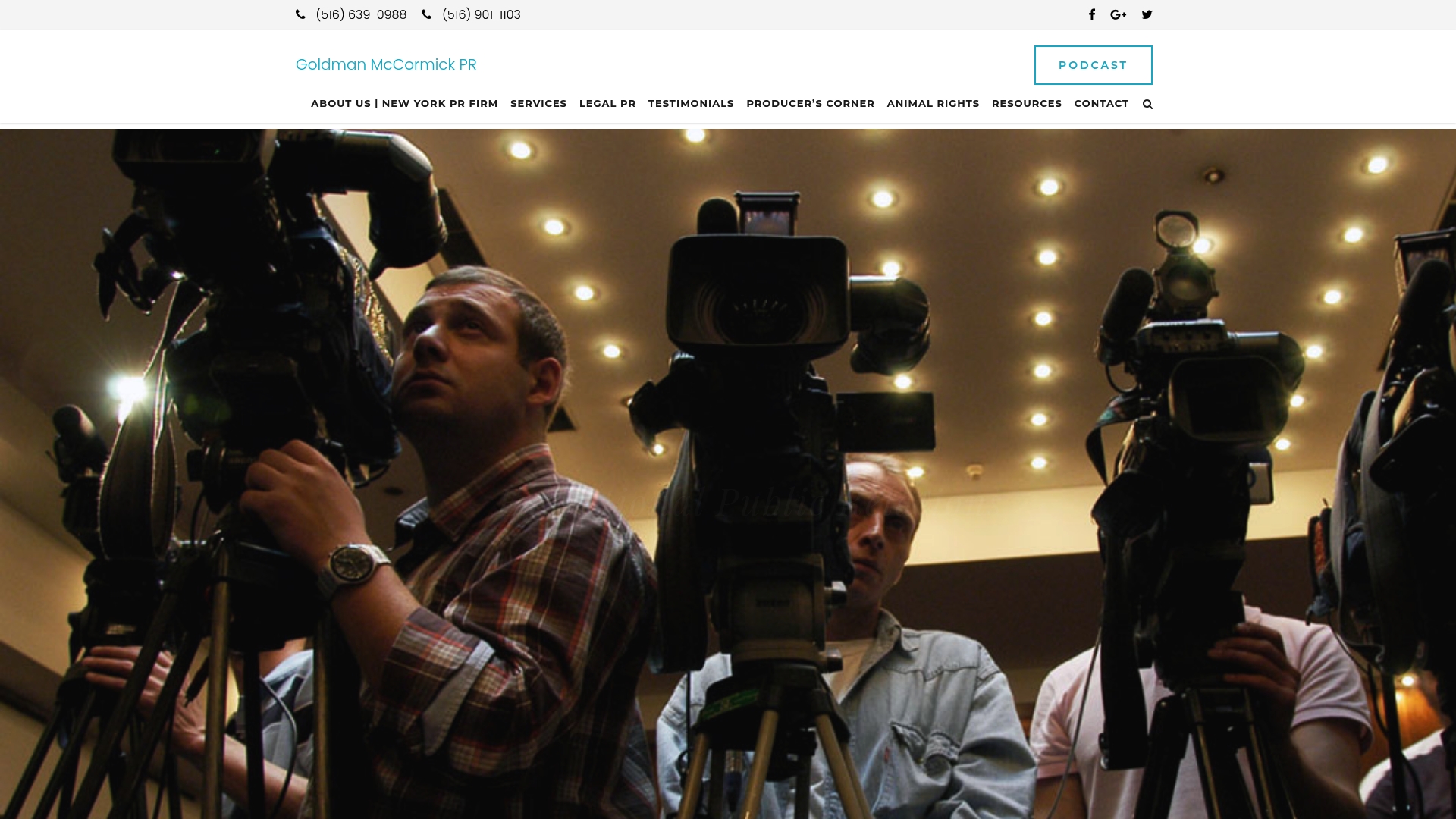
Whether you need crisis communication support, sustained thought leadership, or a media-driven strategy built around your case, our team understands both sides of the attorney-journalist relationship. Explore our legal PR insights to see how we apply these principles in practice, then reach out to discuss what the right campaign looks like for your firm.
Frequently asked questions
What makes a legal PR campaign successful?
Successful legal PR campaigns align messaging with legal strategy, engage relevant media channels, manage reputation proactively, and produce measurable outcomes such as media placements and client inquiries.
How can celebrity involvement benefit a legal PR campaign?
Celebrity involvement increases brand recall by making the campaign memorable and approachable, but precise audience targeting is essential to avoid alienating professional legal audiences who are skeptical of anything that feels gimmicky.
What role does thought leadership play in legal PR?
Thought leadership establishes attorneys as trusted experts through bylined articles and media commentary, and campaigns built on this approach have directly driven LinkedIn traffic growth and measurable increases in new client referrals.
When should a law firm engage litigation PR support?
Firms should engage litigation PR early — ideally before media interest develops — because proactive reputation management aligned with legal strategy produces far better outcomes than reactive damage control.
Are legal PR campaigns ethical if they influence litigation outcomes?
Yes, when campaigns work exclusively with transparent attorneys and focus on informing public discourse with documented facts rather than spin, ethical litigation PR can shift public narratives responsibly without compromising legal processes.